


Finding the Right Solar Rooftop Supplier: A Guide to Sustainable Energy Independence
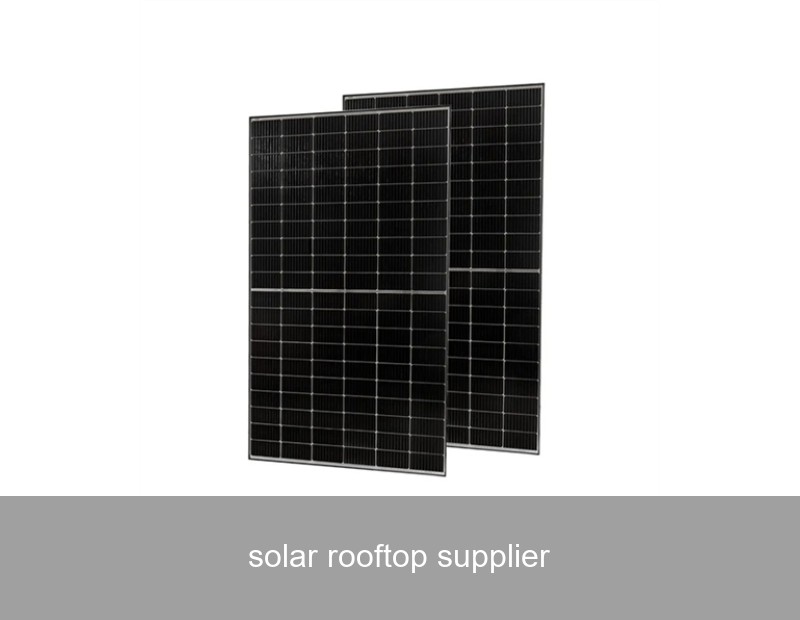
You've looked at your energy bills, considered your environmental impact, and decided: it's time for solar. The sun is a powerful, free fuel source right above your roof. But the journey from decision to power generation hinges on a critical choice—selecting the right solar rooftop supplier. This isn't just about buying panels; it's about partnering with a company for a complex, long-term energy investment. Let's navigate what makes a supplier truly reliable and how the right technology partnership can maximize your return.
Table of Contents
The Rooftop Revolution: More Than Just Panels
Across Europe and the U.S., rooftops are transforming from passive covers to active power plants. This shift is driven by more than just ecological goodwill; it's a strategic financial decision for homeowners and businesses alike. However, the initial excitement of "going solar" often meets the complex reality of system design, installation, and long-term performance. A common pitfall is focusing solely on the cost per panel. The true value lies in the total system performance over 20+ years, which depends heavily on the components you never see: the inverters, battery storage, and the software that orchestrates it all.

This is where the distinction between a simple equipment vendor and a true solar rooftop supplier becomes clear. A leading supplier acts as a solution provider, ensuring every component—from the photovoltaic cells to the grid connection point—is optimized for your specific energy consumption patterns, weather, and financial goals.
The Numbers Behind a Smart Solar Investment
Let's talk data. According to the International Energy Agency (IEA), solar PV is set to become the largest source of installed power capacity globally by 2027. For businesses, the driver is compelling: energy cost stability. While grid prices fluctuate, sunlight is free. A well-designed system can cover 50-80% of a facility's load, with the potential for 100% when paired with storage. The key metric is Levelized Cost of Energy (LCOE), which for solar has plummeted over 80% in the last decade, making it highly competitive.
But here's the critical data point often overlooked: performance degradation. Not all solar panels lose efficiency at the same rate. A premium panel may guarantee 92% output after 25 years, while a cheaper alternative might drop to 85%. That 7% difference represents a significant amount of lost electricity and revenue over the system's lifetime. Your choice of solar rooftop supplier directly influences this long-term yield through the quality of components they offer and the precision of their system design.
Case Study: A German Manufacturing Plant's Journey
Consider the real-world example of "Mittelstand Maschinenbau GmbH" (a pseudonym), a mid-sized automotive parts manufacturer in Bavaria, Germany. Facing rising energy costs and corporate sustainability targets, they sought a solar rooftop supplier for their 10,000 sqm factory roof.
The Challenge: High daytime energy consumption, but also significant base load at night. Maximizing self-consumption was essential for ROI.
The Solution (with Highjoule): They partnered with a supplier who proposed an integrated Highjoule system. The solution included:
- High-efficiency bifacial solar panels to capture light from both sides.
- Highjoule's IntelliBESS 10 containerized battery storage system (500 kWh capacity).
- Highjoule's Energy Management System (EMS) for intelligent dispatch.
The EMS acts as the brain, predicting production and consumption. It charges the batteries with excess solar, powers the factory during peak tariff hours, and even provides grid services. In the first year of operation, the plant achieved:
| Metric | Result |
|---|---|
| Solar Generation | 1.2 GWh |
| Self-Consumption Rate | Increased from 35% to 78% |
| Grid Energy Cost Reduction | 62% |
| CO2 Emissions Reduction | 720 tonnes annually |
Key Insights for Choosing Your Solar Partner
Based on industry expertise and cases like the one above, here are the non-negotiable factors to evaluate in a solar rooftop supplier:
- System Integration Expertise: Can they seamlessly integrate generation, storage, and smart management? Companies like Highjoule specialize in this holistic approach, providing certified, pre-tested systems that reduce on-site risk and commissioning time.
- Technology Agnosticism (to a point): A good supplier recommends the best combination of components for your needs, not just what they have in a single brand's catalog. They should have deep partnerships with leading panel, inverter, and storage manufacturers.
- Lifecycle Support: Installation is day one. What about performance monitoring, preventative maintenance, and warranty support over 25 years? Ask about their O&M (Operations and Maintenance) offerings.
- Financial Modeling Clarity: They should provide transparent, detailed projections of your energy production, savings, payback period, and total lifetime value, not just a bottom-line price.
The Heart of the System: Beyond the Panel
While panels capture the spotlight, the inverter and battery storage are the workhorses. For commercial and industrial applications, the trend is toward DC-coupled storage systems. Unlike simpler AC-coupled units, DC-coupled systems, like those in Highjoule's IntelliBESS series, connect the battery directly to the solar array's DC current. This eliminates multiple conversion steps, boosting round-trip efficiency to over 98% and reducing equipment costs.

Furthermore, advanced battery management systems (BMS) and EMS software are crucial. Highjoule's EMS, for instance, uses AI-driven algorithms to learn a building's energy habits, weather patterns, and utility rates. It autonomously decides the most economical moment to store or discharge energy, creating value streams beyond simple backup power. This intelligent layer is what transforms a capital expense into a strategic asset.
Your Solar Rooftop Supplier Questions Answered
What's the difference between a solar installer and a supplier?
An installer typically focuses on the physical mounting and wiring of purchased equipment. A true solar rooftop supplier like Highjoule provides the end-to-end solution: design, component sourcing (including their own storage tech), system integration, software, and often partners with certified installers for deployment, ensuring performance guarantees are met.
How important is battery storage from the start?
For maximizing self-consumption and resilience, it's highly recommended. While you can add it later, a DC-coupled system designed from the ground up is more efficient and cost-effective. A forward-thinking supplier will design your solar system with "storage-ready" infrastructure.
Can industrial solar systems provide backup power?
Absolutely. With the right battery capacity and system design, critical loads or even entire facilities can be maintained during grid outages. This requires careful engineering for safety and load management—another reason to choose a supplier with deep expertise in microgrid and backup solutions.
Choosing a solar rooftop supplier is the most significant decision in your renewable energy journey. It's the difference between a system that merely sits on your roof and one that actively drives down costs, enhances sustainability, and future-proofs your energy supply. As you evaluate partners, ask yourself: are they offering you a commodity, or are they building a long-term energy partnership?
What specific energy challenge for your home or business could a truly intelligent solar and storage system solve?
 Inquiry
 Online Chat