


Finding the Right Supplier of LONGi 620W Solar Panels for Your Energy System
You've decided to go solar, and you've done your homework. You know that LONGi 620W panels, with their high-efficiency monocrystalline cells, represent the cutting edge of solar technology, promising more power from your rooftop. But here's the catch many face: finding a reliable supplier of LONGi 620W panels is just the first step. The real challenge is integrating these powerful modules into a system that maximizes their potential, stores the excess energy, and delivers reliable power day and night. This is where the choice of your technology partner becomes as critical as the panels themselves.
Table of Contents
- The 600W+ Power Phenomenon: More Than Just a Panel
- The Data Reality: Why System Balance is Everything
- Case Study: A European Agri-Business Transformation
- Expert Insights: Choosing a True Solutions Partner
- The Highjoule Approach: Intelligent Storage for High-Power Solar
The 600W+ Power Phenomenon: More Than Just a Panel
The solar industry's shift to 600W+ modules, like the LONGi Hi-MO 7, is a game-changer. These panels produce more electricity per square meter, reducing the number of panels needed for a given system size. This means lower balance-of-system (BOS) costs, including fewer racks, less wiring, and potentially reduced labor. For commercial and industrial (C&I) sites with large, uninterrupted roof spaces, the economic and efficiency gains are compelling.
However, this increased power output creates a new set of considerations. A supplier of LONGi 620W panels provides the hardware, but these high-wattage panels demand compatible components. Your inverter must be able to handle the higher current and voltage strings. More critically, the sheer volume of energy generated during peak sun hours often exceeds immediate on-site consumption. Without a strategic plan for this surplus, you're leaving significant value—and potential savings—on the table.

Image: High-power solar arrays require intelligent energy management. (Photo: Unsplash)
The Data Reality: Why System Balance is Everything
Let's talk numbers. A standard 100kW system using 400W panels would require approximately 250 modules. Using LONGi 620W panels, you'd need only about 161 panels for the same capacity. This is a clear win. But the output profile is steeper. On a sunny day, such a system might produce over 500 kWh. If your facility only uses 300 kWh during the daytime, you have 200 kWh of excess energy that could be exported to the grid.
Here's the issue: grid feed-in tariffs (FiTs) in many European and U.S. regions are declining, often to rates far below the retail price of electricity you buy from the utility. According to the International Energy Agency (IEA), the value of solar electricity is increasingly tied to when it is produced and consumed. Simply put, exporting excess power at midday is becoming less profitable, while the cost of power drawn from the grid in the evening remains high.
This creates an economic imperative for storage. The key metric is self-consumption—the percentage of your solar generation you use directly. A system without storage might achieve 30-50% self-consumption. Pairing your high-power solar array with a battery energy storage system (BESS) can push that figure to 70%, 80%, or even higher, fundamentally changing the project's return on investment.
Case Study: A European Agri-Business Transformation
Consider the real-world example of "GreenVineyards," a winery and processing facility in Southern France (name changed for privacy). They partnered with a supplier of LONGi 620W panels to install a 250kW rooftop array. Their goals were to reduce a volatile energy bill and ensure stable power for their temperature-controlled fermentation tanks.
The Challenge: The solar system produced a massive surplus during the day, but energy demand spiked in the early evening during processing hours, coinciding with high grid rates. Their initial setup lacked storage, capping their financial and operational benefits.
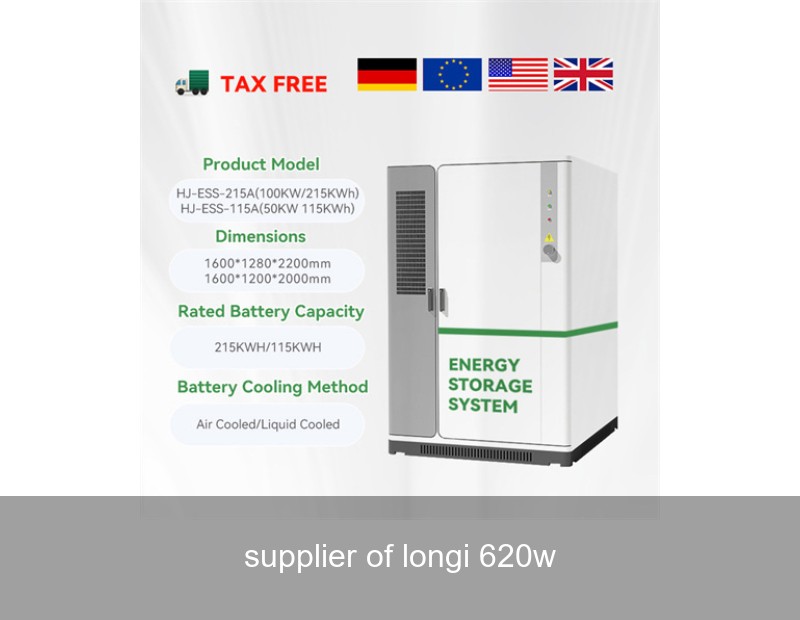
The Solution: GreenVineyards engaged Highjoule to design and integrate a turnkey storage solution. We installed a 180 kWh Highjoule CubeStack battery system alongside their existing solar inverters. Our Energy Management System (EMS) was programmed with a dual strategy: 1) store midday solar excess, and 2) discharge during the evening peak demand period, avoiding the most expensive grid electricity.
The Data-Driven Outcome (12-month post-installation):
| Metric | Before Storage | After Highjoule BESS Integration |
|---|---|---|
| Solar Self-Consumption Rate | 41% | 89% |
| Grid Energy Draw During Peak Hours | ~65% of daily need | < 15% of daily need |
| Annual Energy Cost Savings | €18,000 (solar only) | €42,000 (solar + storage) |
| ROI Period for Storage Addition | N/A | ~5.2 years |
This case illustrates that the value of a premium solar module is fully unlocked only when paired with intelligent storage and control. The panel supplier provided excellent components, but Highjoule's system integration delivered the transformative financial result.
Expert Insights: Choosing a True Solutions Partner
When evaluating a supplier of LONGi 620W panels or any high-power module, shift the conversation from just components to total system performance. Here are the critical questions to ask:
- System Integration Expertise: Do they have proven experience in designing systems that balance high-power strings with appropriate inverters and, crucially, storage?
- Storage Agnostic or Partnered? A supplier locked into a single storage brand may not offer the optimal solution for your load profile. Look for partners who can select the best storage technology for your specific needs.
- Software Intelligence: The hardware stores energy, but the software creates value. Does the proposed solution include an EMS capable of advanced strategies like peak shaving, time-of-use optimization, and grid services readiness?
- Lifecycle Support: A system is a 20+ year investment. What are the guarantees on performance, and what operational support is offered post-installation?
A report by The National Renewable Energy Laboratory (NREL) emphasizes that "the value of storage is highly dependent on the specific use cases and market signals." Your partner should be able to model these scenarios for your site.
The Highjoule Approach: Intelligent Storage for High-Power Solar
At Highjoule, we don't sell solar panels. We make the power they produce more valuable, reliable, and controllable. As a global leader in advanced BESS since 2005, we are the ideal partner to complement your investment in LONGi 620W technology.
Our CubeStack Commercial & Industrial (C&I) Series is engineered for seamless integration with high-DC-input solar systems. With scalable capacities from 100 kWh to multi-MWh, these systems feature:
- High-Power Compatibility: Designed to efficiently manage the charge/discharge rates needed to capture surplus from large solar arrays.
- Highjoule Neuron EMS: The brain of the system. It doesn't just react; it forecasts solar production and load patterns using AI, optimizing every kilowatt-hour for maximum economic return.
- Grid-Interactive Capabilities: In many markets, systems can be configured to participate in grid-balancing services, creating an additional revenue stream.
- Turnkey Delivery: From initial site assessment and financial modeling to engineering, installation, and long-term monitoring via our Highjoule Pulse platform, we provide a single point of accountability.

Image: Modern BESS units are key to unlocking solar value. (Photo: Unsplash)
Asking the Right Questions for Your Project
So, you're speaking with a qualified supplier of LONGi 620W panels. The quotes look good. Before you finalize your decision, consider this: Is your project simply about installing solar panels, or is it about achieving energy independence, cost certainty, and operational resilience?
The future of energy is not just generation—it's intelligent management. The most forward-thinking projects start with the end goal in mind: a fully optimized, resilient, and profitable energy asset.
What specific energy cost or operational challenge is driving your interest in high-power solar today, and how would your business change if you could control not just how you generate power, but exactly when and how you use it?
 Inquiry
 Online Chat