


Solar & Renewable Energy: Powering a Sustainable Future, One Smart System at a Time
Have you ever looked at your electricity bill on a sunny day and wondered, "With all this sun, why am I still paying so much?" You're not alone. Across Europe and the US, homes and businesses are embracing solar panels, but a crucial piece of the puzzle is often missing. The sun doesn't shine on demand, and the grid isn't always ready for our clean energy ambitions. This is where the true power of solar & renewable energy is unlocked: not just in generation, but in intelligent storage and management. The transition isn't just about putting panels on roofs; it's about building a resilient, efficient, and self-sufficient energy ecosystem.
Table of Contents
- The Intermittency Challenge: When the Sun Sets or the Wind Stops
- The Data Behind the Demand: More Than Just Megawatts
- The Intelligent Solution: Beyond Basic Battery Boxes
- Case in Point: A German Bakery's Recipe for Energy Independence
- Highjoule's Role: Engineering Confidence in Your Energy Transition
- Your Energy Future: What's the Next Step?
The Intermittency Challenge: When the Sun Sets or the Wind Stops
Let's face it, nature isn't predictable. A cloud bank rolls in, the wind dies down, and suddenly, your solar array's output plummets. This intermittency is the fundamental hurdle for solar & renewable energy. Without a buffer, you're forced to draw power from the grid during peak—and most expensive—hours, eroding your savings and environmental benefits. For businesses, this volatility can mean operational uncertainty and exposure to volatile energy markets.
Think of it like collecting rainwater in a barrel. The panels are your roof, catching the rain (sunlight). But if you only use the water while it's raining, you'll be thirsty the rest of the time. You need the barrel—the storage system—to hold that resource for when you truly need it.
The Data Behind the Demand: More Than Just Megawatts
The numbers paint a compelling picture. According to the International Energy Agency (IEA), global renewable capacity is set to expand by 2.5 times by 2030. But here's the critical insight: the U.S. Energy Information Administration notes that the value of battery storage is skyrocketing, not just for backup, but for energy arbitrage—storing cheap solar power at noon to use during the expensive evening peak. In some regions of California and Germany, the price difference between peak and off-peak power can be over 200%. That's not just savings; that's a strategic financial advantage.
Furthermore, grid operators are increasingly relying on distributed storage assets to provide stability services, preventing blackouts and deferring costly grid upgrades. Your storage system can become a community asset.

Credit: Photo by American Public Power Association on Unsplash. Solar generation is the first step; capturing its full value requires smart storage.
The Intelligent Solution: Beyond Basic Battery Boxes
So, the answer is simply to add a battery, right? Not exactly. A truly effective system is defined by its intelligence. It's the difference between a basic water tank and a smart home water management system that knows your usage patterns, weather forecasts, and utility rates.
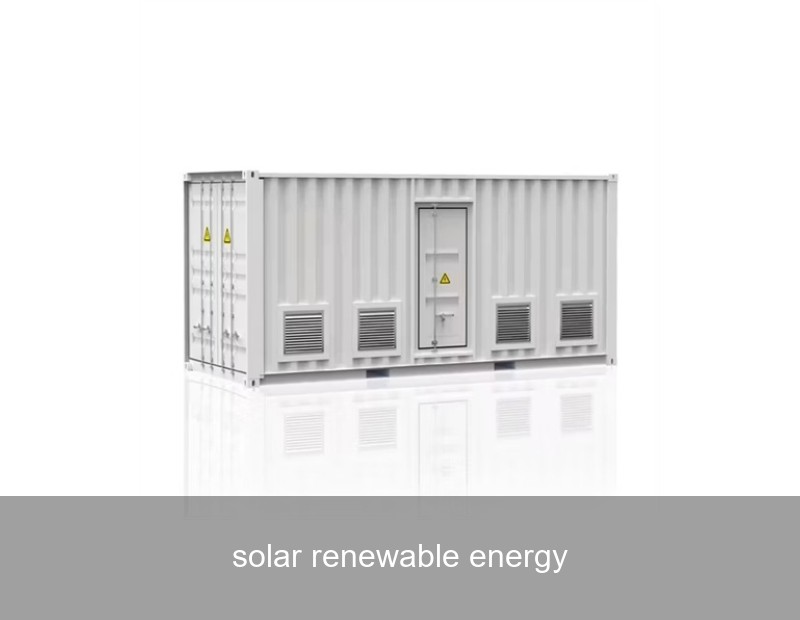
An advanced Battery Energy Storage System (BESS) does more than store electrons. It:
- Forecasts & Optimizes: Using weather data and consumption algorithms, it predicts solar yield and energy needs.
- Manages Complexity: It seamlessly switches between solar power, battery storage, and the grid, always choosing the most economical and efficient source.
- Prioritizes Safety & Longevity: Advanced thermal management and battery chemistry-specific software ensure the system operates safely for decades, not just years.
This is where expertise matters. Not all storage solutions are created equal.
Case in Point: A German Bakery's Recipe for Energy Independence
Let's make this concrete. Consider "Bäckerei Schmidt," a mid-sized artisan bakery in Bavaria, Germany. Their challenge was classic: high energy costs for refrigeration and ovens, with solar panels that covered only 40% of their daytime use. Night baking relied entirely on the grid.
They partnered with a local installer who deployed a Highjoule HiveCore Commercial ESS. Here's what changed:
| Metric | Before Installation | After 12 Months |
|---|---|---|
| Grid Energy Consumption | 100% (Baseline) | 35% |
| Solar Self-Consumption | ~40% of solar production | >95% of solar production |
| Energy Cost Savings | N/A | €8,400 annually |
| Backup Power | None (vulnerable to outages) | 8 hours for critical cold storage |
The HiveCore system's AI-driven controller learned the bakery's schedule. It fully charged the batteries by mid-afternoon using surplus solar, then powered the overnight baking shift and pre-dawn refrigeration cycles. During a brief winter grid outage, the system automatically islanded the facility, preventing thousands of euros in spoiled inventory. For Bäckerei Schmidt, their solar & renewable energy investment finally delivered on its full promise: resilience, savings, and sustainability.
Highjoule's Role: Engineering Confidence in Your Energy Transition
Since 2005, Highjoule has been at the forefront of solving these complex energy challenges. We understand that deploying storage is a significant decision. Our philosophy is to provide not just hardware, but a holistic, intelligent power solution tailored to your specific needs—whether for a large industrial facility, a commercial strip mall, or a community microgrid.
Our product suites, like the HiveCore for Commercial & Industrial applications and the HomeGuard for Residential use, are built on a common platform of safety, intelligence, and durability. They feature:
- Adaptive Power Management Software: The true brain of the system, integrating real-time data for optimal decision-making.
- Lithium Iron Phosphate (LFP) Battery Chemistry: A safer, longer-lasting choice with a superior cycle life, backed by industry-leading warranties.
- Scalable Architecture: Start with what you need and expand capacity as your needs grow, protecting your investment.
- Global Service & Monitoring: 24/7 system monitoring and a network of certified technicians provide peace of mind across Europe and North America.
We bridge the gap between the potential of solar & renewable energy and the practical realities of running a home or business. As noted by research from the National Renewable Energy Laboratory (NREL), the integration of smart controls is the single biggest factor in maximizing the value of storage. That's the core of our engineering mission.

Credit: Photo by Michael Fousert on Unsplash. The intelligence inside a modern BESS, like Highjoule's systems, is what transforms stored energy into strategic value.
Your Energy Future: What's the Next Step?
The journey toward true energy independence is clearer than ever. The technology is proven, the economics are compelling, and the environmental imperative is urgent. But knowing where to start can be the biggest hurdle.
What is the one energy challenge—be it unpredictable bills, resilience concerns, or sustainability goals—that keeps you up at night? Identifying that is the first step toward designing a solution that not only captures the sun's power but also harnesses its full potential for your life or business. The era of passive consumption is over; the age of intelligent energy management is here.
 Inquiry
 Online Chat