


Solar Grid Battery System: The Key to Unlocking True Energy Independence
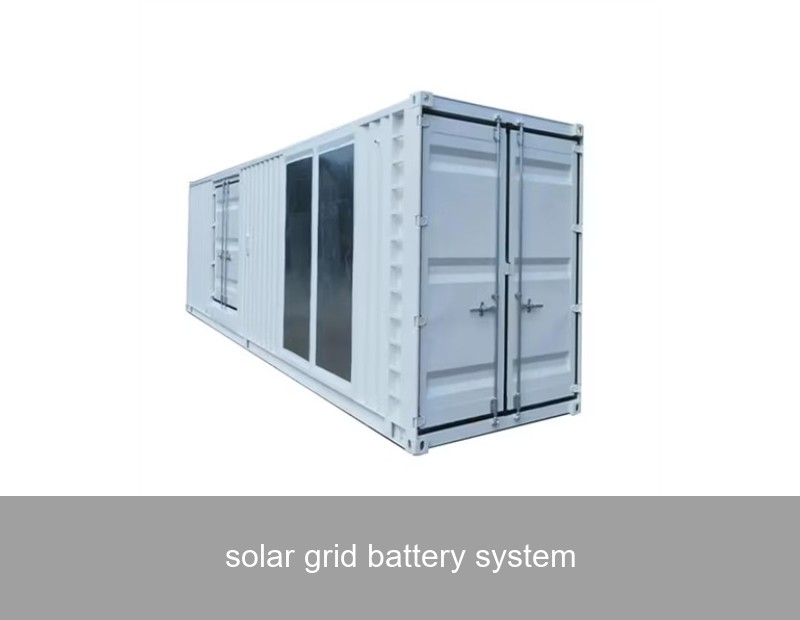
Imagine a world where your home or business isn't just powered by the sun, but is also resilient against blackouts and soaring energy prices. This isn't a distant future—it's the reality enabled by a solar grid battery system. For homeowners and businesses across Europe and the US, integrating solar panels with a sophisticated battery storage system is transforming how we generate, consume, and think about electricity. It's the crucial bridge between simply having solar and achieving genuine energy autonomy. As a global leader in advanced energy storage, Highjoule has been at the forefront of this revolution since 2005, engineering intelligent systems that make this seamless integration not just possible, but powerfully efficient.
Table of Contents
- What is a Solar Grid Battery System?
- The Urgent Need: Why Solar Alone Isn't Enough
- How a Modern Solar Battery System Works: Beyond Basic Backup
- Case Study: Quantifying the Impact in a Real Home
- Choosing the Right System: Key Considerations
- Highjoule's Intelligent Approach to Energy Resilience
- The Bigger Picture: Your Role in the Future Grid
What Exactly is a Solar Grid Battery System?
At its core, a solar grid battery system is an integrated energy solution that combines three key components: photovoltaic (PV) solar panels, a bank of high-performance batteries, and a smart inverter/energy management system. This trio works in concert to capture solar energy, store the excess for later use, and intelligently manage power flow between your solar panels, your battery, your home, and the main electrical grid. Unlike a standalone solar setup that exports surplus power to the grid (often for a low feed-in tariff), a battery system allows you to keep and use that valuable energy yourself, typically when you need it most—during the evening peak or a grid outage.

A modern home energy setup: solar panels generate power, while the wall-mounted battery stores it for use anytime.
The Urgent Need: Why Solar Panels Alone Are No Longer Enough
Many homeowners invested in solar with the promise of lower bills. But a significant challenge remains: the timing mismatch. Solar production peaks in the middle of the day, while household energy consumption soars in the early morning and evening. Without storage, this means buying expensive grid power when your panels are idle.
Let's look at the data. According to the U.S. Department of Energy, solar now powers millions of American homes. Yet, the value of that solar energy is maximized only when it's consumed on-site. In markets like California and parts of Europe, feed-in tariffs have dropped dramatically, while time-of-use (TOU) electricity rates have widened the price gap between peak and off-peak power. This economic shift makes storing your solar energy for peak times a financially savvy move. Furthermore, increasing grid instability due to extreme weather events makes backup power a critical feature for resilience, not just a luxury.
The Three-Part Value Proposition
- Maximize Self-Consumption: Use more of the solar energy you produce, slashing your electricity bill.
- Ensure Backup Power: Keep essential lights and appliances running during grid outages.
- Support Grid Stability: Advanced systems can even help balance the community grid (a concept known as virtual power plants).
How a Modern Solar Battery System Works: Beyond Basic Backup
The magic lies in the intelligence of the system. Here’s a typical daily cycle:
| Time of Day | Solar Production | Home Demand | Battery Action | Grid Interaction |
|---|---|---|---|---|
| Morning (6-9 AM) | Low | High | Discharges to power home | Minimal or zero import |
| Daytime (9 AM - 4 PM) | High | Low/Moderate | Charges with excess solar | Exports any surplus after battery full |
| Evening Peak (4-9 PM) | Low/None | Very High | Discharges to cover peak demand | Avoids expensive peak-rate imports |
| Night (9 PM - 6 AM) | None | Low | May provide backup or rest | Imports low-cost off-peak power if needed |
This intelligent orchestration is managed by the system's brain—the energy management system (EMS). Highjoule's Harmony EMS, for instance, uses predictive algorithms based on weather forecasts and your usage patterns to optimize every kilowatt-hour, deciding when to store, when to discharge, and when to interact with the grid for maximum economic benefit.
Case Study: Quantifying the Impact in a Real German Household
Let's move from theory to tangible results. Consider the Müller family in Bavaria, Germany. In 2022, they had a 8 kWp solar array but were only consuming 35% of their solar generation directly. They installed a 10 kWh Highjoule VoltStack residential battery system.
- Self-Consumption Rate: Increased from 35% to 82%.
- Grid Electricity Purchases: Reduced by 78% year-over-year.
- Annual Energy Cost Savings: €1,450, despite a 20% increase in grid electricity prices.
- Backup Performance: Provided seamless power during two regional grid outages, totaling 8 hours.
This case, mirrored by thousands across Europe and North America, demonstrates the dual financial and resilience payoff. The system paid for itself in under 7 years, a timeline accelerated by rising energy costs. Data from the International Energy Agency (IEA) underscores that pairing solar with storage is becoming the new standard for a reason.
Choosing the Right System: Key Considerations for Homeowners
Not all solar grid battery systems are created equal. When evaluating options, focus on these critical factors:
1. Battery Chemistry & Longevity
Lithium iron phosphate (LFP) batteries, like those used in Highjoule's core product lines, are now the industry benchmark for safety, cycle life (often over 6,000 cycles), and stability. They offer a longer usable lifespan with minimal degradation.
2. Usable Capacity & Power Rating
Don't just look at the total kWh. Understand the usable capacity. Also, the continuous power rating (in kW) determines how many heavy-load appliances (like an HVAC system or heat pump) you can run simultaneously on battery power.
3. System Intelligence & Integration
Can the system integrate with existing or new solar inverters? Does its software allow for customizable control strategies (e.g., maximizing savings vs. maximizing backup)? A smart system adapts to your goals and utility rate structures.

Advanced monitoring and control dashboards put energy management at your fingertips.
Highjoule's Intelligent Approach to Energy Resilience
At Highjoule, we view a solar grid battery system as more than hardware—it's an integrated energy asset. Our solutions, from the compact HomeStack for residences to the robust IndustrialPowerPack for commercial sites, are built on three pillars:
- Adaptive Intelligence: Our Harmony EMS platform learns and optimizes for your unique consumption patterns and local utility rates, ensuring you always get the best financial return.
- Scalable Architecture: Start with what you need now. Our modular design allows for cost-effective capacity expansion later, simply by adding more battery modules.
- Grid-Supportive Design: Our systems are engineered to participate in grid service programs where available, potentially generating additional revenue for you while contributing to community-wide grid stability—a true win-win.
For businesses and microgrids, this intelligence translates into demand charge reduction, power quality management, and a significant step towards sustainability goals.
The Bigger Picture: Your Role in the Future Grid
When you install a smart solar grid battery system, you're not just a consumer—you become a "prosumer," actively managing your energy production and consumption. On a larger scale, thousands of such distributed systems create a virtual power plant (VPP), a flexible resource that can help utilities manage peak demand without firing up polluting peaker plants. This collective action is pivotal for integrating higher levels of renewable energy, as noted by research from The National Renewable Energy Laboratory (NREL).
So, as you consider taking control of your energy future, we leave you with this question: What would true energy independence—freedom from blackouts, volatile prices, and carbon-heavy grid power—enable for your home or business? The technology to answer that question is here, and it's more capable and accessible than ever.
 Inquiry
 Online Chat