


Solar Powered Telecom Towers: The Unseen Backbone of a Sustainable Network
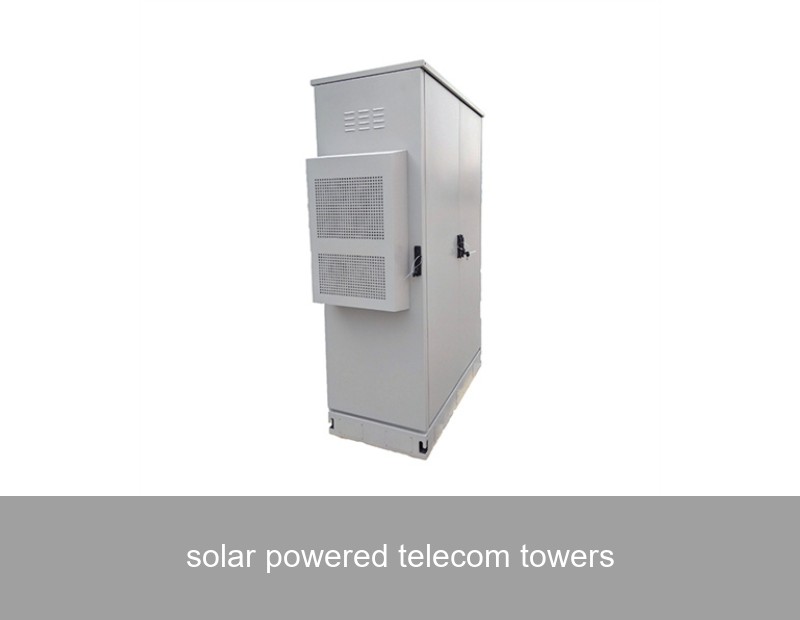
You’re driving through a remote area, your phone seamlessly switches between towers, keeping you connected. Ever stopped to wonder how that tower in the middle of nowhere gets its power? The answer is increasingly coming from the sun. Solar powered telecom towers are revolutionizing network infrastructure, offering a reliable, clean, and economically savvy alternative to traditional diesel generators. For telecom operators, this shift isn't just about going green—it's a strategic move to ensure resilience, slash operational costs, and future-proof their networks. As a leader in advanced energy storage, Highjoule is at the forefront of making these solar-powered systems not just feasible, but superior in performance and intelligence.
Table of Contents
- The Diesel Dilemma: A Costly and Unreliable Phenomenon
- The Solar Solution: Data That Speaks Volumes
- Real-World Case Study: Powering a European Rural Network
- The Critical Role of Battery Energy Storage Systems (BESS)
- Highjoule's Intelligent Edge for Telecom Resilience
- Future Horizons: Beyond Basic Power
The Diesel Dilemma: A Costly and Unreliable Phenomenon
For decades, off-grid and bad-grid telecom towers have relied on diesel generators. The model is simple: when the grid fails (or doesn't exist), the diesel kicks in. But this simplicity masks a host of problems. Fuel transportation to remote sites is logistically complex and expensive. Generators require frequent maintenance and are prone to failure if not meticulously serviced. The cost of diesel fuel itself is volatile, tying operational expenses to the unpredictable swings of the global oil market.
Perhaps most critically, this dependence creates a significant carbon footprint and noise pollution, which is increasingly at odds with corporate sustainability goals and local community expectations. In essence, diesel generators represent a high-risk, high-cost, and high-emissions strategy that is becoming untenable.
The Solar Solution: Data That Speaks Volumes
Enter solar power. A solar powered telecom tower integrates photovoltaic (PV) panels with a battery energy storage system (BESS) and intelligent control. The economics are compelling. Once the capital investment is made, the "fuel" – sunlight – is free. Operational costs plummet. A study by the GSMA highlights that renewable energy solutions can reduce OPEX for off-grid towers by up to 70% compared to diesel. Furthermore, solar systems are silent, have zero on-site emissions, and require less physical maintenance.
But it's not just about cost. It's about reliability. A well-designed hybrid solar system ensures 24/7 power availability. During the day, solar panels power the tower directly and charge the batteries. At night or during cloudy periods, the stored energy in the batteries takes over. This creates a resilient power supply that is less vulnerable to fuel supply chains and mechanical breakdowns.

Solar panels integrated into a remote telecom site, providing clean, autonomous power. (Image for illustrative purposes)
Real-World Case Study: Powering a European Rural Network
Let's look at a concrete example. A major mobile network operator (MNO) in Southern Europe faced challenges with dozens of towers in mountainous, grid-unstable regions. Frequent grid outages forced diesel generators to run nearly continuously, leading to exorbitant fuel costs and missed sustainability targets.
The operator deployed a hybrid solar-storage solution. Each site was equipped with a 10-15 kW rooftop and ground-mounted solar array, paired with a 30-50 kWh lithium-ion battery system, and a sophisticated controller to manage power flow. The diesel generator was kept strictly as a secondary backup.
| Metric | Before Solar+BESS | After Solar+BESS | Improvement |
|---|---|---|---|
| Diesel Fuel Consumption | ~15,000 liters/site/year | < 2,000 liters/site/year | ~87% Reduction |
| Operational Cost (Energy) | €18,000/site/year | €3,500/site/year | ~80% Reduction |
| CO2 Emissions | ~40 tonnes/site/year | ~5 tonnes/site/year | ~87.5% Reduction |
| Generator Runtime | > 8,000 hours/year | < 500 hours/year | ~94% Reduction |
The results were transformative. The network's uptime improved because the silent, solid-state battery system responded to grid outages instantaneously, unlike generators which have a startup delay. The project paid for itself in under four years through fuel and maintenance savings alone, not to mention the significant boost to the operator's ESG (Environmental, Social, and Governance) ratings.
The Critical Role of Battery Energy Storage Systems (BESS)
Solar panels alone cannot power a tower at night. This is where the battery becomes the heart of the system. Not all batteries are created equal for this demanding application. Telecom towers require batteries that can handle deep daily cycling (charging and discharging), withstand harsh environmental conditions, and have a long lifespan to match the 10-15 year investment in the site.
Lithium-ion phosphate (LFP) chemistry has emerged as the industry standard for solar powered telecom towers due to its safety, long cycle life, and excellent thermal stability. A high-quality BESS does more than just store energy; its built-in Battery Management System (BMS) is crucial for monitoring cell health, optimizing performance, and ensuring safety.
Highjoule's Intelligent Edge for Telecom Resilience
This is where Highjoule's expertise directly addresses the core needs of modern telecom operators. We understand that a solar powered telecom tower is more than just a sum of parts; it's an intelligent energy ecosystem. Our HI-POWER BESS series, built with premium LFP cells, is engineered specifically for demanding renewable integration applications.
What sets our solution apart is the Highjoule Energy Management System (HEMS). This advanced controller acts as the brain of the installation. It doesn't just switch between solar, battery, and generator. It uses predictive algorithms and real-time data to:
- Maximize Solar Self-Consumption: Prioritize solar energy above all else, ensuring every possible watt-hour from the sun is used.
- Optimize Battery Health & Lifespan: Our proprietary BMS algorithms prevent stressful charge/discharge cycles, extending battery life beyond standard expectations.
- Intelligently Manage Backup Generators: The system only starts the diesel generator when absolutely necessary and runs it at its most fuel-efficient load, slashing runtime and fuel use.
- Provide Remote Monitoring & Control: Network managers can view the performance, state-of-charge, and health of every tower's power system from a central dashboard, enabling proactive maintenance.

An advanced, containerized battery energy storage system similar to those used in large-scale telecom hybrid power projects. (Image for illustrative purposes)
For telecom operators, partnering with Highjoule means deploying a future-proof asset. Our systems are scalable, allowing for easy expansion of solar capacity or battery storage as network demands grow, for instance, with the rollout of 5G technology which often increases a site's power requirements.
Future Horizons: Beyond Basic Power
The evolution of solar powered telecom towers is moving towards becoming intelligent community hubs. Imagine a tower that not only provides connectivity but also, through its robust solar and storage system, can power a local clinic, a school, or an emergency response center during grid outages. This model of "tower-as-a-grid" can create new revenue streams and deepen the operator's integration into the community.
Furthermore, with advancements in AI and IoT, these distributed energy assets could one day participate in virtual power plants (VPPs), providing grid stabilization services. The journey from a diesel-dependent liability to a clean, intelligent, and revenue-enabling asset is well underway.
The evidence is clear: the future of off-grid and unstable-grid telecom infrastructure is solar-powered, battery-buffered, and intelligently managed. The question for network operators is no longer *if* they should transition, but *how* to execute this transition most effectively and reliably. With nearly two decades of experience in crafting resilient energy solutions for commercial and industrial applications, Highjoule is uniquely positioned to be your partner in this essential modernization. What's the first step in assessing the solar and storage potential for your most challenging tower sites?
 Inquiry
 Online Chat