


Solar Panels with Charge Controller: The Intelligent Heart of Your Energy Independence
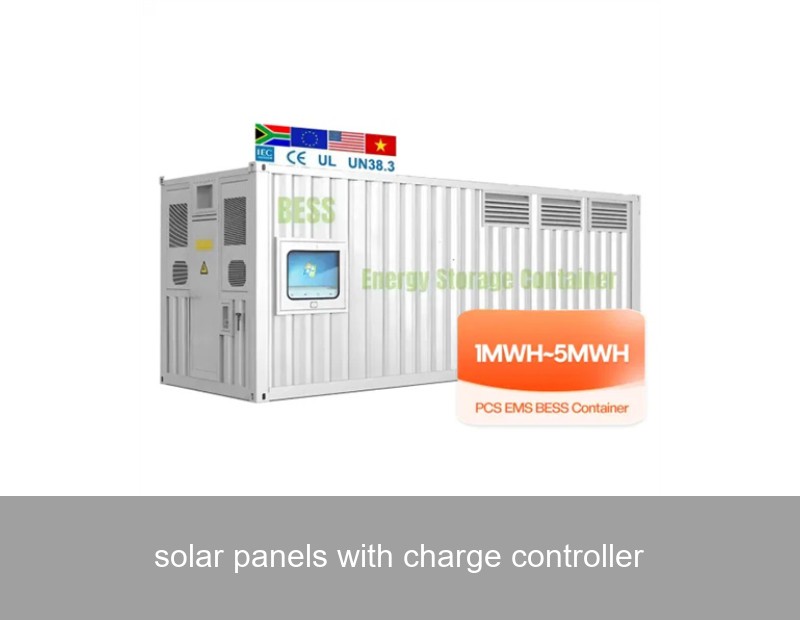
Imagine your solar panels basking in the sun, diligently converting photons into electricity. Now, imagine that precious energy flowing unchecked into your battery bank. Without a crucial guardian in the circuit, this scenario could lead to reduced battery life, inefficiency, or even damage. This is where the indispensable duo of solar panels with charge controller comes in. Think of the charge controller as the essential brain of your off-grid or battery-backed solar system, meticulously managing the power flow to ensure safety, maximize efficiency, and extend the lifespan of your investment. For homeowners and businesses across Europe and the U.S. seeking reliable energy independence, understanding this pairing is the first step toward a truly smart and sustainable power setup.
Table of Contents
- The Silent Guardian: Why Your Solar Array Needs a Brain
- MPPT vs. PWM: Decoding the Charge Controller Technology
- Beyond the Basics: The Modern Smart Charge Controller
- Real-World Impact: A Case Study from Sunny Spain
- Choosing the Right System for Your Needs
- Highjoule's Integrated Solutions: Where Intelligence Meets Storage
The Silent Guardian: Why Your Solar Array Needs a Brain
At its core, a charge controller sits between your solar panels and your batteries. Its primary job is to regulate voltage and current. Why is this so critical? Batteries have a very specific "recipe" for efficient and safe charging. They require a bulk charge, an absorption stage, and a float stage. An unregulated flow from solar panels, which can exceed 20V for a 12V system on a cold, bright day, would violently overcharge a battery, causing overheating, gassing, and a drastically shortened lifespan. Conversely, at night, without a controller, current could backflow from the battery to the panels, slowly draining your stored energy.
This isn't just theoretical. Data from the National Renewable Energy Laboratory (NREL) underscores that proper charge regulation can improve the overall energy harvest of a photovoltaic system by 15-30% and extend battery cycle life by up to 50%. The controller is the silent, diligent guardian that turns a simple connection into a reliable, long-term energy solution.
MPPT vs. PWM: Decoding the Charge Controller Technology
Not all guardians work the same way. The two main types of charge controllers are PWM (Pulse Width Modulation) and MPPT (Maximum Power Point Tracking).
- PWM Controllers: These are the reliable, economical veterans. They essentially act as a switch, connecting the solar array to the battery until a specific voltage is reached, then rapidly switching off and on (pulsing) to maintain it. They are simple and robust, best suited for smaller systems where the solar panel voltage closely matches the battery bank voltage.
- MPPT Controllers: These are the high-performance innovators. An MPPT controller doesn't just switch; it actively interrogates the solar array to find the exact voltage and current at which it produces maximum power (the Maximum Power Point). It then converts any excess voltage into additional current, pushing more usable energy into the batteries. This is especially powerful in colder climates or when panel voltage is significantly higher than battery voltage.
| Feature | PWM Controller | MPPT Controller |
|---|---|---|
| Efficiency | ~70-80% (effective) | 94-99% |
| Best For | Small systems, warm climates, cost-sensitive projects | Larger systems, cold/cloudy climates, maximizing output from limited roof space |
| Cost | Lower upfront cost | Higher upfront cost, but often higher ROI |
The choice between them often boils down to a simple question: Are you optimizing for lowest initial cost or for maximum energy harvest over time? For most modern residential and commercial installations in variable climates like those in Europe and North America, MPPT technology offers a compelling advantage.
Beyond the Basics: The Modern Smart Charge Controller
Today's advanced charge controllers are far more than simple regulators. They are intelligent energy management hubs. Modern units, like those integrated into Highjoule's systems, feature:
- Digital Communication & Monitoring: Real-time data on energy harvested, battery status, and system health, accessible via smartphone apps or web portals.
- Programmable Load Control: The ability to automatically control DC loads (like lights or pumps) based on battery voltage or time of day.
- Temperature Compensation: Automatic adjustment of charge parameters based on battery temperature, a critical factor for longevity.
- Grid & Generator Support: In hybrid systems, they can coordinate with grid power or backup generators for seamless charging support.

Image Source: Unsplash (Representative image of solar technology)
This intelligence transforms a basic setup into a responsive, efficient, and user-friendly energy asset. You're not just storing power; you're managing it with precision.
Real-World Impact: A Case Study from Sunny Spain
Let's move from theory to practice. Consider a medium-sized agri-tourism business in Andalusia, Spain. They operated an off-grid water pumping and facility power system using a 8kW solar array and a large lead-acid battery bank. Their older PWM controller struggled with the seasonal variations and high panel temperatures, leading to chronic battery undercharging in summer afternoons and reduced pump runtime.
In 2023, they upgraded to a system centered around a Highjoule HMPPT-100 smart charge controller. The results were quantified over six months:
- Energy Harvest Increase: The MPPT technology, optimized for high temperatures, boosted their daily energy harvest by an average of 22%.
- Battery Health: The precise, multi-stage charging and temperature compensation stabilized battery voltages. Specific gravity readings (a key health indicator) improved by 15%, indicating significantly reduced sulfation.
- Operational Reliability: The reliable water pump runtime increased by nearly 30%, eliminating midday interruptions during peak guest season.
This case illustrates a powerful truth: upgrading the "brain" of your system—the solar panels with charge controller duo—can unlock significant hidden performance from your existing solar assets.
Choosing the Right System for Your Needs
So, how do you select the right controller? Ask these key questions:
- System Voltage: What is your battery bank voltage (e.g., 12V, 24V, 48V)?
- Solar Array Current: What is the maximum current (Imp) of your panel array? Choose a controller with a current rating at least 25% higher.
- Environment: Is your installation in a consistently hot, cold, or variable climate?
- Future Expansion: Might you add more panels later? Opt for a controller with some headroom.
- Monitoring Needs: Do you want remote access and detailed analytics?
Getting this match right is crucial. An undersized controller can throttle your solar production, while an incorrectly configured one can harm your batteries.
Highjoule's Integrated Solutions: Where Intelligence Meets Storage
At Highjoule, we understand that a charge controller is not an isolated component; it's the critical link in a holistic energy ecosystem. Since 2005, we've evolved from providing components to delivering complete, intelligent storage solutions. Our approach integrates the charge controller seamlessly into our smart Battery Energy Storage Systems (BESS).
For instance, our ResiCore Home Energy System and CommerCore C&I Solutions feature built-in, high-efficiency MPPT solar charging that is pre-configured and tested with our lithium-ion battery banks. This eliminates compatibility guesswork. More importantly, the charge controller's data is fed into our proprietary energy management system (EMS), which makes intelligent, real-time decisions: should solar power charge the battery, power the home, or be exported to the grid based on tariffs, consumption patterns, and weather forecasts?

Image Source: Unsplash (Representative image of a solar home)
This level of integration means our customers—from a family in California to a factory in Germany—don't just get solar panels with a charge controller; they get a self-optimizing energy asset that maximizes self-consumption, protects equipment, and delivers tangible returns on investment. We handle the complexity, so you can simply enjoy reliable, clean power.
Ready to Optimize Your Solar Harvest?
The journey to true energy resilience and efficiency begins with the right foundation. Whether you're planning a new installation or looking to breathe new life into an existing solar array, the intelligence of your charge controller is the pivotal factor. What hidden potential could a smarter energy management strategy unlock for your home or business today?
 Inquiry
 Online Chat