


Harnessing the Sun: How Solar Panels and Smart Storage Are Powering Mauritius' Future
a tropical island paradise, blessed with abundant sunshine nearly year-round. It seems like the perfect candidate for a solar energy revolution, right? For Mauritius, this isn't just a vision; it's an urgent necessity. Like many island nations, Mauritius faces a critical energy dilemma. It relies heavily on imported fossil fuels, making its electricity supply vulnerable to global price shocks and leaving a significant carbon footprint. Yet, the solution shines brightly overhead. The potential of solar panels electricity Mauritius is immense, but unlocking its full power requires more than just installing photovoltaic (PV) modules. It demands intelligent, resilient technology to turn intermittent sunlight into a reliable, 24/7 power source. This is where the story gets interesting for energy-secure communities everywhere.
Solar Power: The Obvious Solution?
Mauritius receives an average of over 2,900 hours of sunshine annually, a resource that screams for utilization. The government has set ambitious targets, aiming for 60% of its electricity from renewable sources by 2030, with solar playing a starring role. Rooftop solar panels are becoming a more common sight, and utility-scale solar farms are part of the national plan. On the surface, the math is simple: more solar panels electricity Mauritius generation equals less diesel dependency.
However, energy engineers and grid operators know a hidden challenge lurks beneath this sunny surface. Solar power is inherently variable. Clouds pass, night falls, and generation drops precisely when evening demand often peaks. Injecting large amounts of this intermittent power into a small, isolated grid like Mauritius's can cause instability—voltage fluctuations and frequency issues that can lead to blackouts. This phenomenon isn't unique to islands; we see it in remote communities and even in parts of advanced grids with high renewable penetration. The data is clear: a 2021 report by the International Renewable Energy Agency (IRENA) highlighted that for islands, integrating renewables beyond 20-30% of annual generation often requires supporting infrastructure to maintain grid stability. Simply put, without a "buffer," there's a limit to how much solar energy an island grid can safely absorb.

Image: Solar potential is high in island nations, but integration requires smart technology. (Source: Unsplash, credited to photographer)
The Missing Piece: Advanced Energy Storage
This is where Battery Energy Storage Systems (BESS) become the game-changer. Think of a BESS as a high-tech, giant "energy bank." During the day, when solar panels electricity Mauritius production is high, any excess electricity not used immediately is stored in the batteries instead of being wasted or curtailed. Then, in the evening, during cloudy periods, or during sudden demand spikes, the system discharges that clean, stored energy back into the grid or directly to consumers.
The benefits are transformative:
- Grid Stability: Advanced BESS can respond to grid frequency changes in milliseconds, providing essential services that were traditionally handled by fossil-fuel plants.
- Maximized Solar Utilization: It virtually eliminates solar curtailment, ensuring every kilowatt-hour generated is used.
- Energy Security: It acts as a backup reserve, enhancing the grid's resilience against outages.
- Cost Reduction: By offsetting the most expensive diesel-generated power during peak hours, it lowers overall energy costs.
Not all storage solutions are created equal, however. The harsh, humid coastal environment of an island like Mauritius demands robust, corrosion-resistant hardware. More critically, the software intelligence—the "brain" of the system—must be sophisticated enough to perform multiple functions simultaneously: energy time-shifting, frequency regulation, and seamless integration with existing grid controls.
A Mauritian Case Study: Sunshine to Stability
Let's move from theory to a tangible example. In 2022, a major Mauritian commercial developer faced rising energy costs and wanted to commit to sustainability for its large shopping complex and office park. They installed a 1.2 MW rooftop solar array—a significant amount of power. Initially, they faced limitations from the local utility on how much they could feed back to the grid due to stability concerns, capping their savings and environmental impact.
The turning point was the integration of a containerized, grid-tied battery storage system. This wasn't just a simple battery pack; it was a complete solution featuring lithium-ion phosphate (LFP) battery racks, a bi-directional inverter, and a sophisticated Energy Management System (EMS).
The results, monitored over one year, were compelling:
| Metric | Before BESS | After BESS Integration |
|---|---|---|
| Solar Self-Consumption | ~65% | >95% |
| Grid Peak Demand Draw | 850 kW | 450 kW (a 47% reduction) |
| Grid Services Provided | None | Frequency regulation enabled |
| Estimated Annual Cost Saving | -- | €125,000+ |
The system stores the midday solar surplus and releases it during the 5-9 PM peak, dramatically reducing the complex's demand charges. Furthermore, its EMS allows it to provide grid-support services, making the local network more stable for everyone. This case is a microcosm of what's possible for the entire Mauritian grid—transforming solar panels electricity Mauritius from a variable source into a dispatchable, reliable one.
Highjoule Solutions for Island Grids and Beyond
At Highjoule, we've been designing precisely these kinds of intelligent energy systems since 2005. We understand that the challenge in Mauritius, Hawaii, or off-grid communities in Europe isn't just about storing energy; it's about creating an adaptive, resilient power ecosystem. Our solutions are engineered for the real world.
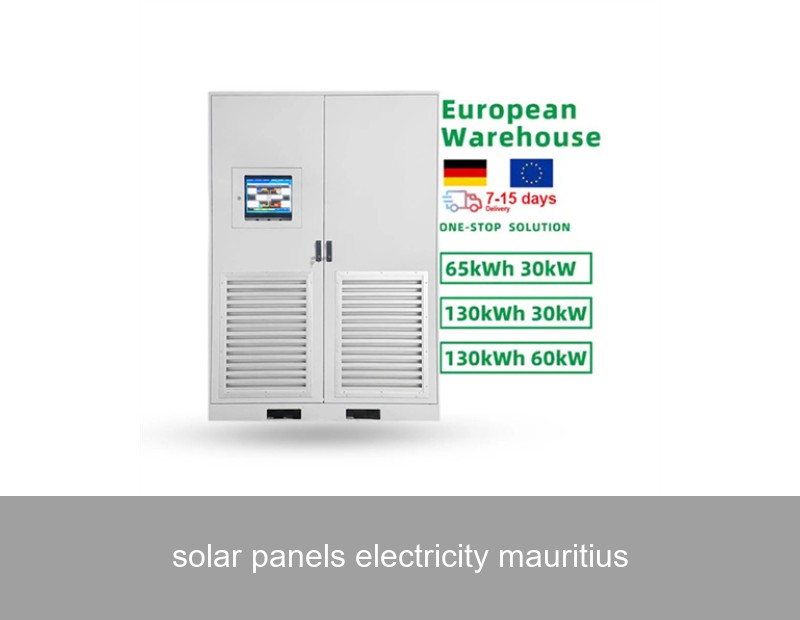
For commercial and industrial (C&I) clients like the one in our case study, our H-IQ Commercial ESS is a perfect fit. It's a modular, all-in-one system that combines our proprietary battery packs, hybrid inverters, and the crucial Highjoule Neuron™ EMS platform. This AI-driven platform doesn't just react; it predicts. By analyzing weather forecasts, electricity tariff schedules, and consumption patterns, it autonomously optimizes energy flow to maximize financial return and grid support. It's like having a 24/7 energy trader and grid engineer built into your system.
For larger-scale utility and microgrid applications—exactly what Mauritius needs to achieve its 60% renewable target—we offer the H-Core Utility BESS. These scalable, containerized solutions are built for high-power applications and harsh environments. They provide the critical inertia and fast-frequency response that small grids lose as they retire diesel gensets. Our systems are currently deployed in diverse climates, from the heat of Australia to the cold of Scandinavia, proving their durability and intelligence.

Image: Intelligent control systems are the brain of modern energy storage. (Source: Unsplash, credited to photographer)
Beyond Mauritius: A Global Blueprint
The journey of solar panels electricity Mauritius is a blueprint for any region seeking energy independence and a cleaner future. The principles are universal: harness abundant local renewables, then deploy smart storage to balance the grid, defer costly infrastructure upgrades, and ensure reliability. From remote European islands in the Mediterranean or North Sea to communities in California facing grid constraints, the equation is the same.
Authoritative bodies like the International Renewable Energy Agency (IRENA) and the National Renewable Energy Laboratory (NREL) have extensively documented the role of storage in enabling high renewable penetration. The technology is proven, and the economic case grows stronger every year as battery costs decline and energy volatility increases.
So, whether you're a hotel owner in Mauritius looking to lock in energy costs, a municipal planner in Southern Europe designing a community microgrid, or an industrial operator in the US aiming for net-zero, the question is no longer *if* you should combine solar with storage, but *how* to do it most effectively. What specific energy challenge—be it cost, reliability, or sustainability—is the most critical for your operation to solve with the power of the sun?
 Inquiry
 Online Chat