


Solar Panel Wall Cladding: The Next Frontier in Building-Integrated Photovoltaics
Imagine a building that doesn't just consume energy, but generates it—seamlessly, silently, and beautifully. This is no longer a futuristic concept. Across Europe and North America, a quiet revolution is transforming our urban landscapes: solar panel wall cladding. Moving beyond traditional rooftop arrays, this innovation integrates photovoltaic technology directly into the building envelope, turning walls into active power generators. For architects, building owners, and sustainability officers, this represents a powerful convergence of design, function, and energy independence. As a leader in advanced energy storage, Highjoule has witnessed firsthand how this architectural shift, when paired with intelligent storage, is redefining what it means to be a "smart building."
Table of Contents
The Phenomenon: Buildings as Power Plants
For decades, solar power was synonymous with rooftop panels. While effective, this approach has limitations—roof space is finite, and not all architectural styles can accommodate traditional modules. Enter Building-Integrated Photovoltaics (BIPV), specifically solar cladding. These are not panels stuck onto a wall; they are the wall. They come as elegant facades, spandrel glass, rainscreen panels, and terracotta-like elements, meeting building codes for weather protection and thermal performance while generating electricity.
The driver is twofold: stringent new building codes, like the EU's Energy Performance of Buildings Directive (EPBD) aiming for zero-emission buildings, and a growing corporate demand for demonstrable sustainability. A building's facade offers vastly more surface area than its roof, unlocking significant generation potential, especially in dense urban environments.
The Data: Why Facades Are the New Frontier
Let's talk numbers. According to a landmark study by the National Renewable Energy Lab (NREL), the United States has over 8 billion square meters of suitable wall area for vertical PV. While vertical surfaces yield slightly less energy than optimally tilted roofs, their sheer scale is transformative.
- Urban Potential: In cities like New York or London, where roof space is crowded with equipment, facades become the primary solar resource.
- Dual-Season Performance: Studies show vertical solar performs exceptionally well in winter and at higher latitudes, capturing low-angle sun and light reflected off snow.
- Architectural Value: Beyond kilowatt-hours, BIPV cladding can reduce material costs by replacing conventional cladding, while contributing to LEED, BREEAM, and other green certification points.
| Cladding Type | Typical Efficiency | Key Advantage |
|---|---|---|
| Crystalline Silicon Facade Panels | 17-20% | High power output, proven technology |
| Thin-Film Glass Laminates | 10-15% | Superior aesthetics, flexibility in shape/color |
| Solar Rainscreen Systems | 12-16% | Ventilation, thermal regulation, easy installation |
But here's the catch many overlook: the power generation profile of a vertical facade is different. It's more variable and often peaks at different times than rooftop systems. This is where the story gets interesting, and where simply having solar cladding isn't enough.
Case Study: The Copenhagen Commerce Centre
A real-world example brings this to life. The Copenhagen Commerce Centre in Denmark, a 12-story mixed-use building, underwent a major retrofit in 2022. The goal was to achieve net-zero operational carbon. Architects installed 2,100 square meters of custom-colored, crystalline silicon solar cladding across its south and west facades.
- System Size: 340 kWp from the facade (complementing a 120 kWp rooftop system).
- Annual Generation: ~285,000 kWh from the wall cladding alone.
- The Challenge: The facade generation peaked in the late afternoon, misaligned with the building's morning energy demand peak. A significant portion of this valuable energy was being exported to the grid at lower rates, undermining the financial return.
The solution wasn't more panels; it was smarter energy management. The building integrated a Highjoule HiveStack™ commercial battery energy storage system (BESS). This 500 kWh system was programmed to store the afternoon surplus from the walls. This stored energy is then deployed during the expensive evening peak and early morning hours before solar production ramps up.

The result? The building reduced its peak grid demand by 40% and increased its on-site consumption of solar energy from an estimated 35% to over 80%. The payback period for the combined cladding and storage system was nearly 30% shorter than for the cladding alone, thanks to avoided demand charges and optimized self-consumption.
The Critical Synergy: Cladding + Intelligent Storage
The Copenhagen case underscores a fundamental principle: solar panel wall cladding reaches its full potential only when paired with intelligent storage. Why?
- Load Shifting: It bridges the gap between generation and consumption timings. Grid Services & Resilience: A stored energy reserve provides backup power and can participate in grid-balancing programs in some regions.
- Financial Optimization: It maximizes return on investment by capturing the full value of every kilowatt-hour the beautiful facade produces.
Highjoule's Role: Making BIPV Systems Truly Smart
At Highjoule, we don't manufacture cladding. We make the generated energy work harder for you. Our expertise lies in the brain and muscle behind the building's new skin. For projects integrating solar wall cladding, we provide:
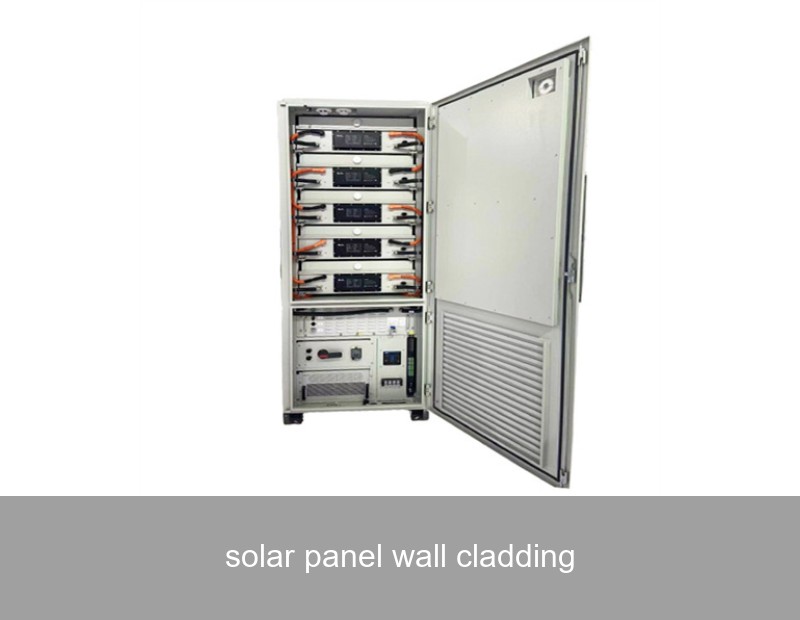
- Highjoule HiveStack™ BESS: Our scalable, modular battery systems are designed for seamless integration with both new and retrofit BIPV projects. They feature advanced thermal management for safety and longevity.
- AI-Powered Energy Management System (EMS): This is the true intelligence. Our EMS doesn't just store and release energy. It learns the building's load patterns, predicts solar generation from the facade (considering weather and orientation), and makes real-time decisions to optimize for cost, carbon, or resilience.
- Comprehensive Lifecycle Support: From initial feasibility modeling—helping you size the storage to match your cladding's output—to long-term performance monitoring and maintenance, we ensure your integrated system delivers for decades.

For a forward-thinking developer in Texas, we paired a stunning thin-film solar glass curtain wall with a 1 MWh HiveStack system. Our EMS was configured to prioritize demand charge reduction in the intense summer months, saving the owner over $75,000 in the first year alone.
The Future & Your Next Step
The technology for solar cladding is advancing rapidly, with efficiencies rising and costs falling. The International Energy Agency (IEA) highlights the untapped potential of building surfaces in the clean energy transition. The question is no longer "Can we build beautiful solar walls?" but "How do we make them a reliable, core part of our building's energy infrastructure?"
This requires a shift in thinking—from viewing BIPV as a standalone feature to designing it as part of a holistic, smart energy system from the outset. The most successful projects involve architects, cladding suppliers, and energy storage experts like Highjoule in the earliest planning phases.
Is your next commercial or institutional project considering a statement in sustainability? What specific energy challenge—be it peak demand charges, resilience goals, or a strict carbon mandate—could be solved by turning your building's facade into an intelligent power plant?
 Inquiry
 Online Chat