


How Much Can Solar Panels Really Save You? A Real-World Breakdown
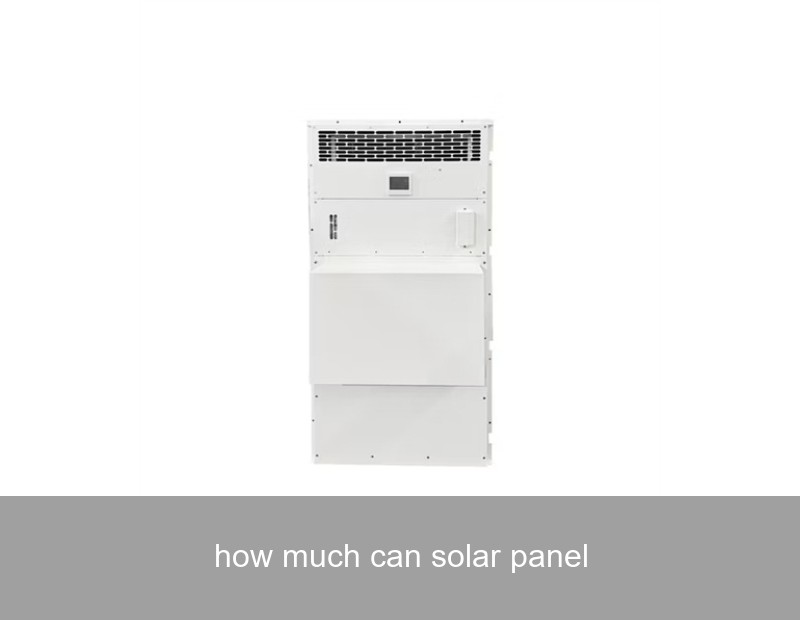
You've seen the ads and heard the neighbors talk about it: slashing your electricity bill with solar panels. But when you dig deeper, the question becomes more nuanced. It's not just "how much can solar panels save?" but "how much can solar panels deliver in reliable, usable power for my home or business?" The true answer lies not only on your roof but in how intelligently you store and manage that precious solar energy. This is where modern solar storage systems transform a good investment into a great one, maximizing every kilowatt-hour your panels produce.
Table of Contents
The Phenomenon: From Sunlight to Savings
Imagine your rooftop solar panels as a diligent, silent workforce. They clock in at sunrise, peak at noon, and clock out at dusk. The energy they produce is immediate – it's used instantly in your home, with any excess traditionally sent back to the grid (often for a modest feed-in tariff). But here's the catch: your energy consumption doesn't always match this solar work schedule. You likely need more power in the early morning and evening when the sun is low. This mismatch is the fundamental limit of a solar-only system.
So, how much can solar panels save on their own? In regions with favorable net metering policies, savings can be significant, potentially offsetting 50-70% of your grid consumption. However, net metering rules are evolving rapidly in both the US and Europe, often reducing the credit you receive for exported power. This shift makes self-consumption – using your own solar energy directly – more valuable than ever.
The Data: Understanding Your Solar Potential
Let's ground this in numbers. Key factors determining your solar output include:
- Location & Insolation: A home in Southern California or Southern Spain will generate more than one in Washington state or Northern Germany. The Global Solar Atlas provides excellent, free insights into your local solar potential.
- System Size & Orientation: A typical residential system in the US is 6-10 kW. South-facing roofs (in the Northern Hemisphere) with a 30-35 degree tilt are ideal.
- Energy Rates: Your savings are directly tied to the cost of grid electricity you're displacing. With rising energy prices across Europe and parts of the US, the value of each self-consumed kWh has skyrocketed.
| System Size | Estimated Annual Production (Sunny Region) | Estimated Annual Production (Moderate Region) | Potential Annual Grid Offset* |
|---|---|---|---|
| 6 kW | 9,000 - 10,500 kWh | 6,000 - 7,200 kWh | 60-75% |
| 10 kW | 15,000 - 17,500 kWh | 10,000 - 12,000 kWh | 80-95%+ (with storage) |
*Offset depends heavily on consumption patterns and storage. Source: Highjoule analysis based on NREL and PVGIS data.

The data shows a clear picture: a well-sized system can cover a major portion of your needs. But to push that offset toward 95% or even achieve full energy independence, you need to address the timing problem. This is where the story gets truly powerful.
The Game Changer: Adding Storage to the Equation
Think of a solar battery storage system as your personal energy reservoir. Instead of sending surplus midday solar energy away, you store it for when you need it most – at night, on cloudy days, or during peak rate periods when grid electricity is most expensive.
This simple addition changes the entire economics and resilience of your solar investment. Suddenly, you're not just saving money; you're building a predictable, controllable energy asset. For businesses, this can mean avoiding crippling demand charges. For homeowners, it means peace of mind during grid outages and protection from volatile energy markets.
How Storage Amplifies "How Much" You Can Save:
- Maximizes Self-Consumption: Use 70-80% of your solar production directly, up from 30-50% in many solar-only setups.
- Time-of-Use (TOU) Arbitrage: In areas with TOU rates (common in California and parts of Europe), store cheap solar or off-peak grid energy to use during expensive peak hours.
- Backup Power: Maintain critical loads during a blackout—a feature whose value is immeasurable during severe weather events.
A Real-World Case Study: The German Bakery
Let's look at a concrete example from Bavaria, Germany. "Bäckerei Schmidt" (a pseudonym for a real customer) is a medium-sized artisan bakery with high energy needs for ovens, refrigeration, and lighting. Their challenge was high grid consumption, especially in the early morning before sunrise, and steep demand charges.
- Installed System: 45 kW rooftop solar + a 40 kWh Highjoule HES Series commercial battery storage system with intelligent energy management.
- Result: Within the first year:
- Grid electricity consumption reduced by 81%.
- Solar self-consumption rate increased to 92% (from an estimated 48% without storage).
- Peak demand from the grid was slashed by over 60%, dramatically cutting demand charges.
- The system provided seamless backup for refrigeration, preventing spoilage during two brief grid interruptions.
"For us, the question wasn't just 'how much can solar panels save,' but 'how can we make our energy costs predictable and our operations resilient,'" the bakery's owner noted. "The battery system turned our solar array from a partial solution into the core of our energy strategy." This case, supported by data from the Fraunhofer Institute for Solar Energy Systems, highlights the transformative impact of integrated solar and storage.
The Highjoule Solution: Intelligent Energy Independence
At Highjoule, with nearly two decades of experience since 2005, we've learned that hardware is only part of the answer. The true potential of your solar investment is unlocked by intelligent integration and management. Our systems are designed to answer the "how much" question with maximum results.
For residential clients, our HES Home series features scalable, high-cycle life lithium iron phosphate (LiFePO4) batteries managed by the Highjoule Energy OS. This platform doesn't just store energy; it learns your household patterns, integrates with time-of-use rates, and can even prioritize charging from solar during the sunniest periods. It gives you a single, clear interface to see exactly how much energy your panels produce, store, and save you.

For commercial and industrial applications, our HES C&I solutions offer robust, containerized or modular storage. These systems are engineered for peak shaving, demand charge management, and providing microgrid stability. We partner with businesses to conduct detailed energy audits, modeling precisely how much solar and storage they need to meet specific financial and operational goals, just like we did for the bakery in our case study.
Practical Steps to Maximize Your Solar Savings
So, what can you do to ensure you get the most out of your solar panels?
- Audit First: Understand your energy consumption profile. Look at your hourly or monthly usage data from your utility. When are your peaks?
- Size for Your Needs, Not Just Your Roof: Work with an installer who models future consumption (like adding an EV) and values self-consumption over sheer system size.
- Plan for Storage from Day One: Even if you phase the purchase, design your solar system with DC-coupled battery readiness. This can improve overall efficiency and reduce future costs.
- Choose an Intelligent System: Opt for storage with smart software that can adapt to changing tariffs and your usage. The brain of the system is as important as the battery cells.
- Consider the Long-Term Ecosystem: Your energy system might one day power your EV or integrate with a community microgrid. Choose a platform, like Highjoule's, built for future flexibility.
For more on system sizing and storage benefits, the U.S. Department of Energy's guide is a valuable resource.

The journey to energy independence is unique for every home and business. The ultimate answer to "how much can solar panels save" is now in your hands, defined by the intelligence of the system you build around them. What will your first step be towards not just generating solar energy, but truly commanding it?
 Inquiry
 Online Chat