


Solar Inverter Solutions: The Intelligent Heart of Your Modern Energy System
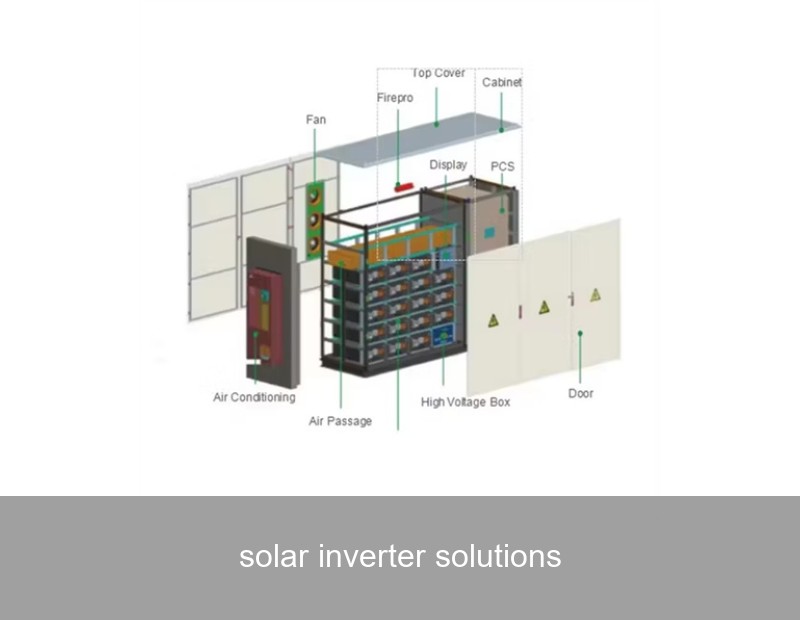
Have you ever wondered what truly makes your solar panels "smart"? While the panels capture sunlight, it's the solar inverter solutions that perform the critical magic of converting that raw solar power into usable electricity for your home or business. As energy prices fluctuate and grid reliability becomes a growing concern, particularly in Europe and the US, the choice of inverter technology is no longer an afterthought—it's the central decision that defines the efficiency, resilience, and intelligence of your entire energy setup. This article dives deep into modern solar inverter technology, explaining why it's the cornerstone of a truly sustainable and cost-effective power system.
Table of Contents
- The Phenomenon: From Simple Conversion to System Intelligence
- The Data: Why Your Inverter Choice Matters More Than Ever
- The Case Study: A German Manufacturing Plant's Journey to Resilience
- The Insight: Key Features of Future-Proof Solar Inverter Solutions
- Highjoule's Role: Delivering Integrated Energy Intelligence
- What's Your Energy Independence Blueprint?
The Phenomenon: From Simple Conversion to System Intelligence
Gone are the days when a solar inverter's sole job was to convert Direct Current (DC) from panels to Alternating Current (AC) for your appliances. Today's solar inverter solutions are sophisticated energy managers. Think of them as the brain and central nervous system of your power network. They must now handle bidirectional power flow (especially with electric vehicles), communicate with the grid, manage battery storage, optimize self-consumption, and ensure system safety. The rapid rise of decentralized energy and complex tariff structures has thrust advanced inverters into the spotlight.

This shift from a component to a solution is crucial. A standalone inverter might suffice for a simple setup, but holistic solar inverter solutions encompass hardware, software, grid services compatibility, and seamless integration with storage. This is the foundation for true energy independence.
The Data: Why Your Inverter Choice Matters More Than Ever
Let's look at the numbers. According to the U.S. Department of Energy's Solar Energy Technologies Office, inverter efficiency and functionality directly impact the levelized cost of energy (LCOE). A drop in conversion efficiency from 98% to 95% can result in significant energy losses over a system's 25-year lifespan.
More compelling is the data around self-consumption and resilience. A standard system without smart inverter capabilities might export 60% of its production to the grid, often at low rates. In contrast, a system with an intelligent inverter solution paired with storage can increase self-consumption to over 80%, shielding the owner from peak utility prices. For commercial and industrial (C&I) users, this isn't just about savings; it's about operational continuity. The Lawrence Berkeley National Laboratory has documented that power outages cost the U.S. economy billions annually, making backup power a critical investment.
| Feature | Basic Inverter | Advanced Inverter Solution |
|---|---|---|
| Peak Conversion Efficiency | 95-97% | >98.5% |
| Energy Self-Consumption (Typical Home) | 30-40% | 70-85% (with storage management) |
| Grid Services Support (Frequency Regulation) | No | Yes |
| Seamless Backup Power | Usually not available | Yes (islanding capability) |
| System Monitoring & Diagnostics | Basic | Comprehensive, AI-enhanced |
The Case Study: A German Manufacturing Plant's Journey to Resilience
Let's examine a real-world application. A mid-sized automotive parts manufacturer near Stuttgart, Germany, faced two challenges: volatile energy costs and stringent requirements for production line uptime. Their existing solar array, with conventional inverters, covered base load but offered no protection during grid outages and exported excess power at non-optimal rates.
In 2023, they deployed a comprehensive solar inverter solution centered on Highjoule's C&I energy management platform. The project involved:
- Upgrading to Highjoule's HI-Power 3-Phase Commercial Inverters, known for their 98.6% peak efficiency and robust grid-forming capability.
- Integrating a 500 kWh Highjoule battery storage system (BESS).
- Implementing Highjoule's OptiLoop AI-driven energy management software to forecast production, consumption, and grid prices.
The results after one year were telling:
- Energy Cost Reduction: Overall electricity costs decreased by 68%, driven by a self-consumption rate increase from 35% to 89%.
- Revenue Generation: The system's ability to provide grid frequency containment reserve (FCR) services generated approximately €15,000 in annual ancillary revenue.
- Resilience Achieved: The plant seamlessly rode through three grid disturbances, preventing an estimated €200,000 in production line stoppage costs.
This case underscores that modern solar inverter solutions are economic and resilience engines, not just conversion devices.

The Insight: Key Features of Future-Proof Solar Inverter Solutions
Based on market trends and cases like the one above, what should you look for? Here are the non-negotiable features of a cutting-edge solution:
1. Grid-Forming Capability
This is paramount for backup power. Unlike traditional grid-following inverters that shut down when the grid fails, grid-forming inverters can create a stable "island" microgrid to power critical loads independently. This feature is becoming standard for resilience-focused installations in both the US and Europe.
2. Hybrid and Storage-Ready Design
A true solution is built for storage from the ground up. It should have dedicated, high-efficiency DC coupling for batteries, minimizing conversion losses. Look for inverters that can communicate natively with major battery brands for optimized charge/discharge cycles.
3. Advanced Software and Monitoring
The hardware is only as good as its software. The platform should offer intuitive monitoring, detailed analytics, and ideally, predictive capabilities using AI to maximize financial returns based on weather and tariff forecasts.
4. Compliance and Grid Support
In Europe, compliance with grid codes like VDE-AR-N 4105 (Germany) or CEI 0-21 (Italy) is essential. In the US, UL 1741 SA certification is key. These ensure your system can safely support the grid by providing services like voltage and frequency regulation, making it a community asset.
Highjoule's Role: Delivering Integrated Energy Intelligence
At Highjoule, we understand that a superior inverter is the core, but it's the integrated system that delivers value. Since 2005, we've evolved from a component supplier to a provider of end-to-end intelligent solar inverter solutions. Our approach is holistic:
- For Residential Users: Our HI-Sun Home Hub is an all-in-one inverter and storage manager that simplifies energy independence. It pairs seamlessly with our home battery packs and offers an app that lets homeowners optimize for self-consumption or grid revenue.
- For Commercial & Industrial Clients: The HI-Power Series offers scalable, modular inverters designed for demanding environments. Coupled with our OptiLoop software and large-scale BESS, we deliver turnkey systems that cut costs and ensure uptime.
- For Microgrids & Utilities: Our utility-grade solutions feature advanced grid-forming technology and fleet management software, enabling the creation of stable, renewable-powered microgrids and virtual power plants (VPPs).
Our solutions are designed with the specific grid requirements and market dynamics of North America and Europe in mind, ensuring compliance, performance, and maximum return on investment. We don't just sell hardware; we deliver a guaranteed energy outcome.

What's Your Energy Independence Blueprint?
The landscape of energy is shifting from passive consumption to active management. Your solar inverter is the pivotal technology in that shift. It determines whether your system is a simple cost-saver or an intelligent, revenue-generating, resilience-building asset. As you consider upgrading your existing setup or planning a new installation, ask yourself: Does my plan account for future storage expansion? Can my system provide backup power when the grid is unstable? Is it intelligent enough to adapt to changing energy tariffs and policies? The answers lie in choosing a comprehensive solar inverter solution, not just an inverter. What is the first step you will take to audit the intelligence and resilience of your current or planned energy system?
 Inquiry
 Online Chat