


Finding the Right 330W Solar Cell for Sale: Your Guide to Efficiency and Value
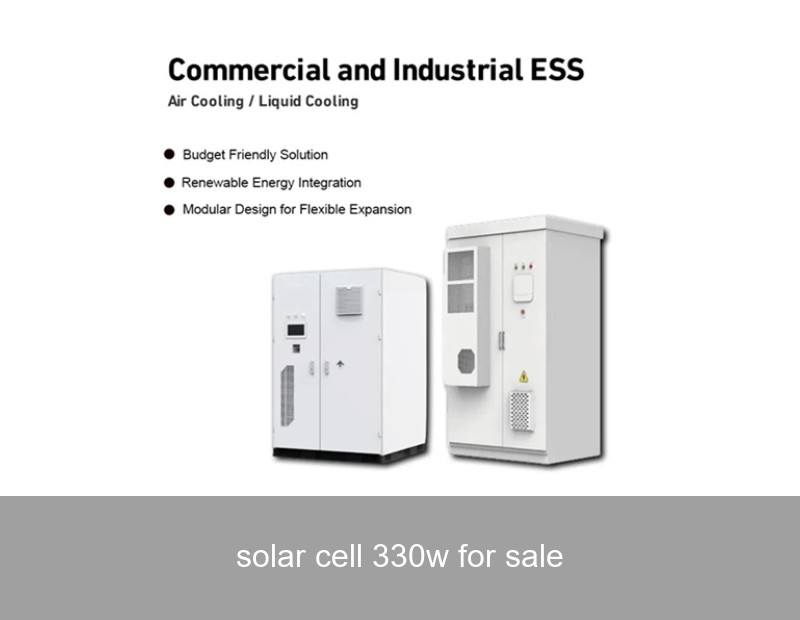
If you're browsing for a "solar cell 330w for sale," you're likely in the planning stages of a solar project that demands a specific balance of power, space efficiency, and cost. The 330-watt panel has become a sweet spot in the market, offering a robust output suitable for everything from residential expansions to commercial arrays. But in a sea of online listings, how do you ensure you're investing in quality, durability, and long-term performance, not just a sticker wattage? This guide will illuminate the key considerations, moving beyond the basic specs to help you build a smarter, more resilient energy system.
Table of Contents
Understanding the 330W Solar Cell: More Than Just a Number
A 330-watt rating represents the panel's power output under Standard Test Conditions (STC). It's a reliable, mid-to-high power class that efficiently utilizes rooftop or ground space. But here's the phenomenon many encounter: two panels, both labeled 330W, can deliver drastically different real-world energy yields and have vastly different lifespans. Why? Because the cell technology, manufacturing quality, and degradation rate are what truly define value.
Most modern 330W panels use monocrystalline silicon cells, often in a half-cut or split-cell design. This design reduces internal resistance and minimizes power loss from partial shading. When you see a "solar cell 330w for sale," it's prudent to verify the cell type. Monocrystalline PERC (Passivated Emitter and Rear Cell) technology is now industry-standard for high-efficiency modules, typically offering efficiencies above 19%. This means you get more power from the same footprint—a crucial factor for space-constrained installations.

Image Source: Unsplash - High-efficiency monocrystalline solar cells.
Key Specifications to Scrutinize Beyond Wattage
To make an informed decision, look at the data sheet. These metrics tell the real story:
- Temperature Coefficient: How much does power drop on a hot day? A coefficient of -0.35%/°C is better than -0.41%/°C. In sunny climates, this difference translates to significant annual energy gains.
- Performance Warranty: Top-tier manufacturers guarantee 90-92% output after 10 years and around 85% after 25 years. A cheap panel might only guarantee 80% after 25 years, a substantial long-term loss.
- Product Warranty: Look for a minimum 12-year product warranty, with leading brands offering 15-25 years.
- NOCT (Nominal Operating Cell Temperature): This gives a more realistic power rating (e.g., 245W) under real-world operating conditions, which is a better indicator of daily performance than STC.
Selecting panels with superior specs is the first step. However, the true performance of your "solar cell 330w for sale" find is unlocked only when integrated into a perfectly balanced system. This is where expertise matters most.
The Critical Step: System Integration and Balance
Think of your solar panels as the heart, but they need a healthy circulatory system—the inverter, wiring, monitoring, and mounting—to function. A common pitfall is pairing high-efficiency panels with a low-quality or mismatched inverter, throttling the entire system's output. For a string of 330W panels, you need an inverter that not only matches the total system voltage and current but also handles the specific power profile efficiently.
This is a core principle at Highjoule. As a global provider of advanced energy storage and management solutions since 2005, we understand that optimal solar harvest requires intelligent integration. Our approach goes beyond just components; we provide holistic smart, efficient, and sustainable power solutions. For commercial and industrial projects leveraging high-power panels like the 330W class, our Highjoule Energy Management System (EMS) ensures every kilowatt-hour generated is optimized for self-consumption, stored, or fed back to the grid based on real-time economics and load demand.
From Panel to Power Plant: A Real-World Case Study
Let's ground this discussion with data. Consider a mid-sized fruit-packing warehouse in Southern Spain, a region with high solar insolation but also significant grid dependency and peak demand charges.
- Challenge: Reduce daytime operational energy costs and provide backup for critical refrigeration.
- Solution: A 250 kW DC rooftop system using ~760 units of high-quality 330W monocrystalline PERC panels. The key differentiator was coupling the array not with a standard inverter setup, but with a Highjoule Containerized Battery Energy Storage System (BESS) and our proprietary EMS.
- Data & Outcome:
- The solar array generates an average of 385 MWh annually.
- The Highjoule BESS (with 500 kWh capacity) stores excess midday solar for use during evening operational peaks, shaving over 40% off peak demand charges.
- The EMS intelligently dispatches power, prioritizing solar for immediate use, then charging the battery, and only then exporting. This maximized self-consumption to over 72%.
- The project achieved a payback period of under 6 years, with IRENA noting that solar-plus-storage paybacks in commercial applications are increasingly attractive.
This case illustrates that the value of your "solar cell 330w for sale" multiplies when it's part of an intelligent ecosystem. The panels generate the fuel, but smart storage and controls deliver the financial and operational resilience.

Image Source: Unsplash - Industrial battery storage system.
Future-Proofing Your Investment with Smart Storage
Solar generation is intermittent. To truly achieve energy independence and maximize the return from every 330W panel, integrating storage is no longer a luxury—it's a strategic upgrade. Highjoule's residential and commercial battery systems are designed for this exact purpose.
Our H-Joule HomePower series, for instance, seamlessly integrates with new or existing solar arrays. It stores surplus 330W panel production for use at night, during outages, or during high-tariff periods. For larger-scale applications, our modular Industrial BESS can be scaled from hundreds of kWh to multiple MWh, turning a solar installation into a dispatchable power asset. According to a report by NREL, coupling solar with storage enhances grid value and reliability significantly.
Making Your Informed Choice
So, when you evaluate a "solar cell 330w for sale," think systemically. Ask the vendor not just about the panel's datasheet, but about compatibility with advanced inverters and storage solutions. Inquire about the long-term performance data and the support ecosystem for the entire energy asset.
Highjoule stands as your partner in this journey. We don't sell standalone panels, but we provide the critical intelligence and storage that transforms those panels into a reliable, money-saving, and sustainable power plant for your home or business. Our solutions ensure that the high-quality energy harvested by your 330W cells is never wasted.
Ready to see how your solar project, starting with those efficient 330W cells, can be elevated with intelligent storage and management? What is the biggest energy challenge you're hoping to solve—reducing peak demand charges, achieving backup power, or simply maximizing self-consumption?
 Inquiry
 Online Chat