


Smart Uninterruptible Power Supply: The Guardian of Your Critical Operations
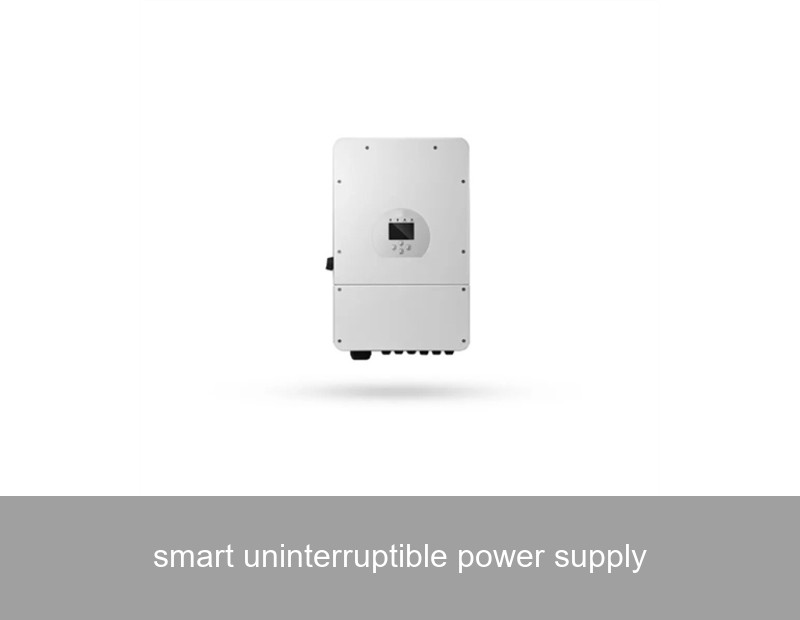
Imagine you're in the middle of a critical video conference, finalizing a complex data analysis, or performing a delicate medical procedure. Suddenly, the lights flicker and your screen goes black. A power outage. For most of us, this is a frustrating inconvenience. But for businesses, hospitals, data centers, and research facilities, it can mean catastrophic data loss, halted production, or even life-threatening situations. This is where the traditional Uninterruptible Power Supply (UPS) has long been a hero. But in our increasingly connected and data-driven world, a simple backup is no longer enough. Enter the Smart Uninterruptible Power Supply – the intelligent evolution designed not just to keep the lights on, but to optimize, communicate, and integrate with the future of energy.
What is a Smart Uninterruptible Power Supply?
A Smart Uninterruptible Power Supply (Smart UPS) goes far beyond its basic ancestor's sole function of providing emergency battery power during an outage. It is a sophisticated, connected device that combines robust power protection with intelligent software and communication capabilities. Think of it as the difference between a simple nightlight and a fully integrated smart home lighting system. A Smart UPS continuously monitors power quality, manages its own battery health, communicates status updates to users and IT managers, and can even be integrated into broader energy management systems. For organizations across Europe and the US, this intelligence is becoming non-negotiable for ensuring resilience, efficiency, and control.
The Phenomenon: Our Modern Power Vulnerability
Our reliance on a flawless, 24/7 power supply has never been greater. The digital transformation of industries, the rise of remote work, and the critical nature of IoT infrastructure have made power quality a top-tier business concern. Yet, the grid is facing new pressures. From more frequent extreme weather events in the US impacting stability to the strategic integration of variable renewable sources like wind and solar across Europe, the traditional grid is evolving—and with that evolution comes new challenges for consistent power delivery.
Common power problems include not just blackouts, but sags, surges, harmonics, and frequency variations. Each of these can silently damage sensitive equipment, corrupt data, and cause unexpected shutdowns. A basic UPS might handle a total outage, but what about these subtle, yet damaging, events?
The Data: The Staggering Cost of Downtime
Let's talk numbers, because they paint a compelling picture for the need for intelligent power management. According to a Ponemon Institute report, the average cost of a data center outage in 2022 reached a staggering $9,000 per minute. For a small or medium-sized business, even a short 30-minute outage can result in tens of thousands of dollars in lost revenue, productivity, and recovery efforts. In sectors like manufacturing or healthcare, the costs are measured not just in currency, but in safety and compliance risks.
This financial exposure makes the proactive, monitored, and managed approach of a Smart UPS not just a technical upgrade, but a strategic financial decision.
The Evolution: From Basic UPS to Smart UPS
The journey from a basic UPS to a Smart UPS is marked by the addition of brains to brawn.
- The Basic UPS (The Reactive Box): Sits silently, only springing into action during a power failure. You often don't know its battery health until it fails to perform.
- The Smart UPS (The Proactive Partner): Constantly analyzes input power, battery status, and load capacity. It can send alerts via email, SMS, or network management systems (like SNMP) for events ranging from "Utility Power Failed" to "Battery Needs Replacement in 30 Days." This predictive capability is a game-changer.
This is precisely the philosophy behind Highjoule's approach to energy resilience. As a global leader in advanced energy storage systems since 2005, Highjoule designs solutions that are inherently intelligent. Our H-Series Commercial UPS line, for example, is built from the ground up as a smart system. It features integrated remote monitoring via a cloud-based dashboard, allowing facility managers in London or Chicago to check the status of their power protection infrastructure in real-time, receive predictive maintenance alerts, and generate efficiency reports—all from a single pane of glass.
The Smart UPS Advantage: Key Features
What specific capabilities should you look for in a modern Smart UPS?
| Feature | Basic UPS | Smart UPS | Business Benefit |
|---|---|---|---|
| Monitoring & Alerts | Limited or none | Comprehensive (Power, Battery, Load, Temperature) | Prevents surprises, enables proactive maintenance. |
| Remote Management | Physical inspection required | Cloud or network-based control interface | Saves time and cost, enables management of distributed sites. |
| Battery Management | Simple charge/discharge | Advanced Battery Management System (BMS) for longevity | Extends battery life, reduces TCO, ensures reliability. |
| Integration Capability | Stand-alone device | API, Modbus, or other protocols for BMS/SCADA integration | Becomes part of a holistic facility energy strategy. |
| Efficiency & Eco-Mode | Often fixed efficiency | High-efficiency modes (e.g., ECOnomic mode) that adapt to conditions | Significantly reduces energy costs and carbon footprint. |

Image Source: Unsplash (Representative image of a modern data center setup)
A Real-World Case Study: Securing a German Medical Research Facility
Let's look at a concrete example from our work at Highjoule. A leading medical research institute in Munich, Germany, was experiencing issues with sensitive laboratory equipment. Microscopes, DNA sequencers, and climate-controlled storage units were suffering from micro-outages and voltage fluctuations inherent to their urban grid, leading to corrupted experiments and lost samples. Their existing, aging UPS units provided no visibility into these events.
The Solution: Highjoule deployed a tailored system featuring our H-Series Smart UPS units with lithium-ion battery packs. The key differentiator was the integrated Highjoule Energy Management Platform (HEMP) software.
The Outcome:
- The Smart UPS system immediately began logging over 12 minor power events per week that were previously invisible.
- Researchers received automatic alerts on their phones if lab power conditions deviated from set parameters, allowing them to pause sensitive procedures.
- The facility manager used the HEMP dashboard to confirm 100% power availability for critical cold storage, a vital compliance requirement.
- Projected battery replacement cycles extended from 3-5 years (with lead-acid) to over 10 years with the Li-ion solution, reducing long-term waste and cost.
This case, detailed in a study on lab power reliability, underscores how a Smart UPS transitions from being a cost center to a value-generating, data-producing asset.
The Future: Integrating Renewables and Smart Grids
The true potential of Smart UPS technology is unlocked when it interacts with the broader energy ecosystem. This is where Highjoule's expertise in renewable energy and battery storage systems (BESS) truly shines. A Smart UPS with a sufficiently large battery bank can do more than just backup; it can participate in demand charge management, store excess solar energy for use at night, and provide grid services.
Imagine a manufacturing plant in California with a rooftop solar array. A Highjoule Integrated Power System (IPS) can combine solar inverters, a Smart UPS, and a large-scale BESS into one coordinated system. During the day, solar powers operations and charges the batteries. During a peak demand period or a grid outage, the system seamlessly switches to battery power, avoiding costly demand charges and ensuring production continuity. This transforms the Smart UPS from an isolated protector into the brain of a site's energy resilience and economic strategy.

Image Source: Unsplash (Representative image of commercial solar integration)
Choosing the Right Smart UPS Solution
Selecting a Smart UPS isn't just about kVA rating. It's about choosing a platform. Ask yourself and your provider:
- Scalability: Can the system grow with my needs, from a single rack to an entire microgrid?
- Openness: Does it use standard communication protocols for easy integration into my existing building or energy management systems?
- Total Cost of Ownership (TCO): Have I factored in energy efficiency savings, extended battery life, and reduced maintenance costs?
- Vendor Expertise: Does the provider understand the intersection of power protection, renewables, and software?
At Highjoule, we engineer our products with these questions in mind. Our solutions for commercial, industrial, and microgrid applications are designed to be modular, connected, and future-proof, ensuring your investment protects you today and empowers you tomorrow.
As you look at your own operations, what is the one process or piece of data that a 15-minute power interruption would put at an unacceptable risk? Understanding that answer is the first step toward building a truly resilient and intelligent power infrastructure.
 Inquiry
 Online Chat