


SCADA Systems in Energy: The Brain Behind Modern Grid Stability and Renewable Integration
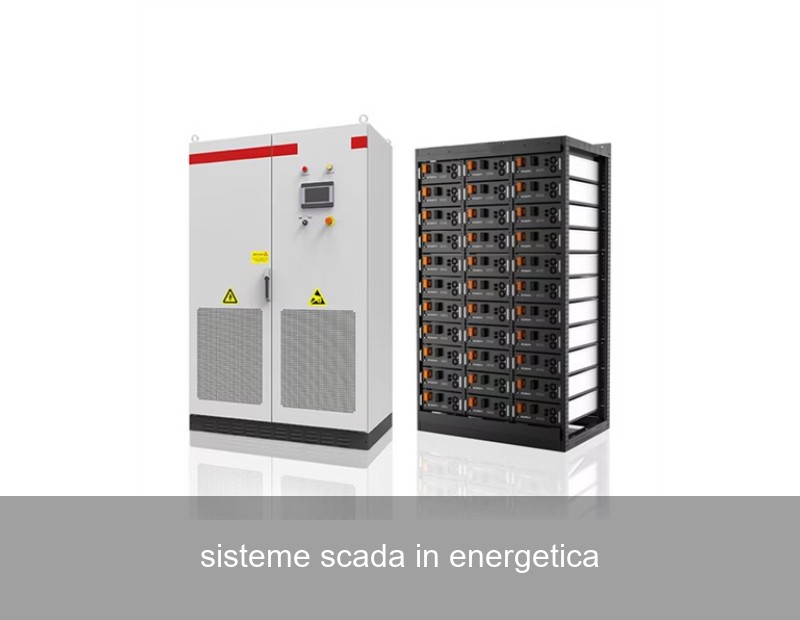
Imagine a power grid stretched across a continent, humming with energy from sprawling solar farms, towering wind turbines, and vast battery warehouses. Now, imagine managing this colossal, dynamic system in real-time, preventing outages, and balancing supply with ever-changing demand. This isn't science fiction; it's the daily reality made possible by SCADA systems in energy. For utilities, grid operators, and renewable energy project developers, SCADA (Supervisory Control and Data Acquisition) has evolved from a simple monitoring tool to the indispensable central nervous system of the modern energy landscape. As we integrate more variable renewables, this digital brain is what keeps the lights on, the grid stable, and our energy transition on track.
Table of Contents
- What is a SCADA System in the Energy Sector?
- Why SCADA is Now More Critical Than Ever
- Key Components & How It Works: A Simplified View
- The Renewables Challenge: SCADA as the Integration Enabler
- Case Study: Grid Stability in Germany's Renewable Heartland
- The Role of Advanced Battery Storage (BESS) and SCADA
- Future Trends: AI, Cybersecurity, and Distributed Control
- Making the Right Choice for Your Energy Assets
What is a SCADA System in the Energy Sector?
At its core, a SCADA system is a collection of hardware and software components designed for one overarching purpose: supervisory control and data acquisition. In the energy world, this translates to gathering real-time data from thousands of sensors and intelligent devices (RTUs, PLCs) spread across power plants, substations, transmission lines, and now, distributed assets like wind farms and solar parks. This data—voltage, current, power output, switch status, temperature—flows to a central master station, presenting operators with a clear, graphical overview of the entire grid on their HMIs (Human-Machine Interfaces).
But SCADA is more than a fancy dashboard. It allows for remote control: an operator in a control room hundreds of miles away can safely open or close a circuit breaker, adjust transformer taps, or curtail power from a renewable source based on the system's needs. This capability is fundamental for managing complex, geographically dispersed infrastructure efficiently and responding to events in seconds, not hours.
Why SCADA is Now More Critical Than Ever
The shift from centralized, fossil-fuel-based generation to a decentralized, renewable-heavy grid has turned grid management into a high-speed puzzle. The "set-it-and-forget-it" model is obsolete. Consider these data points:
- Intermittency: Solar and wind generation can fluctuate dramatically with weather, creating volatile supply.
- Bidirectional Flow: Power no longer flows one-way from plant to consumer. Prosumers with rooftop solar can inject excess power back, complicating voltage and frequency control.
- Grid Frequency Stability: Grids like the European Continental Grid must maintain a strict 50 Hz frequency. Large deviations can cause cascading blackouts. In 2021, a report by the European Network of Transmission System Operators (ENTSO-E) highlighted the increasing need for faster automated reserves to counteract renewable variability.
Without a sophisticated SCADA system capable of high-speed data processing and automated control loops, managing these complexities would be impossible. It is the foundational technology for grid resilience.
Key Components & How It Works: A Simplified View
Let's break down the anatomy of a modern energy SCADA system:
| Component | Role in Energy | Example |
|---|---|---|
| Field Devices (Sensors, Meters) | Eyes and ears on the ground. | PV string inverters, battery management system (BMS) sensors, grid connection point meters. |
| Remote Terminal Units (RTUs)/PLCs | Local brains that collect data and execute control commands. | An RTU at a substation collecting breaker statuses and voltage levels. |
| Communication Infrastructure | The nervous system carrying signals. | Fiber optics, secure radio, or satellite links connecting a remote wind farm to the control center. |
| SCADA Master Station | The central brain and command center. | Software servers located at the Transmission System Operator's (TSO) primary control room. |
| Human-Machine Interface (HMI) | The intuitive window into the system for operators. | Large video walls and workstations displaying a single-line diagram of the grid with real-time color-coded statuses. |
The process is a continuous loop: Data Acquisition → Communication → Presentation → (Automated or Manual) Decision & Control. Advanced systems now incorporate predictive analytics and AI, moving from reactive to proactive management.
The Renewables Challenge: SCADA as the Integration Enabler
Integrating a 300 MW solar farm isn't just about connecting cables. The grid operator needs visibility and control. This is where specialized SCADA solutions for renewable plants come in. They aggregate data from every inverter, tracker, and weather station, providing a unified view of plant health and performance. More importantly, they receive automatic generation control (AGC) signals from the TSO. If the grid is overloaded, the TSO can send a signal via the SCADA system to curtail the solar farm's output by a precise amount, almost instantly.
This level of integration is non-negotiable for large-scale renewable adoption. It turns a variable energy source into a predictable, dispatchable grid asset. For commercial and industrial entities investing in on-site generation, a robust SCADA system is equally vital for energy management, optimizing self-consumption, and participating in grid service markets.
The Highjoule Perspective: Where Advanced BESS Meets Intelligent SCADA
This is precisely where Highjoule's expertise becomes pivotal. We see the battery energy storage system (BESS) not just as a container of batteries, but as a high-speed, grid-responsive asset. Our containerized and modular BESS solutions are designed with SCADA integration as a first principle. The Highjoule Energy Management System (EMS), which acts as the plant-level SCADA master, seamlessly communicates with our battery racks, power conversion systems (PCS), and climate controls.
For a developer or grid operator, this means our BESS appears as a single, highly controllable unit on their wider grid SCADA. They can send commands to charge, discharge, or provide frequency response, and our system executes them with millisecond-level precision. This deep integration ensures that storage assets, which are crucial for smoothing renewable fluctuations, deliver their full value and reliability to the grid. Whether for a commercial microgrid in California or a utility-scale storage project supporting grid stability in Europe, Highjoule's intelligent systems provide the control layer that turns stored electrons into grid services.

Image Source: Unsplash (Representative image of a modern energy control room)
Case Study: Grid Stability in Germany's Renewable Heartland
Let's look at a real-world application. Germany's “Grid Control Cooperative” (GridControl e.V.) is a pioneering project involving multiple grid operators in regions with very high photovoltaic (PV) penetration, like Bavaria and Baden-Württemberg. The challenge: on sunny weekends, local distribution grids can be flooded with excess solar power, causing voltage rises that threaten equipment and force PV systems to shut off—wasting clean energy.
The Solution: A distributed SCADA-based control system was implemented. It connects to thousands of decentralized PV systems and battery storage units (including systems with SCADA-ready interfaces like Highjoule's). The system continuously monitors grid voltage at critical nodes.
The Data & Outcome: When voltage approaches the upper limit (e.g., 1.07 per unit), the SCADA system automatically sends curtailment signals to selected PV systems or charging signals to distributed batteries, absorbing the excess power. Data from a pilot phase showed a 30-50% reduction in critical voltage events, allowing more renewable energy to be integrated without costly grid reinforcement. This case, documented by the Fraunhofer Institute for Energy Economics, perfectly illustrates how SCADA systems are evolving into active network management tools, orchestrating millions of small assets for grid stability.
Future Trends: AI, Cybersecurity, and Distributed Control
The future of SCADA systems in energy is intelligent and decentralized. Three key trends are shaping its evolution:
- AI and Machine Learning: Future SCADA systems will not just display data but predict it. AI algorithms will forecast renewable output and load patterns, enabling SCADA to proactively schedule storage discharge or recommend grid topology changes.
- Paramount Cybersecurity: As SCADA systems become more connected, they are prime targets. The industry is shifting towards "security-by-design," with encrypted communications, zero-trust architectures, and continuous threat monitoring becoming standard—a principle Highjoule embeds in its EMS and system design.
- Edge Computing and Distributed Control: Instead of all decisions waiting for a central master, intelligence is moving to the "edge." A Highjoule BESS, for instance, can use its local EMS to autonomously perform frequency regulation based on local grid measurements, while still reporting to the central SCADA. This makes the grid more resilient and responsive.

Image Source: Unsplash (Representative image of critical infrastructure cybersecurity)
Making the Right Choice for Your Energy Assets
Whether you're a utility integrating a gigawatt-scale offshore wind cluster or a factory owner installing a solar-plus-storage system, your SCADA strategy is critical. Ask these questions:
- Interoperability: Does the system use open standards (like IEC 61850, Modbus, DNP3) to ensure it can talk to existing grid infrastructure and diverse equipment vendors?
- Scalability: Can it grow from managing a single asset to a portfolio of hundreds?
- Regulatory Compliance: Does it meet the grid code and data reporting requirements of your region (e.g., FERC in the U.S., ENTSO-E in Europe)?
- Vendor Expertise: Does your technology partner understand both the digital control layer and the physical energy assets?
At Highjoule, we bridge this gap. Our team provides not just cutting-edge hardware, but the software and integration expertise to ensure your storage or hybrid renewable project communicates effectively with the wider world. We help you turn your energy assets from passive participants into active, revenue-generating, grid-supporting pillars of the new energy system.
Your Grid, Your Control
The conversation around energy transition often focuses on solar panels and wind turbines. But the true unsung hero enabling this transition is the invisible layer of digital control—the SCADA systems in energy. As we build grids that are cleaner, more distributed, and more dynamic, the intelligence we embed within them will determine their success. What is the first step your organization can take to future-proof its assets with smarter, more integrated control?
 Inquiry
 Online Chat