


How a Smart Grid Management System Powers a Sustainable Energy Future
Imagine your electricity grid not as a one-way street, but as a dynamic, intelligent network. A network that can anticipate demand, instantly integrate power from your rooftop solar panels, store excess energy for a rainy day, and keep everything stable. This isn't science fiction; it's the reality being built today with smart grid management systems. For businesses, communities, and entire nations, this intelligence is the key to unlocking a resilient, efficient, and clean energy future. Let's explore how this digital brain is transforming how we generate, distribute, and consume power.
Table of Contents
- The Challenge: Our Aging Grid Meets the Renewable Revolution
- What is a Smart Grid Management System?
- Core Components of a Modern Smart Grid
- A Real-World Case: California's Grid Resilience
- Highjoule's Role in Enabling Smarter Grids
- The Future is Adaptive and Proactive
The Challenge: Our Aging Grid Meets the Renewable Revolution
Traditional power grids were designed for a simpler era: large, centralized power plants (like coal or nuclear) sending electricity in one direction to passive consumers. The meteoric rise of variable renewable energy (VRE) sources—primarily solar and wind—has turned this model on its head. These sources are fantastic for decarbonization, but they introduce unpredictability. The sun doesn't always shine, and the wind doesn't always blow. This variability can lead to:
- Grid Instability: Sudden drops in solar production (like when a cloud passes) can cause frequency fluctuations.
- Curtailment & Waste: Grid operators sometimes have to pay wind farms to shut down when production exceeds demand, wasting clean energy.
- Congestion: Local grids can become overloaded by midday solar influx, requiring costly infrastructure upgrades.
According to a 2021 IEA report, renewables are set to account for almost 95% of the increase in global power capacity through 2026. Our grid infrastructure simply must get smarter to handle this shift.
What is a Smart Grid Management System?
At its heart, a smart grid management system is an integrated suite of hardware and software that adds digital intelligence and two-way communication to every point in the electricity supply chain—from generation to transmission, distribution, and consumption. Think of it as the central nervous system for the entire energy network.

Its primary objectives are to:
- Enhance Reliability & Resilience: Quickly detect, isolate, and restore power after outages.
- Integrate Renewable Energy Seamlessly: Forecast production and balance it with demand in real-time.
- Empower Consumers: Provide users with data and automated controls to manage their energy use and costs.
- Improve Operational Efficiency: Optimize asset use, reduce losses, and defer costly physical upgrades.
Core Components of a Modern Smart Grid
Building this intelligence requires several layers of technology working in concert:
| Component | Function | Analogy |
|---|---|---|
| Advanced Metering Infrastructure (AMI) | Smart meters that provide real-time, two-way data on consumption and grid conditions. | The sensory nerves, sending constant feedback to the brain. |
| Distributed Energy Resources (DERs) | Rooftop solar, home batteries, electric vehicles (as mobile storage). | Localized power producers and storage units. |
| Energy Management Systems (EMS) & Distributed Energy Resource Management Systems (DERMS) | The software "brain" that monitors, controls, and optimizes grid and DER operations. | The central command center and its AI-powered planning tools. |
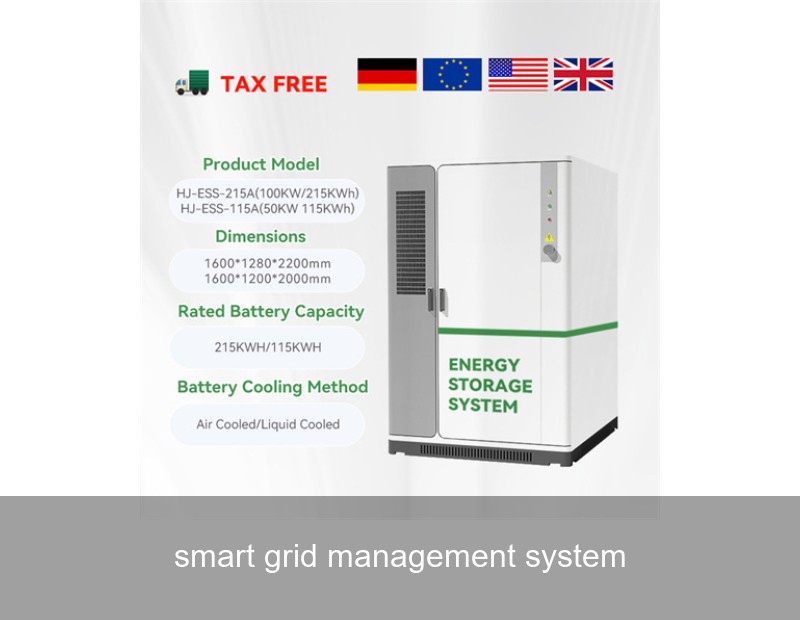
| Grid-Scale & Commercial Battery Energy Storage Systems (BESS) | Large-scale batteries that store excess renewable energy and provide critical grid services. | The grid's shock absorber and emergency reserve. |
This is where companies like Highjoule become pivotal. As a global leader in advanced energy storage since 2005, we don't just provide batteries; we provide the intelligent storage solutions that act as the cornerstone for a stable smart grid. Our Highjoule BESS platforms are designed to be grid-native, with advanced controls that allow them to respond to signals from a smart grid management system in milliseconds, providing frequency regulation, peak shaving, and renewable firming.
A Real-World Case: California's Grid Resilience
Let's look at a concrete example. California, a leader in solar energy, often faces the "duck curve" challenge—a steep ramp-up in demand as solar production drops in the evening. This stresses the grid and has historically increased reliance on fossil-fuel "peaker" plants.
The Project: To mitigate this, several large-scale battery storage projects have been deployed across the state. One notable example is the Monterey County Energy Storage Complex. While specific proprietary data is guarded, public reports from the California Independent System Operator (CAISO) tell a compelling story.
The Data & Outcome: In 2020, California had about 500 MW of grid-scale storage. By the end of 2023, that figure skyrocketed to over 6,600 MW. During a critical heatwave in September 2022, these batteries discharged a record 3,300 MW to the grid—equivalent to the output of three large nuclear reactors—precisely during the evening peak when solar was offline. This directly prevented rolling blackouts and reduced natural gas usage. The batteries, orchestrated by the state's evolving smart grid controls, charged from excess solar during the day and discharged when most needed, flattening the duck curve.

Highjoule's Role in Enabling Smarter Grids
For a smart grid management system to execute such precise commands, it needs highly responsive and reliable assets on the ground. Highjoule's solutions are engineered for this exact purpose.
Our IntelliBESS product line for commercial and industrial (C&I) applications and microgrids is more than just storage. It features an integrated Energy Management System (EMS) that can operate in multiple modes:
- Grid-Support Mode: Automatically responds to utility signals to reduce demand during peak periods (peak shaving), saving significant costs for businesses.
- Renewable Self-Consumption Optimization: Maximizes the use of on-site solar by storing excess generation for use at night.
- Backup Power Mode: Provides seamless, instantaneous power during grid outages, ensuring operational continuity.
For larger utility-scale and industrial projects, our GridMax BESS platform offers unparalleled power and scalability. Its advanced grid-forming inverter technology can actually help stabilize the grid's voltage and frequency, a critical capability as we retire traditional fossil-fuel plants that provided these services. This makes integrating the next gigawatt of wind or solar power not just possible, but stable and cost-effective.
In essence, Highjoule provides the intelligent, controllable muscle that brings the smart grid's digital brain to life.
The Future is Adaptive and Proactive
The next evolution of smart grid management systems lies in artificial intelligence and machine learning. Imagine a system that doesn't just react, but predicts. Using weather data, historical consumption patterns, and market prices, AI can forecast solar output and load demand with incredible accuracy, allowing the grid to optimize itself hours or days in advance.
Furthermore, the rise of vehicle-to-grid (V2G) technology will turn millions of EVs into a massive distributed storage network. Your electric car could sell power back to the grid during a high-price event, all managed autonomously by your home's energy manager and the wider smart grid management system.

Ready to Become an Active Part of the Smart Grid?
The transition to an intelligent energy network is underway. Whether you're a factory manager looking to cut energy costs and ensure uptime, a developer building a sustainable community, or a utility planner tasked with grid modernization, the question is no longer if you should participate, but how.
What role will your home, your business, or your community play in this dynamic new energy landscape? Could your energy assets become a source of revenue and resilience?
 Inquiry
 Online Chat