


Smart Devices to Save Energy: Your Guide to Smarter Consumption and Storage
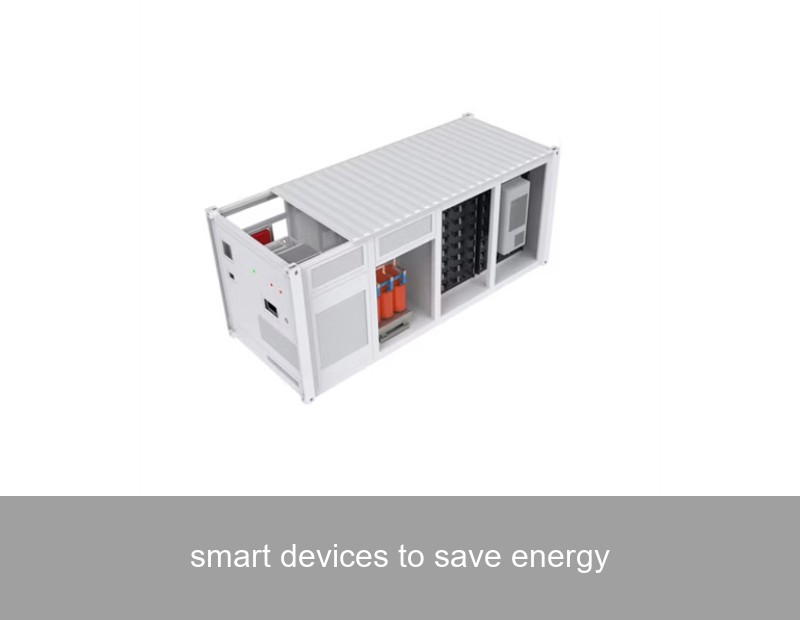
Have you ever looked at your electricity bill and wondered, "Where is all this energy going?" You're not alone. Across homes in Europe and the US, a quiet revolution is happening, moving us from passive consumption to intelligent energy management. At the heart of this shift are smart devices to save energy. But true energy intelligence isn't just about turning things off—it's about knowing when to use, when to save, and crucially, when to store energy. This is where the synergy between smart home gadgets and advanced energy storage systems creates not just savings, but resilience and independence.
Table of Contents
- The Phenomenon: Rising Bills, Rising Awareness
- The Data: How Much Can Smart Tech Really Save?
- The Smart Energy Hierarchy: From Monitoring to Mastery
- Case Study: A German Household's Journey to Energy Autonomy
- The Highjoule Nexus: Where Smart Devices Meet Advanced Storage
- Future-Proofing Your Energy Setup
The Phenomenon: Rising Bills, Rising Awareness
Let's face it, energy prices have been on a rollercoaster. According to the U.S. Energy Information Administration, the average price of electricity for U.S. residential customers has seen significant fluctuations, pushing homeowners to seek control. Similarly, in Europe, the energy crisis underscored a harsh reality: our grids and our wallets are vulnerable. This pain point has catalyzed a massive adoption of smart thermostats, plugs, and lighting. These are fantastic first steps—they give us control and insight. But monitoring and scheduling only address one part of the equation: consumption. What about the supply side? This is the critical piece many miss.
The Data: How Much Can Smart Tech Really Save?
The numbers are compelling. A study by the American Council for an Energy-Efficient Economy (ACEEE) suggests that a fully integrated smart home system can reduce energy use for heating and cooling by up to 10-15%. Smart plugs can eliminate 1-2% of phantom load. But here's the kicker: these savings are primarily about using less grid power. The next-level savings come from using cheaper, self-generated power. When you pair smart devices with solar panels and a battery, the dynamic changes completely. Your smart devices aren't just saving energy; they're optimizing the use of your own stored, renewable energy.
| Device Type | Estimated Saving | Key Function |
|---|---|---|
| Smart Thermostat | 10-12% on HVAC | Learning schedules & geofencing |
| Smart Plugs/Switches | 1-5% on plug loads | Eliminating vampire drain |
| Energy Monitoring System | 5-15% overall (behavioral) | Real-time usage feedback |
| Smart Devices + Solar Battery* | 50-80%+ on grid reliance | Time-shifting solar energy |
*Savings depend on system size, location, and usage patterns. The combined system impact is transformative.
The Smart Energy Hierarchy: From Monitoring to Mastery
Think of building your home's energy intelligence as climbing a ladder.
- Step 1: Monitor. This is your smart meter or a whole-home energy monitor. It tells you the "what" and "when."
- Step 2: Control. Enter smart thermostats, plugs, and lights. They allow you to react and automate based on data.
- Step 3: Generate. Adding rooftop solar panels. Now you're producing your own energy, but often when you're not home to use it all.
- Step 4: Store & Optimize. This is the game-changer. A home battery storage system captures your excess solar. Smart devices to save energy now have a valuable asset to manage.

Image Source: Unsplash. A modern energy-smart home with solar generation.
Case Study: A German Household's Journey to Energy Autonomy
The Schmidt family in Bavaria, Germany, provides a perfect real-world example. In 2021, they installed a 8kWp solar system. Without storage, their self-consumption rate was around 30%—they were exporting most of their daytime solar production and buying expensive power in the evening.
In 2022, they added a Highjoule HomePower 10 battery storage system (10.2 kWh usable capacity) and integrated it with their existing smart home system (including a smart thermostat and smart appliance controls). The results after one year were striking:
- Grid Independence: Their annual grid electricity consumption dropped by 78%.
- Self-Consumption: The rate soared from 30% to over 85%, meaning they used almost all the solar energy they produced.
- Bill Impact: Their electricity bill was reduced to primarily grid service fees, saving them approximately €1,700 annually.
- Smart Synergy: Their system was programmed to charge the battery with excess solar, and the smart thermostat would precondition the house using battery power during high-rate periods, a process managed automatically.
This case shows that the real value of smart devices is unlocked when they have a clean, cost-effective energy reserve to orchestrate.
The Highjoule Nexus: Where Smart Devices Meet Advanced Storage
This is where our expertise at Highjoule comes into play. Since 2005, we've understood that the hardware—the battery cells and inverters—is only part of the solution. The brain is equally important. Our Highjoule Energy Hub is designed to be that brain. It doesn't just store energy; it communicates seamlessly with popular smart home platforms and energy markets.
Imagine this: Your Highjoule system knows the weather forecast (sunny tomorrow), your utility's time-of-use rates (expensive from 4-9 PM), and your family's routine (laundry at 7 PM). It can make intelligent decisions to store extra solar energy today to power your smart dryer tomorrow during peak rates, all without you lifting a finger. Our HomePower Series for residential use and GridShield Series for commercial applications are built with this integration in mind, featuring robust lithium iron phosphate (LFP) chemistry for safety and longevity.
For larger scale needs, our MicroGrid Controller can orchestrate an entire community or industrial site's energy flow, balancing solar, wind, battery storage, and backup generators, making the entire system a single, intelligent smart device to save energy on a macro scale.

Image Source: Unsplash. Example of a modern, integrated battery storage system.
Future-Proofing Your Energy Setup
The future is bidirectional. We're moving towards a world where your electric vehicle (EV) isn't just a load but a mobile battery. Your home battery could power the grid during shortages (a concept known as VPP, or Virtual Power Plant), creating revenue. The smart devices you install today should be ready for this ecosystem. When choosing components, prioritize open communication standards like SunSpec Alliance or common IoT protocols to avoid vendor lock-in.
Consider this: The International Energy Agency (IEA) reports explosive growth in EV adoption. Is your home's energy system ready to charge it intelligently with solar, rather than just pulling from the grid?
Your Home as a Power Plant
The ultimate goal is no longer just efficiency, but resilience and participation. With the right integration, your home becomes a node in a cleaner, more stable energy network. It generates, stores, optimizes, and even shares power. The humble smart devices to save energy evolve from cost-cutters to the user interface for your personal power plant.
So, we leave you with this open question: As you look at your home's energy flow, are you ready to move beyond simply monitoring and controlling consumption, to truly owning and optimizing your energy production and storage? What would energy independence look like for your household or business?
 Inquiry
 Online Chat