


Batteriespeicher für bestehende PV-Anlage: The Smart Upgrade for Your Solar Investment
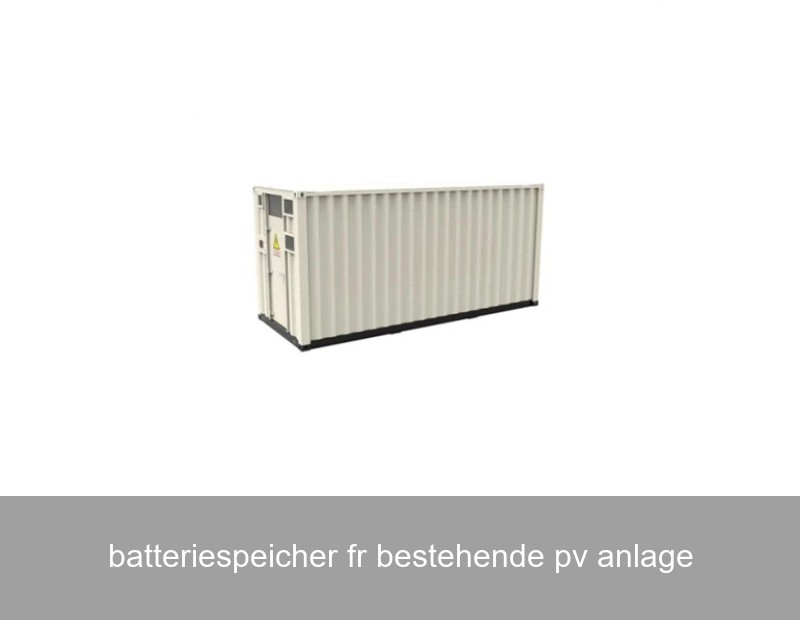
You made a wise decision investing in a photovoltaic (PV) system. You're generating clean energy, reducing your carbon footprint, and have taken a step towards energy independence. But if you're like many solar owners in Europe and the US, you might have noticed a frustrating pattern: your panels produce the most power when you're not home to use it, and you draw expensive grid electricity in the evening. This is where adding a batteriespeicher für bestehende PV-anlage (battery storage for an existing PV system) transforms from an optional extra into the logical, empowering next step. It's the key to unlocking the full potential of your solar installation.
Table of Contents
- The Challenge: Your Solar Power's Timing Problem
- The Data: Why Self-Consumption is the New Gold Standard
- The Solution: How a Battery Storage System Works
- The Case Study: A Real-World Transformation in Bavaria
- Choosing the Right Battery for Your Existing PV System
- Highjoule's Role: Your Partner in Intelligent Energy Upgrade
- Is Your Home Ready for the Next Energy Evolution?
The Challenge: Your Solar Power's Timing Problem
Let's paint a familiar picture. Your rooftop PV system hits peak production around midday. The sun is shining, the kilowatts are flowing... but you're at work. The kids are at school. The house is quiet. A significant portion of that precious, self-generated solar energy gets fed back into the grid, often for a feed-in tariff that is lower than the retail price you pay for electricity. Fast forward to 6 PM. Everyone is home: lights are on, the oven is heating dinner, the TV is running. Your solar production is minimal or zero, forcing you to purchase expensive power from the utility grid. This mismatch between generation and consumption is the fundamental limitation of a standalone PV system.

Image Source: Unsplash (Representative graph added for illustration)
The Data: Why Self-Consumption is the New Gold Standard
The economics of solar have shifted dramatically. A decade ago, generous feed-in tariffs made exporting power highly lucrative. Today, with rising electricity prices and decreasing reimbursement rates, the goal is to maximize self-consumption. According to data from the Fraunhofer Institute for Solar Energy Systems (ISE), a typical household without storage only uses about 30-40% of its self-generated solar power directly. Adding a high-quality battery storage system can increase this self-consumption rate to 60-80% or even more, dramatically reducing reliance on the grid.
| Scenario | Self-Consumption Rate | Grid Dependency in Evening |
|---|---|---|
| PV System Alone | ~30-40% | High |
| PV + Battery Storage | ~60-80%+ | Low to Minimal |
This isn't just about savings; it's about resilience. With increasing grid instability in some regions and a growing desire for energy autonomy, a batteriespeicher für bestehende pv anlage provides a buffer against blackouts and price volatility.
The Solution: How a Battery Storage System Integrates Seamlessly
So, how does this upgrade work? Retrofitting a battery to an existing PV system is a streamlined process. An intelligent energy management system, often part of the battery storage unit, becomes the brain of your home energy setup. It directs the flow of electricity:
- Step 1: Power Priority: Your home's immediate electricity demand is met first by your live solar production.
- Step 2: Charge Cycle: Any excess solar energy, instead of going to the grid, is diverted to charge your battery storage system.
- Step 3: Discharge on Demand: When solar production falls (evening, cloudy weather), the system automatically draws power from the battery to run your home.
- Step 4: Grid as Backup: Only when the battery is depleted does your home pull a minimal amount of electricity from the grid.
Modern systems like those from Highjoule come with user-friendly apps, allowing you to monitor your energy flows in real-time, set preferences, and see exactly how much you're saving and contributing to a greener planet.
A Real-World Transformation: The Schmidt Family Home in Bavaria
Let's look at a concrete example. The Schmidt family in southern Germany had a 8 kWp PV system installed in 2018. While happy with reduced bills, they were frustrated by their ongoing grid purchases. In early 2023, they decided to retrofit a Highjoule HomePower 10 battery storage system with a usable capacity of 10.2 kWh.
The Results (6-Month Post-Installation):
- Self-Consumption Rate: Increased from 38% to 79%.
- Grid Electricity Purchases: Reduced by 68%.
- Energy Bill Savings: An additional €110-€130 saved per month, accelerating the payback period for the battery addition.
- Backup Power: The system provides essential circuit backup during occasional grid outages, a feature the family now values highly.
"The decision felt like completing our solar journey," Mr. Schmidt noted. "Now we truly use what we produce. The integration was smooth, and the system works silently in the background. It's peace of mind, financially and practically."
Choosing the Right Battery for Your Existing PV System
Not all storage solutions are created equal. When retrofitting, key considerations include:
- AC- or DC-Coupled: For existing systems, AC-coupled batteries are often the most flexible and cost-effective choice, as they connect to your home's wiring via your existing inverter.
- Capacity & Power: Capacity (kWh) determines how much energy you can store, while power (kW) determines how many appliances you can run simultaneously from the battery. Your installer should analyze your consumption patterns to size it correctly.
- Depth of Discharge & Cycle Life: High-quality Lithium Iron Phosphate (LFP) batteries, like those used by Highjoule, offer nearly 100% usable depth of discharge and thousands of cycles, guaranteeing performance for decades.
- Integration & Smart Features: Ensure the system can communicate with your existing PV inverter and offers smart energy management for future upgrades (like EV charging).
Highjoule's Expertise: Seamlessly Upgrading Your Energy Ecosystem
At Highjoule, we specialize in intelligent energy storage solutions designed to integrate perfectly with both new and existing solar arrays. Our HomePower Series of battery storage systems is engineered with the retrofit market in mind. They are AC-coupled, ensuring broad compatibility with most existing PV inverters on the market. With our robust LFP battery chemistry, sophisticated energy management software, and scalable design, we provide a future-proof upgrade that maximizes your existing investment.

Image Source: Unsplash (Representative image of a home battery unit)
Our process involves working with a network of certified installers across Europe and the US who assess your current setup, energy goals, and physical space to recommend the ideal Highjoule solution. We don't just sell a battery; we provide a complete power resilience platform that turns your home into a more efficient, independent, and sustainable energy hub.
Beyond Savings: Contributing to Grid Stability
Your upgrade has a broader impact. By storing and consuming your own solar energy, you alleviate stress on the public grid during peak demand periods. In some regions, virtual power plant (VPP) programs even allow your battery system to provide grid services, creating a potential new revenue stream. It's a win for your wallet and for the community's energy transition.
Is Your Home Ready for the Next Energy Evolution?
Your existing PV system was the first, crucial step. Now, the technology and economics are perfectly aligned to take the second step. Adding a batteriespeicher für bestehende pv anlage is the definitive move to capture the full value of your solar power, increase your energy independence, and build resilience against an uncertain energy future. The sun provides the energy; a Highjoule battery storage system provides the control.
What would a day of energy independence look like for your household? How would it feel to know your evening routines are powered by the sun that shone on your roof that afternoon?
 Inquiry
 Online Chat