


Sinewave Energy for Sale: The Pure Power Your Home and Business Deserve
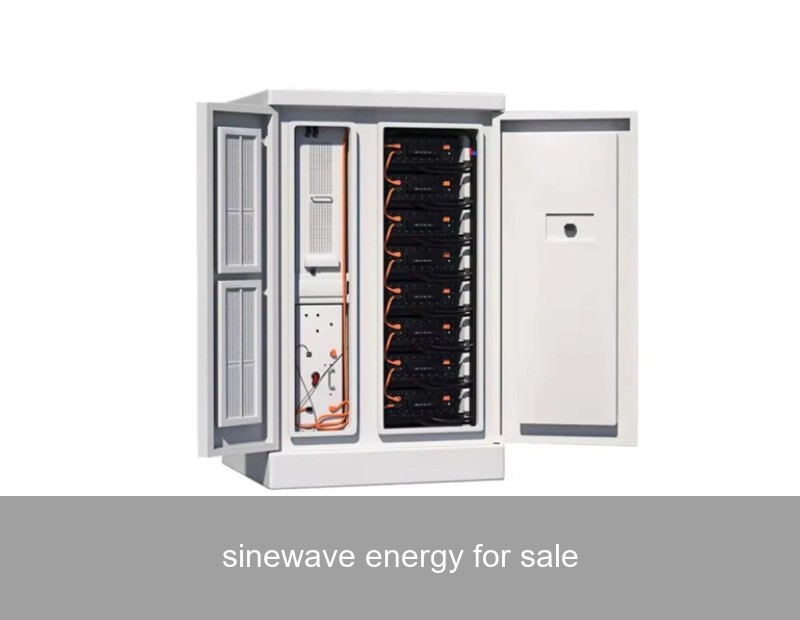
You've likely heard the buzz about solar panels and home batteries. But when you dig deeper, you encounter technical terms that make your head spin. One of the most crucial, yet often overlooked, is the type of electricity these systems produce and manage. This brings us to a vital concept for anyone considering energy independence: sinewave energy for sale. It's not just a technical spec; it's the benchmark for clean, safe, and reliable power for your sensitive electronics, from medical devices to smart home systems. In this article, we'll demystify what sinewave energy is, why it's the only acceptable standard for modern backup and storage systems, and how you can ensure you're investing in pure power.
Table of Contents
- What is Sinewave Energy & Why is it the Gold Standard?
- The Phenomenon: Why Your Grid Power Isn't Always "Clean"
- Data That Matters: The Real Cost of Impure Power
- Case Study: A German Bakery's Recipe for Reliable Power
- The Highjoule Solution: Intelligent Storage Built on Pure Sinewave Foundations
- Choosing Your System: Key Questions to Ask About "Sinewave Energy for Sale"
What is Sinewave Energy & Why is it the Gold Standard?
Simply put, a sinewave is the natural, smooth, and periodic oscillation of alternating current (AC) power. Imagine a perfectly rolling wave in the ocean—that's the ideal form of the electricity that powers your home from the grid (in theory). This "pure sinewave" is what your refrigerators, laptops, LED lighting, and variable-speed motors are designed to run on.
Now, when we talk about sinewave energy for sale in the context of energy storage, we're referring to the capability of a battery system (like a solar battery or backup power unit) to output this perfect, grid-matching AC power. Not all inverters—the devices that convert battery DC power to usable AC power—are created equal. Only systems with true pure sinewave inverters guarantee the clean, stable output that modern electronics crave. Compromising on this is like putting low-grade fuel in a high-performance engine; it might run, but not well, and not for long.
The Phenomenon: Why Your Grid Power Isn't Always "Clean"
Here's a reality check: even your utility grid doesn't always deliver perfect sinewave energy. Voltage sags, surges, harmonics, and brief outages are common, especially in areas with aging infrastructure or during extreme weather events. These imperfections are often called "dirty power."
For decades, we plugged in our appliances and hoped for the best. But today, our homes and businesses are filled with digitally controlled devices that are far more sensitive. A microwave with a digital panel, a high-efficiency HVAC compressor, a gaming PC, or a CPAP machine—all of these can malfunction, experience reduced lifespan, or even be damaged by poor-quality power. This vulnerability becomes glaringly apparent during a power outage when you rely on a backup generator or battery. A cheap inverter might produce a "modified sinewave" or a square wave, which can cause humming, overheating, and erratic behavior in sensitive devices.

Image Source: Unsplash (Representative image of modern home electrical systems)
Data That Matters: The Real Cost of Impure Power
Let's move from phenomenon to hard data. The U.S. Department of Energy estimates that power outages cost the U.S. economy billions of dollars annually. For a household, a single outage can mean spoiled food, disrupted work, and discomfort. But the hidden cost is in the cumulative damage from poor power quality.
- Efficiency Loss: Motors running on impure sinewaves can lose 10-20% efficiency, drawing more power to do the same work.
- Lifespan Reduction: Studies have shown that power quality issues can reduce the operational life of electronic equipment by up to 30%.
- Protection Gap: Standard surge protectors are ineffective against sustained "dirty power." They guard against spikes, not the constant distortion of a poor sinewave.
This data underscores a critical point: when you invest in an energy storage system, you're not just buying backup hours; you're buying power quality insurance. Seeking true sinewave energy for sale is a non-negotiable criterion for protecting your broader investment in home and business technology.
Case Study: A German Bakery's Recipe for Reliable Power
Consider "Bäckerei Schmidt," a family-run artisan bakery in Bavaria, Germany. Their operation depends on precise, temperature-controlled fermentation proofers, sensitive digital ovens, and refrigeration units. Even a minor voltage fluctuation could ruin a batch of bread, costing hundreds of euros and damaging their reputation for quality.
The bakery faced frequent micro-outages and voltage instability from the local grid, especially during peak morning operation hours. They needed a solution that would not only provide backup but also condition their incoming power in real-time, ensuring a perfect sinewave to all equipment, 24/7.
They partnered with Highjoule to install a tailored commercial energy storage system with an advanced pure sinewave inverter and grid-forming capabilities. The system was integrated with their existing rooftop solar. Here are the results after one year:
| Metric | Before Installation | After Installation |
|---|---|---|
| Production Downtime Due to Power Issues | ~15 hours/year | 0 hours/year |
| Estimated Product Spoilage/Loss | €3,200/year | €0/year |
| Energy Bill from Grid | €1,850/month (avg.) | €620/month (avg.) |
| Power Quality Complaints from Equipment Service | 4-5 times/year | 0 times/year |
The bakery now runs on a buffer of self-generated, pure sinewave energy, shielding their process from grid imperfections and slashing energy costs. The owner, Herr Schmidt, noted: "The peace of mind is priceless. Our power is now as clean and reliable as our ingredients."
The Highjoule Solution: Intelligent Storage Built on Pure Sinewave Foundations
At Highjoule, our philosophy is that advanced energy storage should elevate your power quality, not just replicate it. Every system we design, from our residential HomePower Hub to our industrial-scale MicroGrid Commander, is engineered with premium pure sinewave inverters at its core. This isn't an add-on; it's foundational.
What does this mean for you?
- Universal Compatibility: Every device in your home or business works as intended, safely and efficiently.
- Grid-Forming Independence: In off-grid or outage scenarios, Highjoule systems don't just backup; they create a pristine, stable "mini-grid" with perfect sinewave output for your property.
- Seamless Solar Integration: Our systems intelligently manage the variable DC output from your solar panels, converting it to stable AC sinewave energy for immediate use or storage, maximizing your self-consumption of renewable energy.
When you see Highjoule sinewave energy for sale, you're purchasing a complete, intelligent power ecosystem. Our systems monitor grid health, automatically smooth out minor fluctuations, and provide instant backup with zero switching time—all while delivering the cleanest possible power to your outlets.

Image Source: Unsplash (Representative image of a professional battery storage installation)
Choosing Your System: Key Questions to Ask About "Sinewave Energy for Sale"
As you explore your options, cut through the marketing jargon. Here are essential questions to pose to any energy storage provider:
- "Is the inverter a true pure sinewave type, and what is its total harmonic distortion (THD) rating?" (Look for <3% THD).
- "Can the system provide grid-forming, off-grid power, or does it only work with the grid present?"
- "What is the warranty on the inverter, and does it cover failures due to powering sensitive equipment?"
For further reading on power quality standards, you can refer to resources from the IEEE or the International Electrotechnical Commission (IEC).
Your Power, Perfected
The journey to energy resilience is about more than just capacity. It's about taking control of the very quality of the electricity that fuels your daily life and business operations. By insisting on true sinewave energy, you're protecting your investments and ensuring that your transition to renewable energy is smooth, safe, and superior.
Is your current backup plan or solar-plus-storage proposal built on the pure sinewave foundation that your 21st-century electronics demand?
 Inquiry
 Online Chat