


QuantumScape Battery Inc: A Deep Dive into the Solid-State Future and Today's Storage Solutions
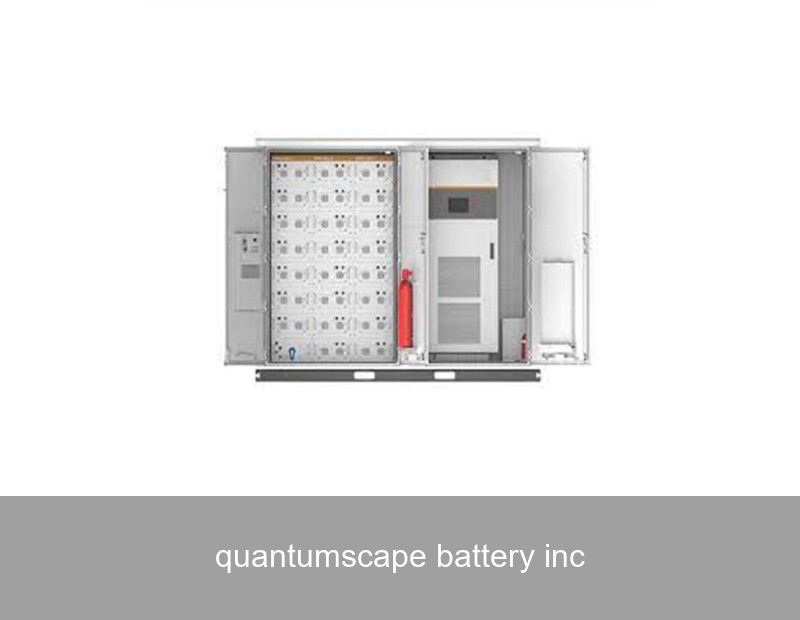
Imagine an electric vehicle that charges in minutes, not hours, and a phone battery that lasts for days. This isn't science fiction; it's the ambitious promise of solid-state battery technology, with QuantumScape Battery Inc leading the charge. As a global leader in advanced energy storage, Highjoule has been at the forefront of battery innovation since 2005. While we watch pioneers like QuantumScape shape the future of cell chemistry, our mission is to deliver the intelligent, efficient, and sustainable power solutions that businesses, industries, and homeowners can rely on today. This article explores the groundbreaking work of QuantumScape and places it in the context of the broader, evolving energy storage landscape where companies like Highjoule are already making a tangible impact.
Table of Contents
- The Solid-State Phenomenon: What Makes It Different?
- QuantumScape Unpacked: The Anode-Less Architecture
- From Lab to Grid: The Real-World Challenges
- Today's Imperative: High-Performance Lithium-Ion Storage Solutions
- A European Case Study: Stability Amidst Volatility
- The Integration Future: Blazing New Trails with Established Tech
The Solid-State Phenomenon: What Makes It Different?
To understand the excitement around QuantumScape Battery Inc, we must first grasp the core limitation of today's dominant technology: lithium-ion batteries. Conventional li-ion batteries use a liquid electrolyte—a flammable organic solvent that facilitates the flow of lithium ions between the anode (typically graphite) and cathode. This liquid component is a key reason for performance ceilings, safety risks (like thermal runaway), and degradation over time.
Solid-state batteries replace that liquid electrolyte with a solid one. This seemingly simple swap unlocks a cascade of potential benefits:
- Higher Energy Density: Enables longer range for EVs or longer runtime for devices.
- Faster Charging: Solid electrolytes can potentially handle much higher current.
- Improved Safety: Removal of flammable liquid reduces fire risk.
- Longer Lifespan: Reduced side reactions at the electrode interfaces.
However, the path is fraught with engineering hurdles, such as ensuring stable ion conduction through the solid material and managing expansion and contraction during charge cycles. This is where QuantumScape's specific approach enters the spotlight.
QuantumScape Unpacked: The Anode-Less Architecture
QuantumScape Battery Inc isn't just working on any solid-state battery; its flagship innovation is an "anode-less" design using a proprietary ceramic solid separator. In traditional batteries, the anode is a physical component (like a graphite layer). QuantumScape's cell starts without a conventional anode. During the first charge, lithium metal plates onto the current collector, forming a pure lithium metal anode in situ.
This approach aims to tackle two major problems simultaneously:
- Dendrite Suppression: Lithium metal anodes are prone to forming needle-like dendrites that can short-circuit the battery. QuantumScape's rigid ceramic separator is designed to be physically strong enough to inhibit their growth.
- Energy Density Boost: By eliminating the bulkier graphite anode, more energy can be packed into the same volume.
Independent tests from QuantumScape's website have shown promising results for single-layer cells, including high cycle life under fast-charge conditions. Yet, as experts in system integration, we at Highjoule understand that a promising cell is just the beginning. The journey to a commercial, scalable, and cost-effective battery system involves complex engineering in packaging, thermal management, battery management software, and manufacturing at gigawatt scale.

Image Source: Unsplash (Representative image of battery research)
From Lab to Grid: The Real-World Challenges
While the potential of solid-state technology is undeniable, the energy storage market cannot wait. The transition to renewables is happening now, and grid operators, businesses, and homeowners need reliable, safe, and high-performing storage solutions today. The challenges for emerging technologies like those from QuantumScape Battery Inc highlight the sophistication of what's already deployed:
| Challenge | Impact on Commercialization | How Today's Advanced Li-Ion Systems Address It |
|---|---|---|
| Manufacturing Scale & Cost | Moving from lab cells to mass production is a monumental task with high capital expenditure. | Highjoule leverages established, scalable supply chains for premium Li-ion cells, ensuring cost predictability and availability for projects of all sizes. |
| Thermal Management | New chemistries require new thermal management system designs. | Our H-Joule Cube commercial storage system features an advanced liquid cooling system, precisely maintaining optimal cell temperature for safety and longevity, a technology directly applicable to future chemistries. |
| System Integration & BMS | A battery cell is only as good as the intelligence that governs it. | Highjoule's proprietary AI-powered Battery Management System (BMS) continuously optimizes performance, safety, and cycle life, a critical software layer that will be essential for any next-generation battery. |
Today's Imperative: High-Performance Lithium-Ion Storage Solutions
This brings us to a critical point: the future is built on the present. At Highjoule, we specialize in maximizing the potential of current-generation lithium-ion technology through superior system design and intelligence. Our products are not just battery containers; they are integrated energy platforms.
For instance, our flagship H-Joule Matrix for industrial and microgrid applications uses a modular design that allows for seamless capacity expansion from 100 kWh to multi-megawatt hours. Its key innovation lies in the Distributed DC-DC Architecture, which allows each battery module to operate independently. This eliminates single points of failure, increases overall system efficiency by up to 3%, and dramatically simplifies maintenance—a feature that will benefit future solid-state modules as well.
For residential users, the Highjoule Home+ system integrates not only storage but also sophisticated energy monitoring and grid interaction services. It learns a household's consumption patterns, automatically shifts to stored solar power during peak tariff periods, and can provide backup power during outages. This level of grid intelligence and user-friendly management is what turns a battery into a true smart home asset.
A European Case Study: Stability Amidst Volatility
Let's look at a real-world application. A mid-sized manufacturing plant in Bavaria, Germany, faced two major challenges: volatile energy prices and a commitment to reduce its carbon footprint. Their existing 500 kW rooftop solar array produced excess energy during midday that was sold to the grid at low prices, while they had to buy expensive power during morning and evening peaks.
The Solution: Highjoule deployed a 750 kWh H-Joule Cube system integrated with their existing solar infrastructure and facility energy management system.
The Results (Data after 12 months of operation):
- Energy Cost Reduction: By storing midday solar surplus and discharging during peak hours, the plant reduced its grid energy purchases by 68%, saving over €85,000 annually.
- Increased Self-Consumption: Solar self-consumption rate jumped from 35% to 92%.
- Grid Services Revenue: The system participates in the German primary control reserve market, generating an additional €15,000 in annual revenue by providing grid stability services—a function managed autonomously by Highjoule's GridSync software platform.
This case, documented in a report by the Fraunhofer Institute for Solar Energy Systems, illustrates that the economic and sustainability benefits of advanced storage are not a future promise—they are a present-day reality. The plant's manager noted, "The system pays for itself while making our operations greener and more resilient. It's the cornerstone of our energy strategy."
The Integration Future: Blazing New Trails with Established Tech
The work of QuantumScape Battery Inc and other solid-state developers is thrilling because it charts the course for the next leap in energy density. As a system integrator, Highjoule views these advancements as future components in a larger ecosystem. Our core expertise—building smarter, safer, and more connected storage systems—will become even more critical when integrating these higher-density cells.
Think of it this way: a more energy-dense cell is like a more powerful engine. But the performance, safety, and longevity of the entire vehicle depend on the chassis, cooling system, and electronic controls. That's our domain. We are already developing next-generation thermal interfaces and BMS algorithms with an eye on the higher charge rates and different voltage profiles that future solid-state modules may require.

Image Source: Unsplash (Representative image of energy storage system control)
So, while we eagerly follow the progress at QuantumScape's labs, our teams across Europe and North America are not waiting. We are deploying robust storage solutions that solve today's energy challenges—from maximizing solar ROI and providing backup power to stabilizing the grid—with technology that is proven, bankable, and intelligent.
The journey to a fully sustainable energy future is a relay race, not a sprint. As pioneers push the boundaries of basic science, implementers like Highjoule ensure that every incremental gain in technology is translated into real-world value and reliability. What energy challenge could a smart storage system solve for your business or home today, while we collectively build the battery breakthroughs of tomorrow?
 Inquiry
 Online Chat