


Empty Container for Sale? How to Turn Idle Space into a Powerhouse for Energy Savings
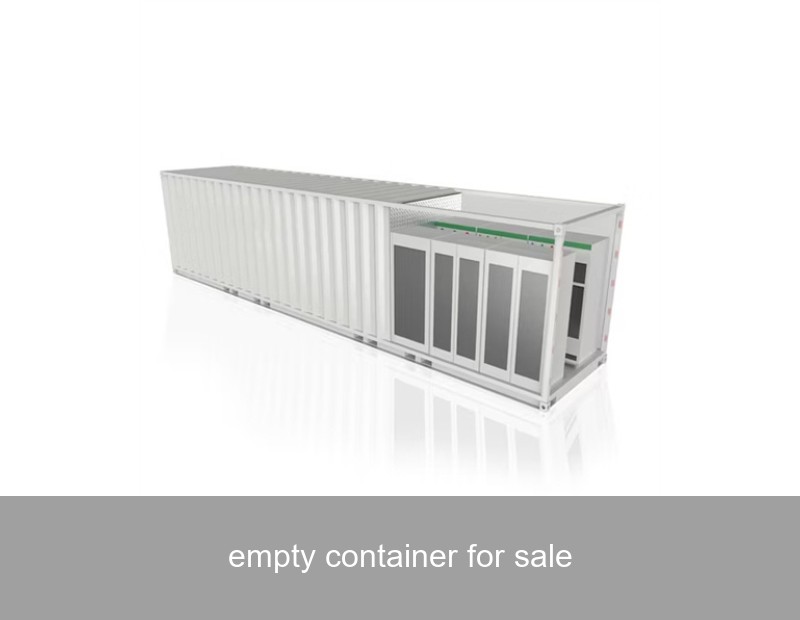
If you're in logistics, shipping, or industrial manufacturing across Europe or the US, you've likely seen the notice: "Empty Container for Sale." It's a common sight, representing both a logistical reality and, often, a missed opportunity. But what if that empty container could be more than just storage or scrap metal? What if it could become the heart of a resilient, cost-saving energy system for your facility? The shift towards on-site power generation and management is revolutionizing how businesses think about energy. This article explores how the concept of an empty container for sale is evolving, transforming from a symbol of idle capacity into a prime opportunity for deploying advanced Battery Energy Storage Systems (BESS) that slash energy costs and boost sustainability.
The Empty Container Phenomenon: A Wasted Asset or a Blank Canvas?
In ports and industrial estates from Hamburg to Houston, stacks of empty containers are a familiar fixture. They represent capital sitting idle. Traditionally, the options are limited: resell, repurpose for basic storage, or recycle. However, forward-thinking facility managers and energy directors are now seeing a different potential. These standardized, robust, and transportable steel boxes are perfect, pre-fabricated enclosures for a critical piece of modern energy infrastructure: containerized battery storage. Instead of searching for "empty container for sale" to clear space, the search is becoming about finding the right container to create space—for energy independence.

Credit: Unsplash - Port of Oakland. Could these idle containers house the key to energy resilience?
The Data Behind the Void: The High Cost of Grid Reliance
Why should you care about turning a container into a battery bank? The numbers speak for themselves. For commercial and industrial (C&I) users, electricity isn't just a utility; it's a major, volatile operational cost.
- Demand Charges: In many US states and European regions, 30-50% of a C&I electricity bill can come from demand charges—fees based on your highest 15-30 minute power draw in a billing cycle. A single spike can cost thousands.
- Time-of-Use (TOU) Rates: Utilities increasingly charge more for power during peak evening hours (e.g., 4-9 PM). The price differential can be 300% or more compared to off-peak rates.
- Grid Volatility: According to the International Energy Agency (IEA), global electricity demand is rising, straining grids and leading to more frequent price volatility and reliability concerns.
This financial exposure creates a compelling business case for taking control. An empty container, strategically placed on your property, can be the vessel for that control.
Case Study: From Empty Container to Energy Hub in Rotterdam
Consider a real-world example. A large refrigerated warehouse in the Port of Rotterdam was facing crippling energy costs. Its constant cooling load, combined with peak-time operations, led to excessive demand charges and a heavy carbon footprint. Their solution wasn't found on the traditional market for an empty container for sale, but through a partnership with Highjoule.
The project deployed a 1 MWh Highjoule IntelliBESS system inside a modified 40-foot high-cube container. The system was integrated with their existing rooftop solar and the building's energy management system. Here's the impact after one year:
| Metric | Before Highjoule BESS | After Highjoule BESS | Change |
|---|---|---|---|
| Monthly Demand Charge | €18,500 | €11,200 | -39% |
| Grid Energy Consumption (Peak Hours) | 65 MWh/month | 22 MWh/month | -66% |
| Solar Self-Consumption | 55% | 92% | +37% |
| CO2e Emissions | 42 tonnes/month | 28 tonnes/month | -33% |
The containerized BESS acts as a buffer. It stores cheap solar energy and off-peak grid power, then discharges during expensive peak periods to "shave" the facility's power draw. The result? A rapid return on investment, enhanced power quality for sensitive refrigeration equipment, and significant progress toward sustainability goals.
The Energy Storage Solution: More Than Just a Battery in a Box
It's crucial to understand that not all containerized solutions are equal. Simply placing battery racks in a steel box is insufficient. A true, industrial-grade BESS is an integrated ecosystem:
- Advanced Battery Modules: Utilizing UL 9540A & IEC 62619 certified Lithium Iron Phosphate (LFP) cells for safety and long life.
- Thermal Management: A dedicated, climate-control system ensuring optimal battery performance in freezing winters or scorching summers.
- Power Conversion System (PCS): The intelligent inverter that manages AC/DC conversion and grid interaction.
- Energy Management System (EMS): The brain of the operation. This software uses AI and real-time data to optimize charging/discharging based on weather, tariffs, and load patterns.
- Safety & Grid Compliance: Integrated fire suppression, gas detection, and seamless compliance with local grid codes (like UL 1741SB in the US or VDE-AR-N 4110 in Germany).
Highjoule's Approach: Intelligent BESS for Real-World Challenges
At Highjoule, we've been designing and deploying smart storage solutions since 2005. Our IntelliBESS Containerized product line is built specifically for the C&I and microgrid market. When you choose to repurpose the idea of an empty container for sale with a Highjoule system, you're not just buying hardware; you're acquiring a turnkey energy asset.
Our systems feature:
- Plug-and-Play Design: Pre-assembled, tested, and commissioned in-factory for rapid on-site deployment. Your "container" arrives ready to connect.
- AI-Powered Highjoule OS: Our proprietary EMS doesn't just react—it forecasts. It learns your load patterns and predicts solar generation to maximize economic savings automatically.
- Scalability: Need more capacity? Units can be paralleled easily, allowing you to start with a 500 kWh system and expand to multiple megawatt-hours as your needs grow.
- Global Service & Monitoring: With a presence in key European and North American markets, we provide 24/7 remote monitoring and local technical support to ensure your system performs for its 15+ year lifespan.

Credit: Unsplash. A modern BESS interior, showcasing the integration of battery racks, power electronics, and climate control.
Implementing Your Solution: Key Considerations
Ready to explore this transformation? Here’s a quick guide:
- Site Assessment: Identify a suitable, level location with proper foundation, access for a crane, and proximity to your main electrical panel or solar inverter.
- Energy Analysis: A deep dive into your past 12-24 months of utility bills is essential. Highjoule's experts analyze this to model your optimal system size and savings potential.
- Regulations & Incentives: The landscape is favorable. In the US, the Investment Tax Credit (ITC) now covers standalone storage. In Europe, programs like Germany's KfW grants support storage. We help navigate these.
- Financing: Options range from direct capital expenditure (CapEx) with strong ROI to Power Purchase Agreement (PPA) models where you pay for the stored energy as a service, with little to no upfront cost.
Beyond the Container: The Future of On-Site Energy
The journey from viewing an empty container for sale as surplus to seeing it as an energy cornerstone reflects a broader shift. It's about asset optimization and energy resilience. For facilities with critical operations, a BESS can provide seamless backup power during outages. For communities, multiple containers can form microgrids, decoupling from the main grid for greater stability.
Highjoule is at the forefront, providing solutions that are as intelligent as they are robust. We empower businesses to not just consume energy, but to manage it strategically.

Credit: Unsplash. The ideal pairing: rooftop solar and a ground-mounted containerized BESS, creating a self-sufficient energy loop.
What's the first energy cost on your facility's balance sheet that you'd like to turn from a liability into a controlled asset?
 Inquiry
 Online Chat