


Understanding Power Battery Price in Kenya: A Guide to Sustainable Energy Investment
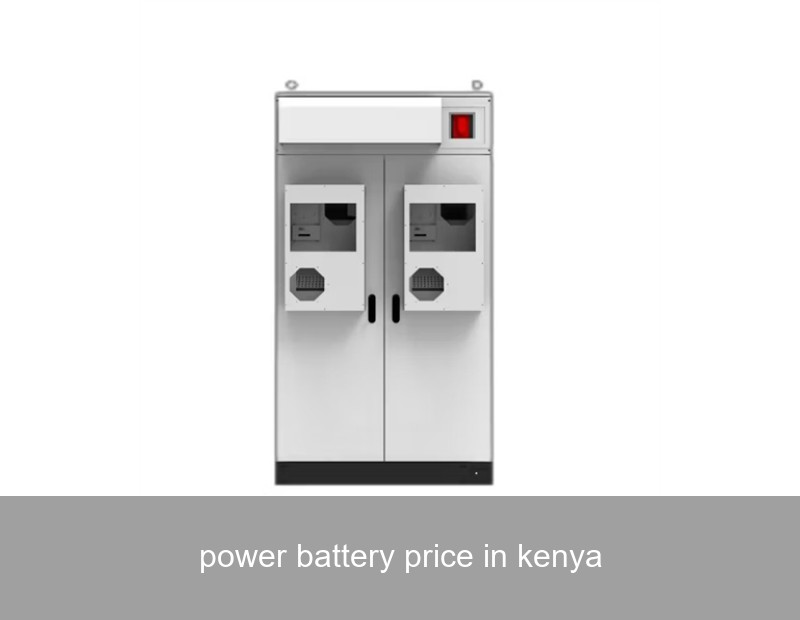
If you're exploring energy solutions in Kenya, you've likely encountered a critical question: what determines the power battery price in Kenya, and how does this investment translate into long-term value? Beyond the initial sticker shock lies a complex landscape of technology, durability, and total cost of ownership. For businesses, communities, and homeowners across Kenya, navigating this market is key to unlocking energy independence and fueling growth. This article breaks down the factors influencing battery storage costs and showcases how smart technology choices are powering a more resilient future.
Table of Contents
The Kenyan Energy Landscape: More Than Just Kilowatt-Hours
Kenya is a leader in East Africa for renewable energy adoption, with a significant portion of its grid powered by geothermal, wind, and hydro. Yet, grid reliability and accessibility remain challenges, particularly for commercial operations and in remote areas. This is where battery energy storage systems (BESS) step in, not merely as backup, but as enablers for maximizing solar investment and ensuring uninterrupted productivity.
The conversation around power battery price in Kenya often starts with the battery itself. However, a myopic focus on per-kWh purchase price can be misleading. The true cost encompasses installation, system compatibility, lifespan, maintenance, and the battery's ability to withstand Kenya's diverse climates. A cheaper battery that degrades quickly in heat or requires frequent replacement offers poor value, disrupting operations and incurring higher long-term expenses.
Decoding the Power Battery Price Tag: Key Cost Drivers
Let's dissect what you're really paying for. The final cost of a battery storage system is influenced by a confluence of factors.
1. Battery Chemistry and Technology
The core technology is the primary price determinant. Lithium-ion phosphate (LFP) batteries have become the dominant standard for stationary storage due to their longer lifespan, superior thermal stability, and declining costs. While other chemistries might have a lower upfront cost, LFP's cycle life—often exceeding 6,000 cycles—makes it more economical over a decade or more.
2. System Capacity and Scalability
Costs scale with capacity (kWh), but not always linearly. Larger commercial systems benefit from economies of scale. More critical is modular design. A scalable system, like those in Highjoule's H-Series for commercial and industrial use, allows you to start with a necessary capacity and expand as your energy needs grow, protecting your initial investment.
3. Power Rating and Integration Complexity
How much power (kW) the battery can deliver at once affects cost. A facility needing to start large motors requires a high power rating. Seamless integration with existing solar PV, generators, and the grid requires advanced inverters and energy management software, which is part of the overall system value.
4. Durability and Warranty
A battery built for harsh conditions is a must. Look for products with an IP65 rating for dust and water resistance and a wide operating temperature range. A robust warranty (e.g., 10 years for 70% capacity retention) is not just a promise; it's a direct indicator of expected lifetime cost. Highjoule's products are engineered for global deployment, with a design philosophy that prioritizes longevity in diverse environments from the Kenyan coast to the highlands.
| Cost Factor | Impact on Upfront Price | Impact on Long-Term Value |
|---|---|---|
| Battery Chemistry (LFP vs. Other) | Moderate to High | Very High (Lifespan & Safety) |
| System Capacity & Scalability | High | High (Avoids Future Overhaul) |
| Power Conversion System (Inverter) | Moderate | High (Efficiency & Grid Support) |
| Installation & Commissioning | Variable | High (Proper setup ensures performance) |
| Warranty & Local Support | Low (embedded) | Critical (Reduces risk & downtime) |
Case Study: The Nakuru Flower Farm's Transition
Let's move from theory to practice. A large flower farm in Nakuru faced two major issues: unreliable grid power threatening refrigeration units, and high diesel generator costs during frequent outages. Their existing solar PV array was underutilized, exporting excess power during the day but unable to help at night.
The Solution: The farm opted for a turnkey 500 kWh / 250 kW battery storage system integrated with their existing infrastructure. The system was designed to provide critical backup, time-shift solar energy for night-time use, and even perform peak shaving to reduce demand charges from the utility.
The Data & Outcome: Within the first year:
- Diesel Usage Reduction: 85% decrease in generator runtime, saving over KES 4.5 million annually in fuel and maintenance.
- Solar Self-Consumption: Increased from 35% to over 90%, maximizing their renewable asset.
- ROI Period: The project's return on investment was calculated at under 5 years, considering energy savings and avoided loss of perishable goods.
This case underscores that the power battery price in Kenya should be evaluated against operational savings and risk mitigation, not in isolation. The farm now views energy as a manageable operational cost rather than an unpredictable liability.

Image Source: Unsplash - Representative image of solar and storage in an agricultural setting.
Beyond Price: The Highjoule Approach to Value in Kenya
As a global provider with nearly two decades of experience, Highjoule understands that sustainable energy solutions are built on trust and proven performance. For the Kenyan market, we emphasize a value-driven proposition that extends far beyond the unit cost per kWh.
Our H-Stack commercial and industrial battery system is a prime example. Its modular, containerized design allows for rapid deployment and easy expansion. More importantly, it's governed by our Aurora Energy Management System (EMS) – an intelligent software platform that acts as the brain of the installation. Aurora doesn't just store and release energy; it optimizes it based on weather forecasts, load patterns, and tariff schedules, ensuring every shilling invested in the battery is working optimally for the owner.
For residential and small business applications, our HomePower series offers similar intelligence in a compact form. Coupled with local partnership networks for installation and maintenance, we ensure that the discussion about power battery price in Kenya is always followed by a deeper discussion about total cost of ownership, reliability, and intelligent energy management.
The Future of Storage: Trends Impacting Costs in Kenya
The trajectory for battery storage is positive. Global manufacturing scale, particularly for LFP cells, continues to drive down core technology costs. According to the International Energy Agency (IEA), global battery costs have fallen by more than 90% since 2010, a trend expected to continue with innovation.
In Kenya, supportive policies and the growth of renewable energy projects will further stimulate the market. Emerging applications like mini-grids and electric vehicle charging infrastructure will create new demand patterns. The future system isn't just a battery; it's a grid-interactive asset that can provide services to stabilize the wider network.
This evolution means evaluating a battery system today requires considering its software upgradeability and grid-service capabilities. Can the system you're considering today adapt to participate in future energy markets? This forward-thinking approach defines true investment wisdom.
Your Energy, Your Decision
The journey to energy resilience is a strategic one. The right question isn't simply "What is the power battery price in Kenya?" but rather, "What is the value of uninterrupted power for my business, my community, or my home, and which partner can deliver a system that maximizes that value for decades to come?"
What specific energy challenge is holding back your operations or quality of life, and how might a intelligently managed storage solution transform that challenge into an opportunity for growth and stability?
 Inquiry
 Online Chat