


Portable Solar Panel Charger: Your Guide to Reliable Off-Grid Power
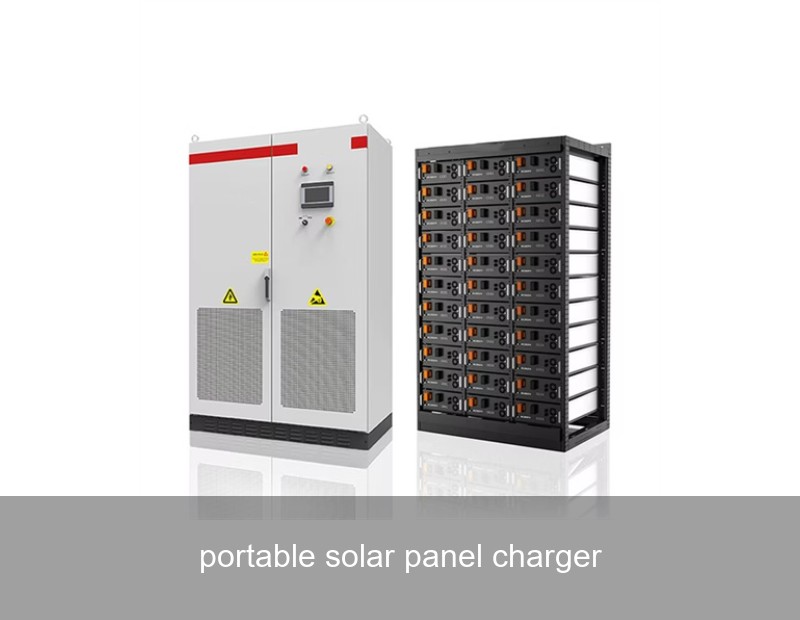
Imagine you're halfway through a breathtaking hike in the Scottish Highlands or setting up camp in a remote corner of California's Sierra Nevada. Your phone beeps—a critical low battery warning. In that moment, a reliable portable solar panel charger transforms from a handy gadget into an essential lifeline, connecting you to maps, emergency services, and the ability to capture memories. But the technology behind these compact power stations is more than just a convenience; it's a microcosm of the larger renewable energy revolution. At Highjoule, with nearly two decades of expertise in advanced energy storage, we understand that the principles of efficiency, durability, and smart management in our large-scale commercial battery systems are the very same that make a personal solar charger truly effective.
Table of Contents
- The Rise of Portable Solar Power
- How Does a Portable Solar Charger Work? The Tech Simplified
- Key Features to Look For
- A Real-World Case Study: Powering Alpine Research
- Beyond the Hike: Broader Applications
- Highjoule's Role in Powering a Sustainable Future
- Choosing Your Perfect Portable Solar Charger
The Rise of Portable Solar Power: More Than a Trend
The market for portable solar solutions has exploded. According to a report by Grand View Research, the global solar charger market size was valued at USD 2.45 billion in 2022 and is expected to grow significantly. Why? The phenomenon is clear: our lives are digital and mobile, yet our desire to explore untouched nature is stronger than ever. This creates a fundamental tension—a power gap. The data shows consumers are actively seeking sustainable ways to bridge this gap, moving away from single-use battery packs and towards renewable, reusable energy sources. It's a shift in mindset, from simply carrying power to generating it responsibly wherever you are.

Image source: Unsplash - A typical portable solar setup for outdoor enthusiasts.
How Does a Portable Solar Charger Work? The Tech Simplified
Let's demystify the process. Think of your portable solar system as a miniature, self-contained power plant. It follows a clear, logical chain:
- Energy Capture: Photovoltaic (PV) cells on the panel absorb sunlight, knocking electrons loose and creating direct current (DC) electricity.
- Voltage Regulation: This raw DC power is inconsistent. A built-in charge controller (the brain of the unit) regulates the voltage to prevent damaging your devices. This is akin to the sophisticated energy management systems Highjoule integrates into its large-scale Battery Energy Storage Systems (BESS) to ensure grid stability.
- Storage (Optional but Common): Many units include a built-in lithium-ion or lithium-polymer battery pack. The regulated power charges this internal bank, storing energy for use when the sun isn't shining.
- Power Delivery: Finally, the stored or direct power is delivered via USB-A, USB-C, or sometimes AC outlets, converting it to the right format for your gadgets.
The efficiency of this entire journey depends heavily on the quality of the solar cells and the intelligence of the power management. Monocrystalline silicon cells, for instance, are typically more efficient (18-22%) than their polycrystalline counterparts, meaning they convert more sunlight into electricity in the same space—a critical factor for a compact, portable panel.
Key Features to Look For in a Quality Charger
Not all solar chargers are created equal. When selecting one, consider this checklist:
- Panel Wattage & Efficiency: 10-25 watts is common for phone/tablet charging. Higher wattage (e.g., 40W+) charges faster and can handle larger devices.
- Battery Capacity (if included): Measured in watt-hours (Wh) or milliamp-hours (mAh). A 10,000mAh battery can charge a typical smartphone 2-3 times.
- Durability & Portability: Look for water-resistant (IPX4 or higher), foldable designs with rugged fabric or ETFE laminates.
- Output Ports & Smart Tech: Multiple ports and smart charging technology that identifies your device to deliver optimal current are huge pluses.
A Real-World Case Study: Powering Alpine Research in Switzerland
Let's move from theory to a concrete example. In the summer of 2023, a small team of environmental researchers conducted a two-week glacier monitoring study in the Swiss Alps. Their base camp was above 2,500 meters, with no access to grid power. Their challenge: keeping critical equipment—drones for aerial mapping, GPS units, satellite communicators, and laptops for data processing—operational daily.
Their Solution: They deployed two high-wattage (60W each) portable solar panel arrays, paired with two robust 500Wh portable power stations (solar generators).
| Equipment | Daily Power Need | How Solar Met the Need |
|---|---|---|
| Drone Batteries (x4) | ~200Wh | Panels fully recharged all drone batteries within 4 hours of midday sun. |
| Laptop & GPS | ~150Wh | Continuous power was supplied directly from the power stations, which were topped up by solar. |
| Satellite Communicator | ~20Wh | Directly charged via a panel's USB port. |
By the end of the expedition, the team had generated over 6 kWh of clean electricity on-site, avoiding the need for heavy, noisy, and polluting fossil-fuel generators. This case perfectly illustrates the transition from dependency to resiliency. The researchers weren't just carrying power; they were harnessing a local, abundant resource—alpine sun—to fuel their mission-critical work. This microgrid mentality is exactly what Highjoule enables on a massive scale for commercial and industrial clients.
Beyond the Hike: Broader Applications of Portable Solar Tech
While camping and hiking are classic use cases, the applications are vast:
- Emergency Preparedness: A vital part of any emergency kit for powering radios, lights, and medical devices during grid outages.
- Remote Work & Digital Nomads: Enabling work from truly anywhere, from a beach in Portugal to a ranch in Montana.
- Events & Festivals: Providing clean, silent power for vendors, lighting, or charging stations at outdoor events.
- Van Life & Overlanding: As a core component of a vehicle's auxiliary power system.

Image source: Unsplash - Portable solar supporting a mobile, off-grid lifestyle.
Highjoule's Role in Powering a Sustainable Future
You might wonder what a global provider of large-scale energy storage has to do with a pocket-sized solar panel. The connection is profound. The same core challenges—maximizing energy harvest, ensuring safe and efficient storage, and delivering reliable power on demand—scale from a 20-watt panel to a 20-megawatt grid storage facility.
Since 2005, Highjoule has been at the forefront of solving these challenges for businesses, industries, and communities. Our intelligent battery storage systems, like the Highjoule H-Cube Commercial BESS, do for a factory or a neighborhood what a good portable charger does for you: they capture renewable energy (from rooftop solar or the grid), store it efficiently, and manage its release intelligently to reduce costs, increase resilience, and lower carbon footprints. The advanced battery management and system integration expertise we've honed over decades directly inform the evolution of consumer-grade portable power, pushing the entire industry towards higher efficiency, safety, and reliability.
For residential customers looking to integrate solar with whole-home backup, our Highjoule Home Energy Hub embodies this principle, providing seamless, intelligent storage for rooftop solar. Whether it's 1 kWh for your home or 1,000 kWh for a factory, the mission is identical: empower energy independence.
Choosing Your Perfect Portable Solar Charger: A Final Checklist
Ready to cut the cord? Before you buy, ask yourself these questions:
- What devices will I charge, and how often? (Phone only vs. laptop + camera).
- What are my typical weather and light conditions? (Full sun vs. partial shade).
- Is weight or compactness my top priority? (Ultralight vs. higher power output).
- Do I need immediate power or just stored power for later? (Panel-only vs. panel-with-battery).
Remember, investing in a quality portable solar panel charger is a small but tangible step towards a more sustainable and self-reliant lifestyle. It connects you directly with the principles of renewable energy that are reshaping our global power infrastructure.
What's the first adventure or practical application you would power with your own reliable source of sunshine? We'd love to hear how you plan to harness the sun.
 Inquiry
 Online Chat