


Phocos Charge Controllers: The Smart Heart of Your Off-Grid Solar System
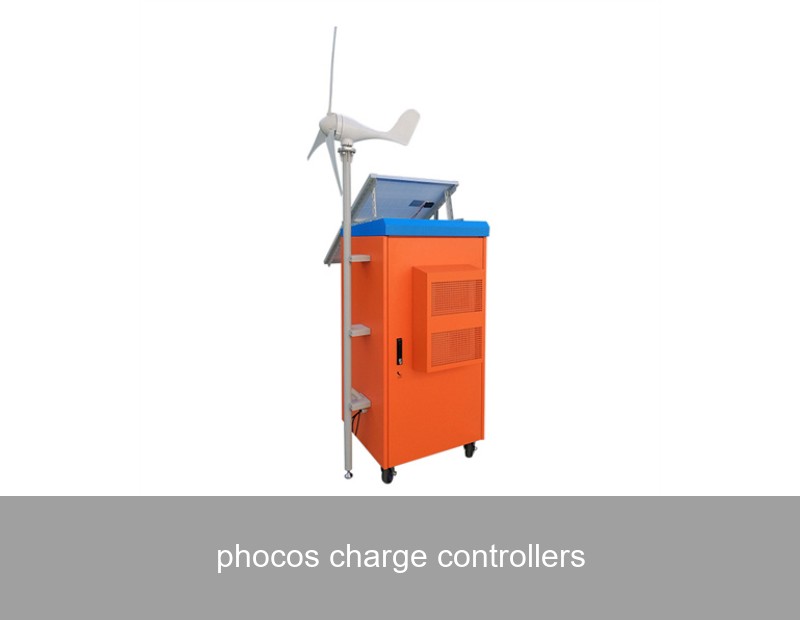
Have you ever wondered what keeps the lights on reliably in a remote cabin, a weather monitoring station, or a community microgrid? The unsung hero is often a device called a solar charge controller. And when it comes to robust, intelligent, and efficient charge controllers, the name Phocos stands out. In this guide, we'll demystify Phocos charge controllers, explain why they are critical for system health, and explore how they integrate into modern, intelligent energy storage solutions like those from Highjoule.
What is a Phocos Charge Controller?
Simply put, a solar charge controller is the regulator between your solar panels and your battery bank. Its primary job is to prevent overcharging, which can severely damage batteries and create safety hazards. Phocos is a globally recognized manufacturer specializing in electronic components for off-grid and renewable energy systems, with charge controllers being one of their flagship products.
Think of it this way: if solar panels are the "generators" and batteries are the "fuel tanks," the Phocos charge controller is the sophisticated "fuel management system." It ensures energy flows optimally, safely, and efficiently into storage, maximizing the harvest from every hour of sunlight.
Why Your Solar System Needs a Quality Charge Controller
The phenomenon is clear: without regulation, a solar panel's voltage output can vary wildly. On a bright, cold day, panel voltage can spike well above a battery's safe charging voltage.
Let's look at the data. Overcharging a lead-acid battery by just 20% can reduce its lifespan by up to half. For a lithium-ion battery bank, improper charging doesn't just shorten life—it can lead to thermal runaway and fire. A study by the National Renewable Energy Laboratory (NREL) emphasizes that battery management, starting at the charge controller, is paramount for system longevity and safety.
This is where Phocos shines. Their controllers are engineered with precise algorithms and robust components to constantly monitor battery voltage and temperature, adjusting the charge current accordingly. It's not just a protector; it's a performance optimizer.
Key Technologies in Phocos Controllers: MPPT & Beyond
Phocos offers two main types: reliable PWM (Pulse Width Modulation) and advanced MPPT (Maximum Power Point Tracking) controllers. For most commercial and industrial applications where maximizing return on investment is key, MPPT is the technology of choice.
Why MPPT? An MPPT controller, like the Phocos MPPT 6000, acts like a smart "gearbox" for your solar array. It continuously finds the exact voltage and current at which your panels produce the most power (the Maximum Power Point) and converts any excess voltage into additional charging current for the batteries. This can yield up to 30% more harvested energy compared to older PWM technology, especially in cooler climates or on cloudy days.

But Phocos's innovation goes further. Many models feature:
- Integrated Data Logging: Track system performance over time.
- Load Control: Automatically manage connected DC loads to prevent battery drain.
- Communication Protocols: Compatibility with remote monitoring platforms, a feature that becomes incredibly powerful when integrated into a larger smart energy system.
A Real-World Case: Solar-Powered Agri-Business in Spain
Let's ground this in a practical example. A medium-sized vineyard in Andalusia, Spain, faced high energy costs for irrigation pumps and needed a reliable power source for a remote weather and soil sensor network. Their challenge was irregular grid power and a desire to reduce diesel generator use.
The Solution: A 12kW off-grid solar system was installed. At its core were two Phocos MPPT 6000 charge controllers managing a 48V lithium-ion battery bank with a capacity of 40kWh.
| Metric | Result |
|---|---|
| Energy Harvest Increase | 22% more than a PWM-based design would have provided |
| Diesel Fuel Savings | ~4,500 liters eliminated annually |
| Battery Health | After 2 years, battery capacity degradation measured at <3%, thanks to precise charging |
| System Uptime | 99.8% for the critical sensor network |
This case, documented in part by the International Renewable Energy Agency (IRENA) in reports on agricultural solar applications, shows how the right controller isn't just a component—it's a cornerstone of project success.
Beyond the Controller: The Highjoule Integrated System Approach
While a superb charge controller is vital, true energy resilience and efficiency come from system-level intelligence. This is where Highjoule's expertise transforms a collection of parts into a seamless power solution.
At Highjoule, we view components like Phocos charge controllers as critical team players within our advanced Battery Energy Storage Systems (BESS). Our HPS (Highjoule PowerStack) series for commercial and industrial applications is designed to integrate seamlessly with leading solar charge controllers and inverters. Imagine a system where:
- The Phocos controller optimizes solar harvest.
- Highjoule's smart BESS, with its advanced lithium-ion (LFP) chemistry, provides safe, long-lasting storage.
- Our proprietary Energy Management System (EMS) acts as the brain, using weather forecasts, load patterns, and tariff data to decide when to store, use, or even sell back energy.
For a remote microgrid or a grid-tied business seeking backup power, this integration means you're not just buying hardware; you're investing in an intelligent, adaptive, and sustainable power ecosystem that manages itself and maximizes your economic return.

Choosing the Right Controller for Your Project
Selecting between a Phocos PWM or MPPT model, or deciding on the right amperage, depends on your specific needs. Here’s a quick guide:
- Small, Budget-Conscious Systems (e.g., tiny home, RV): A Phocos PWM controller is a reliable and cost-effective choice.
- Commercial/Industrial & Large Off-Grid Homes: An MPPT controller is essential for maximizing your solar investment. Consider the Phocos MPPT series for its efficiency and data capabilities.
- Complex Microgrids or Critical Infrastructure: This is where system integration matters most. Partnering with a provider like Highjoule ensures your Phocos controllers, battery bank, inverters, and monitoring systems are perfectly matched and future-proof.
We've seen how a Phocos charge controller acts as the diligent guardian and optimizer of your solar harvest. But in an era of smart grids and dynamic energy prices, is simply harvesting and storing energy enough? What if your entire energy system could learn, adapt, and make financial decisions for you? That's the frontier we're building at Highjoule. What's the biggest energy management challenge your home or business is facing today?
 Inquiry
 Online Chat