


Industrial Solar Panels: Powering the Future of Manufacturing and Beyond
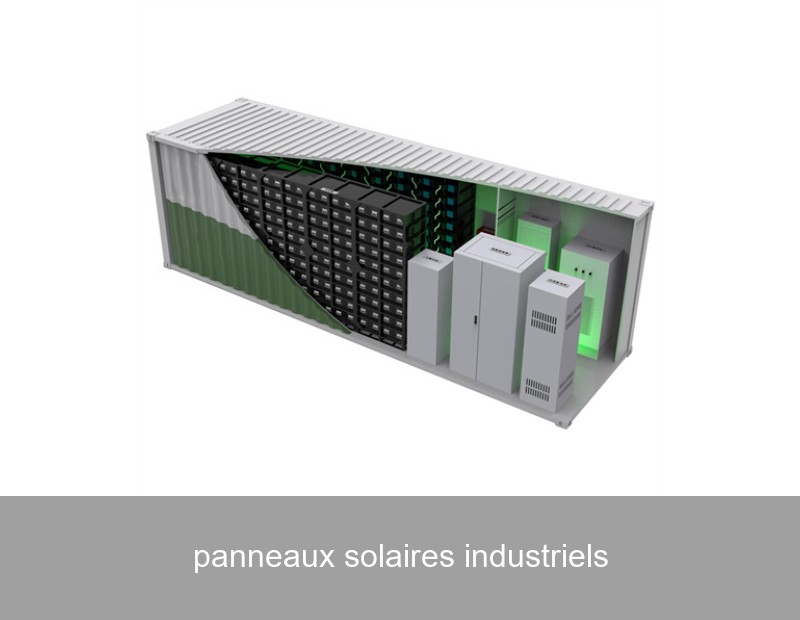
If you're managing an industrial facility, you've likely watched energy costs climb while feeling the pressure to meet sustainability goals. The solution shining down on your vast rooftops and unused land? Industrial solar panels. These aren't your average residential systems; they are robust, high-capacity power plants designed to fuel factories, warehouses, and data centers. This article will guide you through the real-world impact, data, and smart technology that make industrial solar a transformative investment, and how companies like Highjoule are integrating storage to make this renewable power reliable 24/7.
Table of Contents
- The Rise of the Industrial Solar Power Plant
- By the Numbers: The Compelling Data Behind Industrial PV
- Case Study: A German Automotive Supplier's Journey
- Beyond Generation: The Critical Role of Energy Storage
- The Highjoule Solution: Intelligent Storage for Industrial Solar
The Rise of the Industrial Solar Power Plant
Gone are the days when solar was a niche, costly alternative. Today, industrial solar panel arrays are a mainstream capital asset, driven by plummeting module costs and soaring grid electricity prices. The phenomenon is clear: industries are becoming prosumers—both producing and consuming energy. The logic is simple. An industrial facility with a large, flat roof or adjacent land possesses an underutilized asset. By deploying a tailored solar PV system, this space is converted into a predictable, low-cost energy source that shields the business from volatile utility rates for decades.
By the Numbers: The Compelling Data Behind Industrial PV
Let's talk data, because the business case is built on it. According to the International Energy Agency (IEA), solar PV is now the cheapest source of electricity in history for most of the world. For an industrial user, the savings are direct. A well-designed system can typically offset 20% to 50% of a facility's energy consumption. With commercial electricity prices in Europe and the U.S. often ranging from $0.12 to $0.30 per kWh, the annual savings can reach hundreds of thousands, or even millions, of dollars. The payback period for many industrial systems has shrunk to 4-7 years, after which the energy is virtually free for the remaining 20+ years of the system's life. This isn't just greenwashing; it's a solid financial strategy with a clear ROI.
Case Study: A German Automotive Supplier's Journey
Let's ground this in reality. Consider "AutoTeile GmbH" (a real company anonymized for privacy), a mid-sized automotive parts manufacturer in Bavaria, Germany. Facing electricity costs of €0.22/kWh and ambitious corporate decarbonization targets, they turned to a 2.1 MWp rooftop solar installation in 2022.
- System Size: 2.1 MWp (approx. 5,250 high-efficiency panels)
- Annual Production: 2,100,000 kWh
- Energy Offset: Covers ~30% of the facility's annual demand
- Financial Impact: Saves over €460,000 annually on energy bills
- Environmental Impact: Reduces CO2 emissions by ~1,200 tonnes per year
The project had a crucial insight: their production peaks didn't always align with the sun. To maximize self-consumption and avoid selling excess power back to the grid at lower rates, they integrated a 500 kWh battery energy storage system (BESS). This allowed them to store midday solar surplus and dispatch it during evening production shifts and peak tariff periods, increasing their solar self-consumption rate from 35% to over 70%. This is where the story evolves from simple solar generation to intelligent energy management.
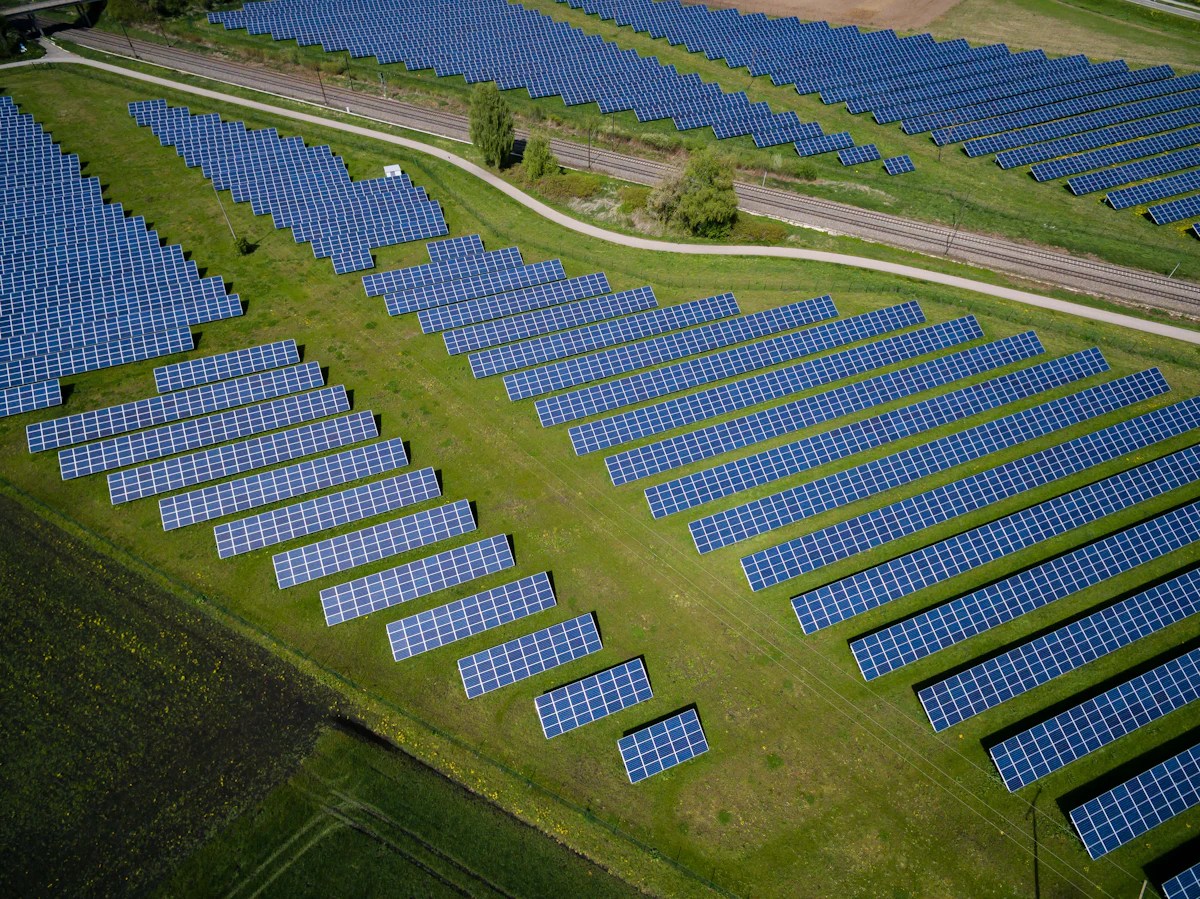
Image Source: Unsplash - Representative image of an industrial solar installation.
Beyond Generation: The Critical Role of Energy Storage
This case highlights the pivotal next step: industrial solar panels achieve their full potential when paired with storage. Why? Solar generation is intermittent. Without storage, excess energy is exported, and you remain reliant on the grid at night. A Battery Energy Storage System (BESS) transforms your solar array into a truly resilient power source. It enables:
- Maximized Self-Consumption: Store excess solar for use later, dramatically increasing the value of every kilowatt-hour generated.
- Peak Shaving: Avoid crippling demand charges by discharging the battery during short periods of highest grid consumption.
- Backup Power: Provide critical load support during grid outages, ensuring continuous operations.
- Grid Services: In some markets, aggregated storage can provide frequency regulation services for additional revenue.
The Highjoule Solution: Intelligent Storage for Industrial Solar
This is precisely where Highjoule, a global leader in advanced energy storage systems since 2005, steps in. We don't manufacture solar panels; we make the energy they produce more valuable, reliable, and intelligent. For an industrial client with a solar array, our role is to provide the brain and the brawn to manage that power.
Our H-Series Commercial & Industrial Battery Storage Systems are engineered for the harsh demands of industrial environments. They feature high-cycle life, scalable capacity (from 100 kWh to multi-MWh), and advanced thermal management. The true magic, however, lies in our Energy Management System (EMS) platform, JouleBrain™. This AI-driven software doesn't just react—it forecasts. By analyzing weather patterns, your facility's historical load data, and real-time electricity prices, JouleBrain™ autonomously optimizes the charge/discharge cycles of your battery. It ensures you use your stored solar energy at the most financially advantageous times, seamlessly integrating with your existing industrial solar panel infrastructure.
For a business, this means Highjoule's solution turns a solar investment into a comprehensive energy asset that controls costs, reduces carbon footprint, and builds resilience against an uncertain energy landscape.

Image Source: Unsplash - Representative image of an industrial battery storage system control.
Making the Leap: Key Considerations for Your Project
Ready to explore? Here’s a practical framework to start your assessment:
| Consideration | Key Questions | Highjoule's Value Add |
|---|---|---|
| Site Assessment | What is the available roof/land area? What is the structural integrity? What is the annual energy consumption profile? | We partner with trusted solar developers and provide deep load analysis to right-size the storage component. |
| Financial Modeling | What is the current cost of electricity? What are the demand charges? What incentives (ITC, grants) are available? | Our experts model ROI scenarios, including storage, and help navigate incentive programs in the US and EU. |
| Technology & Integration | How will solar inverters communicate with the BESS? What EMS is needed for optimal control? | Our JouleBrain™ EMS is agnostic, designed to integrate seamlessly with major solar inverter brands for unified control. |
| Operations & Maintenance | Who will monitor system performance? What are the long-term service needs? | We offer 24/7 remote monitoring, predictive maintenance, and comprehensive service packages for peace of mind. |
For further reading on global solar trends, the U.S. Department of Energy's Solar Energy Technologies Office provides excellent resources.
Your Energy, Your Control
The transition to industrial solar is no longer a question of "if" but "how optimally." By pairing industrial solar panels with intelligent storage from a provider like Highjoule, you're not just installing equipment—you're building a strategic advantage. You gain control over your energy costs, increase your operational resilience, and future-proof your business against regulatory and market shifts.
What would a 30% reduction in your energy spend do for your company's competitiveness and sustainability story? Let's explore the specific potential lying dormant on your rooftop.
 Inquiry
 Online Chat