


How an Australian Solar Power Company Can Unlock True Energy Independence
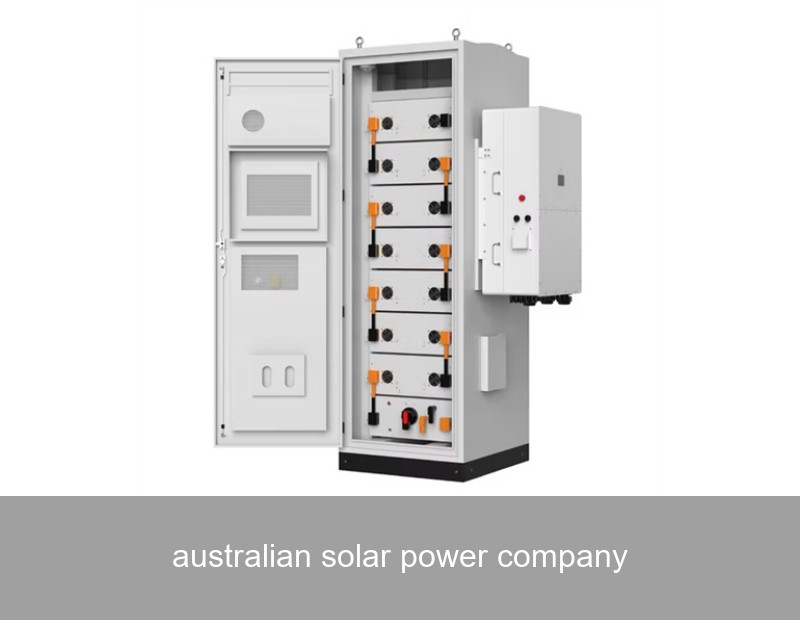
Table of Contents
- The Australian Solar Dilemma: Abundant Sun, Wasted Potential
- Beyond Generation: The Critical Role of Smart Storage
- Case Study: The Melbourne Manufacturing Plant
- Highjoule's Intelligent Solutions for Australian Solar Companies
- Building the Future Grid: From Rooftops to Microgrids
- Your Next Step Towards Energy Resilience
Australia is blessed with some of the world's best solar resources. It's no surprise that Australian solar power companies have been instrumental in putting panels on millions of rooftops. But if you're a business owner or facility manager, you might have noticed a frustrating pattern: your solar panels work brilliantly during the day, but as the sun sets or clouds roll in, you're back to drawing expensive power from the grid. This is the central challenge modern solar providers are solving, and the answer lies not just in generating power, but in intelligently storing and managing it.
The Australian Solar Dilemma: Abundant Sun, Wasted Potential
It's a typical sunny afternoon in Sydney. A commercial building's solar array is producing more electricity than the business can use. This excess energy gets fed back into the grid, often for a modest feed-in tariff. Fast forward to 7 PM. The sun is down, but operations are still running, lights are on, and machinery may be humming. Now, the business is purchasing all its electricity at peak rates from the grid. This cycle creates a "see-saw" effect—giving cheap, clean power away only to buy back expensive, often coal-heavy power hours later.
The data underscores this imbalance. According to the Australian Energy Market Operator (AEMO), the peak demand period (when electricity is most expensive and the grid is most stressed) consistently occurs in the early evening, just as solar generation falls to zero. This means the multi-billion dollar investment in rooftop solar isn't fully alleviating the pressure on the grid during its most critical, costly, and carbon-intensive periods.

Image: The sunset highlights the daily generation cutoff for solar-only systems.
Beyond Generation: The Critical Role of Smart Storage
This is where the narrative shifts from simply being an Australian solar power company to becoming a comprehensive energy solutions provider. The key is energy storage. A Battery Energy Storage System (BESS) acts as a bank for your electricity. It captures the surplus solar energy produced during the day, stores it, and dispatches it precisely when you need it most.
Think of it as the difference between having a rainwater tank that overflows into the street versus one that saves every drop for a dry spell. The benefits are tangible:
- Maximized Self-Consumption: Use 70-90% of the solar energy you produce, slashing grid imports.
- Peak Shaving: Avoid punitive demand charges and high spot prices during grid peak times.
- Backup Power: Maintain critical operations during grid outages, a feature increasingly valuable in the face of extreme weather events.
- Grid Services: For larger systems, participate in demand response programs to generate additional revenue.
Case Study: The Melbourne Manufacturing Plant
Let's look at a real-world example. A medium-sized manufacturing plant in Melbourne's south-east, working with their local Australian solar power company, installed a 500kW solar array in 2020. While it reduced daytime costs, they still faced huge demand charges. In 2023, they integrated a Highjoule H4 Commercial Series battery storage system with a capacity of 750kWh.
The results, after one full year of operation:
| Metric | Before Highjoule BESS | After Highjoule BESS | Change |
|---|---|---|---|
| Grid Import During Peak (4-9 PM) | ~350 kWh/day | <50 kWh/day | -86% |
| Monthly Demand Charge | $12,500 AUD (avg.) | $4,800 AUD (avg.) | -62% |
| Overall Energy Cost | $42,000 AUD/month | $18,500 AUD/month | -56% |
| Site's Renewable Energy Fraction | 35% | 89% | +154% |
This plant didn't just save money; it fundamentally changed its relationship with the grid, achieving true energy resilience. The Highjoule system's intelligent energy management software predicted consumption patterns and solar yield, automatically optimizing charge/discharge cycles for maximum financial return.
Highjoule's Intelligent Solutions for Australian Solar Companies
For over 18 years, Highjoule has partnered with solar integrators worldwide, providing the advanced storage technology that transforms a solar project from a cost-reduction measure into a strategic energy asset. Our products are designed to seamlessly integrate with the offerings of any forward-thinking Australian solar power company.
- For Residential & Small Commercial: The Highjoule Home+ series features scalable, all-in-one units with integrated inverter technology. Its sleek design, silent operation, and intuitive app allow homeowners to track savings and control their energy flow with ease, making it a perfect add-on for residential solar installs.
- For C&I and Microgrids: The Highjoule H4 Commercial Series is our workhorse. Built with lithium iron phosphate (LFP) battery chemistry for safety and longevity, these modular, containerized solutions can be scaled from 100 kWh to multi-MWh. They come with Highjoule's proprietary GridSync OS, a platform that enables peak shaving, tariff optimization, and even grid-forming capabilities for off-grid applications.

Image: Highjoule's C&I systems are designed for robust performance in demanding environments.
Our partnership model means we provide the technology, training, and support, empowering solar companies to deliver a complete, high-value solution without the need for deep in-house storage expertise. As the International Energy Agency notes, storage is the "linchpin" for a secure, renewable-based energy transition.
Building the Future Grid: From Rooftops to Microgrids
The ultimate vision for an Australian solar power company equipped with smart storage is the creation of localized energy ecosystems—microgrids. Imagine a remote mining site, an agricultural co-op, or a suburban community powered by a combination of solar, wind, and storage, operating independently from the main grid or connecting to it as a supportive node.
Highjoule's systems are engineered for this future. Our GridSync OS can manage multiple generation sources and prioritize loads, ensuring a hospital's critical wing stays powered or a farm's irrigation pumps run on schedule, regardless of grid conditions. This isn't just about individual savings; it's about building community-wide resilience against bushfires, floods, and supply disruptions—a pressing concern highlighted by climate scientists and research bodies like CSIRO.
Your Next Step Towards Energy Resilience
The conversation about solar in Australia has matured. It's no longer just about the number of panels on the roof, but about how much usable, dispatchable, and resilient clean energy you control. The technology to break free from the grid's price volatility and reliability issues is here and proven.
So, the question we leave you with is this: As you evaluate your next energy investment, will you settle for a solar system that only works when the sun shines, or will you partner with a provider who can deliver a 24/7 clean energy solution? What would total control over your energy costs and security mean for your business planning over the next decade?
 Inquiry
 Online Chat