


Paneles Solares en Jujuy: Powering Argentina's Future with Smart Solar and Storage
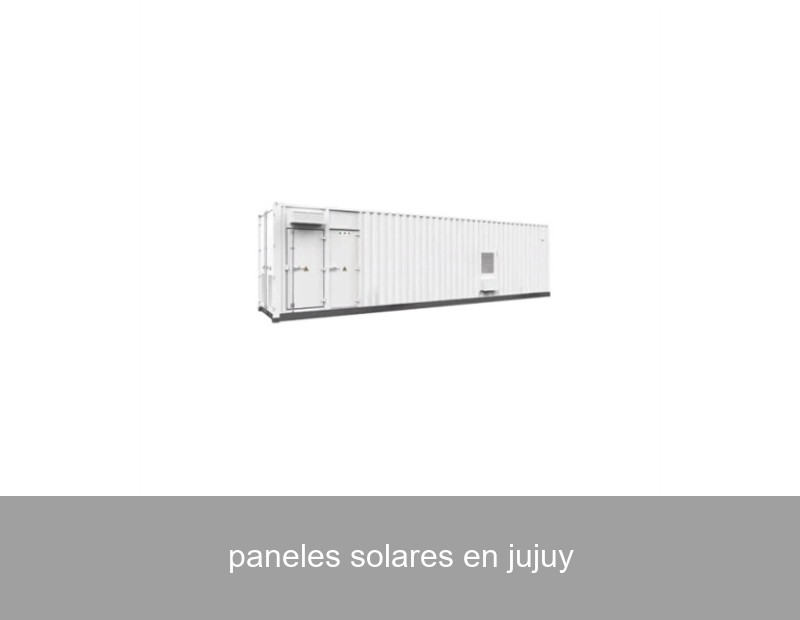
Imagine a place bathed in some of the most intense sunlight on Earth, a region where the potential for clean energy is not just promising—it's staggering. This is Jujuy, Argentina. The phenomenon of "paneles solares en Jujuy" (solar panels in Jujuy) represents more than just an installation; it's a transformative movement. Here, the high-altitude Puna plateau offers solar irradiance levels that rival the world's best sites, creating a unique opportunity to generate abundant, low-cost electricity. But as with any great potential, challenges arise: how to integrate this intermittent power into a stable grid, how to ensure energy is available when the sun sets, and how to maximize the economic return for communities and businesses. This is where the conversation evolves from simple solar panels to intelligent, integrated energy systems.
Table of Contents
The Sun Phenomenon of Jujuy
Jujuy isn't just sunny; it's a solar powerhouse. With over 300 days of sunshine per year and an average solar irradiance exceeding 2,600 kWh/m² annually, the region's potential is quantified and immense. To put that in perspective, this is significantly higher than most parts of southern Europe or even the southwestern United States. The provincial government's ambitious Cauchari Solar Park complex stands as a testament, with over 1.2 million panels generating hundreds of megawatts for the national grid. This macro-scale success story is the beacon, but the real, distributed revolution happens when businesses, industrial facilities, and remote communities harness this same resource for their own resilience and growth.
Beyond Generation: The Data on Intermittency
Here's the core challenge every solar-rich region faces: the sun's schedule doesn't always align with energy demand. A factory operates into the night, a hotel needs power for guests after dark, and critical infrastructure cannot afford downtime. Relying solely on paneles solares en Jujuy means potentially wasting excess energy at noon and having a deficit by 8 PM. This intermittency can strain local grids, limit self-consumption rates, and cap financial savings. According to studies by the International Renewable Energy Agency (IRENA), the value and viability of solar projects skyrocket when paired with storage, transforming variable generation into dispatchable, reliable power.
Think of it like this: a solar panel is a brilliant water source, but without a tank (the battery), you can only use the water when it's flowing. For Jujuy to truly capitalize on its natural asset, it needs the "tank."
Case Study: Stabilizing a Remote Mining Operation's Microgrid
Let's look at a real-world application. A mid-sized mining operation in the Jujuy Puna, off the main grid, relied on expensive, polluting diesel generators for 24/7 power. They installed a 2 MW solar farm (paneles solares en Jujuy at their best), which cut diesel use by 60% during daylight. But the generators still had to run constantly to provide base load at night and during cloud cover, leading to high maintenance costs and incomplete decarbonization goals.
The Solution & The Data: The operation integrated a 1.5 MWh / 750 kW battery energy storage system (BESS) into their microgrid. The results, monitored over one year, were compelling:
| Metric | Before BESS | After BESS Integration |
|---|---|---|
| Diesel Fuel Consumption | 100% Baseline | Reduced by 89% |
| Generator Runtime | 24/7 | Less than 10 hours per week |
| Levelized Cost of Energy (LCOE) | ~$0.35/kWh | ~$0.12/kWh |
| Carbon Footprint | High | Reduced by over 90% |
The BESS acted as a buffer, storing the midday solar surplus and releasing it on demand. It also provided critical grid-forming services, stabilizing voltage and frequency without the generators. This case illustrates the quantum leap from solar generation to a fully functional, renewable-powered microgrid.

Image Source: Unsplash (Representative of high-altitude solar installation)
The Intelligent Solution: Hybrid Solar + Storage Systems
The magic isn't just in adding batteries; it's in intelligent integration. A modern hybrid system consists of three core pillars:
- The Generation Layer: High-efficiency paneles solares en Jujuy, often using monocrystalline technology for better performance in high-light conditions.
- The Storage & Conversion Layer: This is the heart. It includes lithium-ion battery banks (for density and longevity) and sophisticated bi-directional inverters that manage the flow of energy between DC (solar, batteries) and AC (the building or grid).
- The Intelligence Layer: The brain of the operation. An Energy Management System (EMS) uses weather forecasts, load patterns, and tariff schedules to autonomously decide when to store, when to discharge, and when to export, maximizing ROI and reliability.
For a hotel in San Salvador de Jujuy, this could mean powering air conditioning overnight with stored solar. For a vineyard using irrigation pumps, it could mean running them in the early morning without drawing expensive peak power from the grid.
How Highjoule's Expertise Powers Such Solutions
This is precisely where Highjoule, as a global leader in advanced energy storage since 2005, brings critical expertise. We don't just supply components; we provide turnkey, intelligent storage solutions that make solar projects like those in Jujuy truly bankable and future-proof.
For commercial and industrial applications in regions with exceptional solar resources, our H-Series Commercial Battery Systems are engineered for durability and high cycle life, crucial for maximizing daily solar charge/discharge cycles. Their modular design allows for scalable capacity, perfect for a growing business or expanding industrial plant.
More importantly, our proprietary JouleMind AI EMS is the differentiator. It doesn't just react; it predicts and optimizes. For a project in Jujuy, JouleMind would factor in the region's specific ultra-clear mornings, potential afternoon cloud buildup, and the facility's operational schedule to create the most efficient and cost-effective energy flow strategy 24/7. We bridge the gap between raw solar potential and reliable, high-quality power for operations that cannot afford to fail.

Image Source: Unsplash (Representative of a commercial BESS installation)
What Could the Future Hold for Jujuy? An Open Question.
The trajectory is clear. Paneles solares en Jujuy are the foundation, but the future is about smart, integrated energy ecosystems. Could Jujuy's remote villages become 100% renewable-powered, self-sufficient microgrids, improving quality of life and attracting new business? Can its industries become not only green but also more competitive with drastically lower and predictable energy costs? The technology to make this happen exists today.
The question for business leaders, project developers, and community planners in Jujuy and similar high-potential regions is this: Are you ready to move beyond just capturing sunlight, to harnessing and controlling its power on your own terms, 24 hours a day? The next step in the energy revolution isn't just generation—it's intelligent storage and control.
 Inquiry
 Online Chat