


Paneles Solares en Japón: A Blueprint for Energy Resilience in the Face of Natural and Grid Challenges
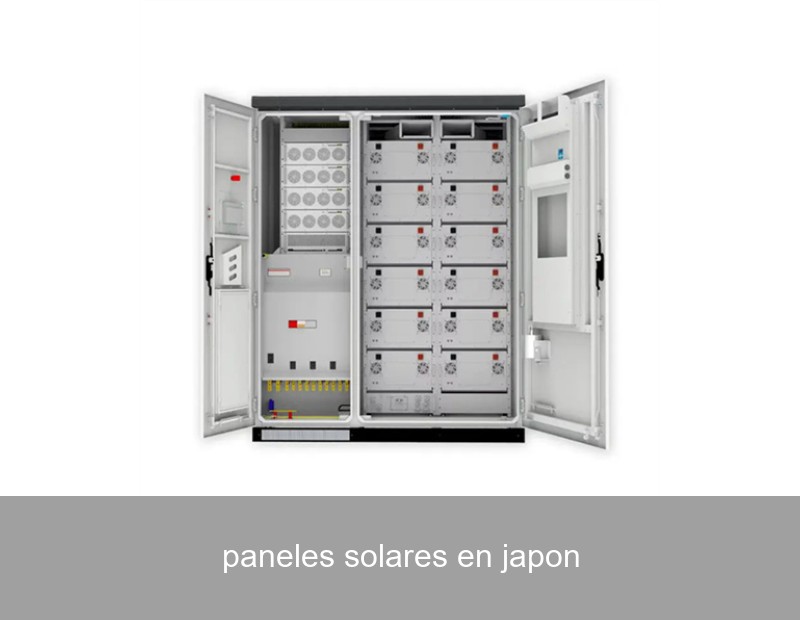
When we think of paneles solares en Japón, a fascinating duality emerges. Japan is a global technology leader, yet its energy landscape is uniquely constrained: a mountainous archipelago with limited natural resources, high population density, and a historical reliance on imported fuels. Following the 2011 Great East Japan Earthquake and the Fukushima Daiichi nuclear accident, the nation embarked on a profound energy transformation, known as the "Energy Shift." Solar power, or taiyōkō hatsuden, has been at the heart of this shift. But simply installing panels isn't the full story. The real lesson from Japan's journey is about integrating solar with intelligent storage to create resilient, self-sufficient power systems. This is where global expertise in advanced energy storage becomes critical, not just for Japan, but for any region seeking true energy independence.
Table of Contents
- The Japan Phenomenon: From Feed-in Tariff to Integrated Systems
- Data Drives the Shift: Solar Adoption and Grid Constraints
- Case Study: Resilience in a Tokyo Commercial District
- The Storage Imperative: Beyond Solar Generation
- Highjoule's Integrated Approach: Smart Storage for Global Challenges
- The Future Energy Landscape: Lessons from Japan
The Japan Phenomenon: From Feed-in Tariff to Integrated Systems
Japan's solar boom was initially catalyzed by one of the world's most generous Feed-in Tariff (FIT) schemes, introduced in 2012. It led to a massive deployment of solar panels, transforming rooftops, abandoned farmland, and even golf courses into power plants. However, this rapid growth surfaced a critical challenge: grid congestion. Japan's grid is divided into two frequencies (50Hz in the east, 60Hz in the west), and areas with abundant solar generation, like Kyushu, began experiencing curtailment—where solar output is deliberately reduced to maintain grid stability. This phenomenon taught a crucial lesson: generation must be paired with management and storage. The focus shifted from merely counting installed kilowatts of paneles solares to ensuring that the generated energy could be used effectively, reliably, and on-demand.

Image Source: Unsplash - Photo showcasing urban solar integration
Data Drives the Shift: Solar Adoption and Grid Constraints
Let's look at the numbers. According to data from the International Renewable Energy Agency (IRENA), Japan's solar PV capacity skyrocketed from around 7 GW in 2012 to over 80 GW by the end of 2023, ranking it among the top three nations for total solar capacity. Yet, a report by Japan's Agency for Natural Resources and Energy (ANRE) highlighted that in 2022, renewable energy curtailment, primarily solar, exceeded 1 billion kWh in some regions. That's enough electricity to power approximately 300,000 typical Japanese households for a year—wasted simply because the grid couldn't absorb it at the time of generation.
This data paints a clear picture: the next phase of Japan's energy transition isn't about more panels alone. It's about optimization, storage, and intelligent control. The market is now rapidly evolving towards solar-plus-storage systems for both commercial/industrial (C&I) and residential sectors, aiming to maximize self-consumption, provide backup power during frequent natural disasters, and contribute to grid services.
Case Study: Resilience in a Tokyo Commercial District
Consider the real-world example of a medium-sized pharmaceutical logistics warehouse in the Tokyo metropolitan area. The facility had a 500 kW rooftop solar array installed under the FIT scheme. While it generated revenue, the facility remained vulnerable to grid outages, which could spoil temperature-sensitive inventory and halt critical operations.
In 2022, the company decided to retrofit the system. When the initial FIT contract expired, they repurposed the solar installation, integrating it with a 750 kWh containerized battery energy storage system (BESS) and an advanced energy management system (EMS). Here are the outcomes after one year of operation:
- Self-Consumption Rate: Increased from 30% to over 85%, drastically reducing grid electricity purchases.
- Backup Power: The system can now power critical refrigeration and sorting systems for up to 8 hours during a blackout.
- Revenue Stream: By participating in a demand response program with the local utility, the facility earns incentives by discharging stored solar energy during peak grid demand periods.
- ROI: The projected payback period for the storage integration is under 7 years, factoring in energy savings, avoided losses, and new revenue.
This case mirrors a national trend, moving from passive solar generation to active, resilient energy assets.
The Storage Imperative: Beyond Solar Generation
So, what makes a storage solution truly effective in a context shaped by the challenges seen with paneles solares en Japón? It requires more than just a battery box. Key considerations include:
- Safety & Density: High energy density in a compact footprint is crucial in space-constrained Japan. Lithium iron phosphate (LFP) chemistry is now the preferred standard for its thermal stability and long cycle life.
- Intelligence: The system must autonomously decide when to store, when to discharge for self-use, and when to provide grid services, based on weather forecasts, electricity rates, and facility load patterns.
- Durability: Systems must be built to withstand harsh conditions, from typhoon humidity to seismic activity—a non-negotiable in the Pacific Ring of Fire.
This is precisely the engineering philosophy we embody at Highjoule. For nearly two decades, we've designed storage systems not just for ideal conditions, but for the real-world complexities of grids, weather, and economics.
Highjoule's Integrated Approach: Smart Storage for Global Challenges
Drawing inspiration from complex energy transitions like Japan's, Highjoule develops solutions that address the core pain points of solar integration. Our H-Series Commercial & Industrial BESS is a prime example. It's a modular, all-in-one unit that integrates LFP batteries, a hybrid inverter, thermal management, and our proprietary JouleMind AI EMS into a single, scalable cabinet.
How does it apply to challenges similar to Japan's? The JouleMind platform can be configured to:
- Maximize Solar Self-Consumption: It learns your facility's load profile and solar generation pattern, storing excess midday solar for use in the evening peak.
- Ensure Critical Backup: Provides seamless transition to backup power during outages, protecting operations and data.
- Unlock Revenue: Enables safe participation in grid service markets (like frequency regulation or virtual power plants) where available, turning your storage system into an income-generating asset.
For larger-scale applications like microgrids for industrial parks or remote communities—a relevant solution for island nations or geographically challenging areas—our MegaJoule Containerized BESS offers utility-scale storage in a pre-integrated, plug-and-play format. These systems are the logical next step for regions with high solar penetration, helping to stabilize grids and defer costly infrastructure upgrades.

Image Source: Unsplash - Photo representing advanced BESS technology
The Future Energy Landscape: Lessons from Japan
The journey of paneles solares en Japón is a microcosm of the global energy transition. It starts with a push for generation but quickly evolves into a sophisticated conversation about integration, resilience, and intelligence. Japan's experience underscores that sustainable power is not just about the source, but about the system.
As we look at markets in Europe and North America, which are also experiencing rapid renewable growth and grid modernization pains, the same principles apply. Whether it's a homeowner in California wanting to avoid blackouts, a factory in Germany aiming to cut energy costs and carbon footprint, or a municipality building a disaster-resilient community, the solution converges on the same point: smart solar + smart storage.
Japan's path from FIT-driven solar adoption to a mature market prioritizing storage-integrated solutions offers a valuable blueprint. It asks us a pivotal question: As you evaluate your own energy resilience strategy, are you planning for just generation, or for a truly intelligent and independent power system?
What specific challenge in your region's energy transition—be it grid instability, rising costs, or the need for backup power—could be solved by applying the integrated storage-first approach pioneered in markets like Japan?
 Inquiry
 Online Chat