


One Solar Hybrid Inverter: The Intelligent Heart of a Modern Energy System
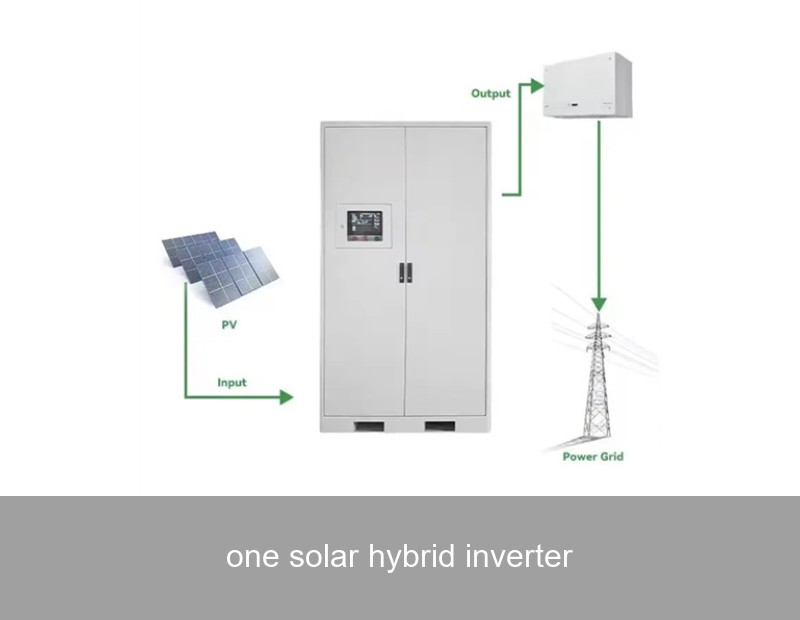
Have you ever wondered how a modern home or business can seamlessly use solar power, store it for a rainy day, and still stay connected to the grid—all while saving money and increasing energy independence? The answer lies in a single, sophisticated piece of technology: the one solar hybrid inverter. This isn't just another inverter; it's the intelligent command center for your entire energy ecosystem. For nearly two decades, Highjoule has been at the forefront of designing and deploying these advanced systems across Europe and the US, helping customers transform their relationship with energy. Let's explore why this single unit is revolutionizing how we power our lives.
Table of Contents
- What is a One Solar Hybrid Inverter?
- The Problem: Disconnected Energy Sources
- The Solution: Integration and Intelligence
- Key Benefits of a Unified System
- A Real-World Case Study: Resilience in California
- The Highjoule Approach: Beyond the Hardware
- Future Trends and Your Next Step
What Exactly is a One Solar Hybrid Inverter?
Traditionally, a solar setup required multiple components: a solar inverter to convert DC from panels to AC for your home, a separate charge controller for batteries, and another inverter to draw from those batteries. A one solar hybrid inverter consolidates all these functions into a single, streamlined unit. Think of it as the difference between a collection of individual stereos, CD players, and tape decks versus a modern, all-in-one smart sound system. It manages energy flow from solar panels, battery storage, and the grid simultaneously, making real-time decisions to optimize for efficiency, cost, and resilience.

This integration is the cornerstone of modern energy independence. Companies like Highjoule have refined this technology to offer systems like our HPS Series Hybrid Power Station, which combines a high-efficiency hybrid inverter with intelligent software, creating a plug-and-play hub for solar, storage, and backup power.
The Problem: Disconnected Energy Sources and Wasted Potential
Here’s a common scenario many homeowners with older solar systems face: Your panels produce a surplus of energy in the middle of a sunny afternoon when you're at work. With a standard setup, this excess is fed back to the grid, often at a low feed-in tariff. Later that evening, when the sun is down and energy prices are high, you're forced to buy electricity back from the utility. Your system isn't "wrong," it's just not smart. It's a series of disconnected parts without a unified strategy.
- Inefficiency: Energy is exported when it's least valuable and imported when it's most expensive.
- Complexity: Multiple devices mean more points of failure, more complex installation, and a larger footprint.
- Limited Resilience: Most standard grid-tie inverters shut down during a blackout for safety, leaving you without power even if the sun is shining.
The Solution: Integration, Intelligence, and Insight
A one solar hybrid inverter solves these issues through integration and built-in intelligence. It acts as a single point of control with three primary energy management functions:
- Multi-Mode Operation: It can operate in grid-tie, off-grid, and backup modes seamlessly, switching in milliseconds during an outage.
- Smart Load Management: It prioritizes using solar energy to power your home first, then directs surplus to charge your battery, and only then exports to the grid. You can program it to avoid drawing expensive grid power during peak rate periods.
- Advanced Monitoring: All this is visible and controllable via a user-friendly app, giving you unprecedented insight into your energy production, consumption, and savings.
This isn't just theoretical. Data from the National Renewable Energy Laboratory (NREL) shows that pairing solar with storage and smart controls can increase self-consumption of solar energy by 40-80%, dramatically reducing reliance on the grid.
Key Benefits of a Unified System
| Benefit | Description | Impact |
|---|---|---|
| Maximized Self-Consumption | Uses your solar energy first, storing what you don't use immediately. | Lowers electricity bills, improves ROI on solar panels. |
| Uninterrupted Power Supply | Provides automatic backup power during grid outages. | Ensures essential appliances keep running, providing peace of mind. |
| Reduced System Complexity | One unit replaces 2-3 separate devices. | Easier installation, maintenance, and a cleaner setup. |
| Intelligent Energy Arbitrage | Can be programmed to buy grid power when cheap and use stored energy when expensive. | Further optimizes costs, especially in areas with time-of-use rates. |
A Real-World Case Study: Resilience in California, USA
Let's look at a concrete example. A medium-sized winery in Sonoma County, California, faced frequent Public Safety Power Shutoffs (PSPS) to prevent wildfires. These outages threatened their temperature-sensitive fermentation tanks and crippled business operations. They needed a solution that would keep critical processes online and provide long-term financial sense.
The Solution: Highjoule designed and installed a system centered around a high-capacity one solar hybrid inverter, coupled with an existing solar array and a new 50 kWh lithium-ion battery bank. The hybrid inverter became the system's brain, managing the existing solar, the new storage, and the critical loads of the winery.
- Outage Protection: The system provided over 72 hours of backup power for critical loads during grid outages, ensuring zero product loss.
- Financial Savings: By shifting energy consumption away from peak grid periods (4-9 pm), the winery reduced its monthly demand charges by an average of 28%.
- Solar Optimization: Self-consumption of their solar energy increased from ~35% to over 90%, drastically reducing their annual energy costs.

This case, mirrored by many across Europe dealing with volatile energy prices, highlights that a one solar hybrid inverter isn't just an emergency tool; it's a daily driver for economic and operational efficiency.
The Highjoule Approach: Engineering the Ecosystem
At Highjoule, we believe the hardware is only part of the story. Our HPS Series hybrid inverters are designed with scalability and intelligence at their core. What sets our implementation apart is the Highjoule Energy Operating System (EOS), a cloud-based platform that provides system diagnostics, performance analytics, and remote firmware updates. This means your system gets smarter over time, adapting to new utility rate structures or your changing consumption patterns.
Our services extend from initial consultancy and custom design for commercial and industrial applications to residential packages and long-term performance monitoring. We partner with certified installers across the US and Europe to ensure every system, powered by our one solar hybrid inverter technology, delivers on its promise of resilience and savings. For microgrid applications, this same technology forms the stable, intelligent foundation for community-scale energy independence.
Considering the Technology: AC-Coupled vs. DC-Coupled
A technical point worth understanding is the coupling method. Our hybrid systems often utilize DC-coupling, where solar panels and batteries connect on the DC side of the inverter. This is more efficient for charging batteries directly with solar energy, as it avoids a double conversion loss (DC to AC and back to DC). It's a design choice that exemplifies how a truly integrated one solar hybrid inverter system can squeeze every possible watt of value from your investment. You can read more about the technical nuances on the U.S. Department of Energy's solar integration page.
Future Trends and Your Next Step
The evolution of the one solar hybrid inverter is moving towards even greater grid interaction. Future systems will act as virtual power plant (VPP) participants, where aggregated home batteries can provide grid stabilization services. This turns your personal energy asset into a community resource, potentially creating new revenue streams. The core enabling technology for this future is the intelligent, communicating hybrid inverter already on the market today.
So, as you consider taking control of your energy costs and resilience, the question isn't just about adding solar or batteries in isolation. The pivotal question is: How can a single, intelligent system unify your energy assets to create a solution that is greater than the sum of its parts? The answer begins with exploring what a modern one solar hybrid inverter can do for you.
 Inquiry
 Online Chat