


Off Grid Power Systems UK: Your Complete Guide to Energy Independence
Imagine a home, farm, or business in the UK, completely free from the National Grid. No more electricity bills, no vulnerability to widespread power cuts, and a significantly reduced carbon footprint. This isn't a distant dream; it's the practical reality offered by modern off grid power systems in the UK. For homeowners in remote Scottish Highlands, agricultural holdings in Wales, or eco-conscious developers across the countryside, disconnecting from the grid is becoming a viable and intelligent choice. This guide will walk you through everything you need to know about achieving true energy independence in the British context.
Why Go Off-Grid? Key Drivers in the UK Market
The interest in off grid power systems UK is surging, and it's driven by more than just a desire for a rural idyll. Several powerful factors are converging to make this technology a mainstream consideration.
- High Grid Connection Costs: For new builds or remote properties, the quote from the Distribution Network Operator (DNO) to extend a grid connection can be staggering—often ranging from £30,000 to well over £100,000. An off-grid system can be a cost-effective alternative from day one.
- Energy Security and Resilience: With an increasing frequency of severe weather events disrupting power supplies, as noted by the UK Met Office, the appeal of a self-reliant power supply is stronger than ever. An off-grid system ensures continuity for critical operations, from farm refrigeration to home medical equipment.
- Rising Energy Prices: The volatility of the global energy market directly impacts UK electricity bills. Locking in your "fuel" cost—which is essentially free sunlight and wind—provides long-term financial predictability.
- Environmental Goals: The UK's legally binding net-zero target is motivating individuals and businesses to decarbonise. A well-designed off-grid system powered by renewables is a direct and impactful contribution to this goal.

Image: A modern off-grid property utilising solar panels. Source: Unsplash
Building Blocks: Components of a Modern Off-Grid System
A reliable off grid power system is more than just a few solar panels. It's an integrated ecosystem of components working in harmony. Let's break down the essentials:
1. Energy Generation: Solar, Wind, and Backup
Solar PV is the cornerstone for most UK systems, complemented by wind turbines in suitable locations. A backup generator (often diesel, LPG, or biodiesel) is typically included as a "last resort" for prolonged periods of low renewable generation, especially in deep winter.
2. The Heart of the System: The Battery Energy Storage System (BESS)
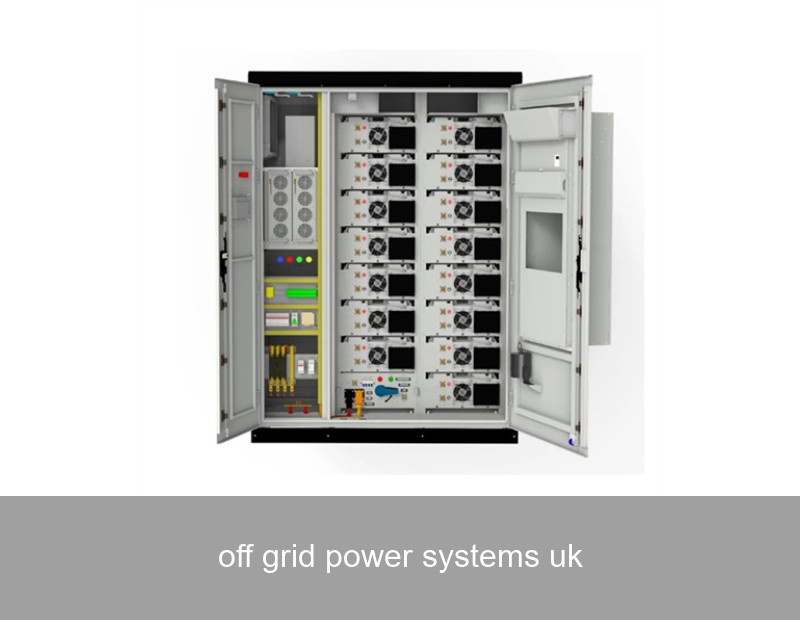
This is where the magic happens. The battery bank stores excess energy generated during sunny or windy periods for use at night and during calm weather. Modern lithium-ion batteries, like those in Highjoule's H-Joule Cube series, offer high depth of discharge, long cycle life (10,000+ cycles), and compact footprints compared to older lead-acid technology.
3. The Brain: The Inverter/Charger and System Controller
The inverter converts DC electricity from batteries and solar panels into the AC power your appliances use. An advanced off-grid inverter, such as those integrated into Highjoule systems, also manages battery charging from multiple sources (solar, wind, generator) and prioritises loads for optimal efficiency.
| Component | Primary Function | Key Consideration for UK Climate |
|---|---|---|
| Solar PV Array | Converts sunlight into electricity | Oversizing is often recommended to capture low-light winter sun. |
| Battery Bank (BESS) | Stores energy for use when generation is low | Capacity must account for several consecutive cloudy days ("autonomy days"). |
| Inverter/Charger | Converts DC to AC & manages charging | Must be robust enough to handle motor starts (e.g., for water pumps). |
| Backup Generator | Provides power during extended low-renewable periods | Automatic start-stop functionality minimises fuel use and runtime. |
A Real-World UK Case Study: The Highland Estate
Let's look at a concrete example. A 150-acre sporting estate in the Scottish Highlands faced a £85,000 quote to connect to the grid. Their energy needs included a 4-bedroom lodge, a stable block, water pumping, and estate workshop equipment, with a peak load of 15kW and a daily consumption of around 40kWh.
The Solution & Data: The estate installed a hybrid off-grid system in 2022. It features a 24kW solar array, a 25kW wind turbine, and a Highjoule H-Joule Cube 30 battery system with 30kWh of usable storage. A 20kVA biodiesel generator serves as backup. In its first full year of operation:
- Generator Runtime: Reduced to just 210 hours annually (primarily in December and January), an 85% reduction compared to a generator-only setup.
- Fuel Savings: Saved over £4,200 in diesel costs.
- Renewable Fraction: 91% of the estate's total annual energy came directly from solar and wind.
- Payback Period: The entire system is projected to pay for itself in under 9 years when compared to the avoided grid connection fee and ongoing fuel savings.
This case demonstrates that with precise sizing and high-quality components, off grid power systems in the UK can deliver exceptional reliability and economic sense, even in challenging northern climates.
Engineered for Resilience: Highjoule's Off-Grid Solutions for the UK
At Highjoule, we understand that an off-grid system is a critical piece of infrastructure. Our approach goes beyond simply selling components; we provide intelligent, integrated power solutions designed for the specific demands of the UK and European environments.
Our Off-Grid Power Hub is a pre-engineered solution that combines our high-efficiency battery storage, advanced hybrid inverters, and intelligent energy management software into a single, manageable platform. The system's brain continuously forecasts weather (leveraging data from sources like the European Centre for Medium-Range Weather Forecasts) and learns your consumption patterns to optimise every watt-hour of energy. It automatically decides when to store solar power, when to draw from the battery, and when to briefly activate the backup generator for the most efficient recharge, maximising system lifespan and minimising fuel use.

Image: A modern battery storage system installation. Source: Unsplash
For larger commercial or microgrid applications, such as remote holiday parks or agricultural processing facilities, our H-Joule Matrix scalable containerised BESS can be deployed. This allows for megawatt-hour-scale storage, ensuring community or business-level energy independence. All our systems are supported by 24/7 remote monitoring and a dedicated UK-based technical support team.
Considering Your Own Off-Grid Power System in the UK?
The journey to energy independence starts with a clear understanding of your unique needs. What are your non-negotiable loads (like refrigeration or water pumps)? What is your site's solar and wind potential? Crucially, what level of reliability are you aiming for—are you comfortable with occasionally managing your consumption, or do you need "grid-like" availability 365 days a year?
Designing a robust off grid power system is a complex task where oversizing is costly and undersizing leads to failure. It requires professional expertise in load profiling, resource assessment, and component integration. This is where partnering with an experienced provider like Highjoule makes the difference between an expensive experiment and a lifelong asset.
Are you ready to explore what a custom-designed off-grid power system could look like for your UK property, and what the true cost of energy independence would be for your specific situation?
 Inquiry
 Online Chat