


Lithium Ion Solar Battery: The Key to Unlocking Energy Independence
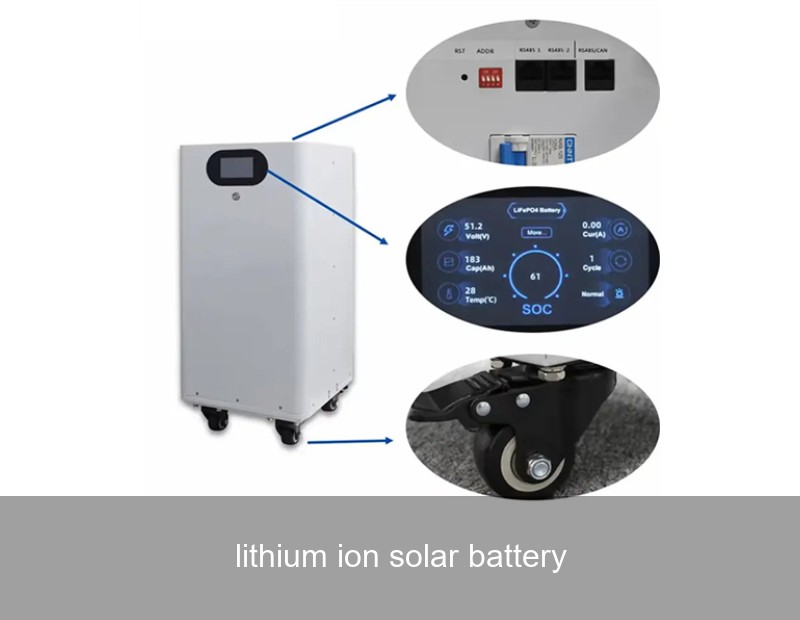
Have you ever watched your solar panels generate a surplus of clean energy on a sunny afternoon, only to see it flow back to the grid, knowing you'll have to buy it back at a higher price in the evening? This common frustration is driving homeowners and businesses across Europe and the US to seek a smarter solution: the lithium ion solar battery. More than just a backup, these advanced energy storage systems are the cornerstone of a modern, resilient, and cost-effective energy strategy. They allow you to capture, store, and use your self-generated solar power on your own terms. As a leader in this field since 2005, Highjoule is at the forefront, designing intelligent storage solutions that transform this potential into tangible, everyday benefits for commercial, industrial, residential, and microgrid applications.
Why Lithium-Ion Dominates Solar Storage
When it comes to pairing with solar PV, not all batteries are created equal. While lead-acid batteries had their day, the lithium ion solar battery has become the undisputed champion for good reason. Let's break down the "why" behind the technology.
The Performance Advantage
Lithium-ion chemistry, particularly variants like Lithium Iron Phosphate (LFP), offers a compelling set of features perfectly suited for the daily charge-discharge cycle of solar energy storage:
- Higher Depth of Discharge (DoD): You can safely use 90-95% of a lithium-ion battery's stored energy without damaging it. Compare that to roughly 50% for traditional lead-acid, meaning you get nearly twice the usable capacity from a similarly rated battery.
- Longer Lifespan: A quality lithium-ion system can deliver thousands of cycles, often coming with warranties of 10 years or more while maintaining 60-70% of its original capacity. This translates to a much lower cost per cycle over its lifetime.
- Greater Efficiency: With round-trip efficiency often exceeding 95%, almost all the solar energy you put into a lithium-ion battery is available for use. For lead-acid, losses of 15-20% are common, meaning a significant portion of your hard-earned solar power is wasted as heat.
- Compact Size & Flexibility: Higher energy density means these systems take up less space and can be more easily installed in garages, utility rooms, or even outdoors with proper enclosures.

This technological edge is backed by market data. According to the International Energy Agency, lithium-ion batteries accounted for over 90% of new global grid-scale storage and the vast majority of residential storage additions in recent years, a clear testament to their effectiveness.
Beyond Kilowatt-Hours: Key Metrics You Must Understand
Choosing a lithium ion solar battery isn't just about picking the biggest "kWh" number. To make an informed decision, you need to speak the language of storage. Here are the critical specifications:
| Metric | What It Means | Why It Matters |
|---|---|---|
| Usable Capacity (kWh) | The actual amount of energy you can draw from the battery. | Determines how long you can power your home/business during an outage or after sunset. |
| Continuous Power (kW) | The maximum rate at which the battery can deliver electricity at any moment. | Defines how many large appliances (e.g., AC, oven, machinery) you can run simultaneously. |
| Depth of Discharge (DoD) | The percentage of the battery's total capacity that is safe to use. | A higher DoD (like 95%) means you get more value from your investment. |
| Round-Trip Efficiency | The percentage of energy put into storage that is later retrieved. | Higher efficiency (95%+) means less wasted solar energy and more savings. |
| Cycles & Warranty | The number of charge/discharge cycles and the warranty terms. | Guarantees long-term performance and protects your investment. |
For instance, a battery with 10 kWh of usable capacity and 5 kW of continuous power can run a 2 kW refrigerator and 3 kW of lighting/electronics for several hours, but it might not be able to start a 6 kW heat pump. This is where professional design from a company like Highjoule is crucial. Our H-Joule HomeStack and Commercial Energy Hub systems are engineered with these real-world dynamics in mind, ensuring balanced performance that matches your specific load profile.
A Real-World Case Study: The German Bakery Project
Let's move from theory to practice. Consider a mid-sized artisan bakery in Bavaria, Germany. Their challenge was twofold: high electricity costs during early morning operational peaks and a desire to increase sustainability.
The Phenomenon: Energy bills were spiking between 4 AM and 9 AM during baking, coinciding with high grid tariffs. Their existing rooftop solar system produced most of its energy in the middle of the day, which was largely exported to the grid at a lower feed-in tariff.
The Data & Solution: A Highjoule energy audit revealed a morning peak load of 25 kW and an average daily consumption of 180 kWh. We installed a tailored 40 kWh Highjoule Commercial Energy Hub system, integrated with their existing solar array. The system was programmed to charge from excess solar during the day and from the grid during a brief, ultra-low-cost overnight window.
The Outcome: The battery system seamlessly discharges during the expensive morning peak, covering nearly 100% of the bakery's power needs during those hours. The results within the first year were compelling:
- 40% reduction in peak demand charges from the utility.
- 68% increase in self-consumption of solar energy.
- Overall electricity cost savings of approximately €5,200 annually.
- Payback period estimated at under 7 years, with a system warranty of 10 years.

This case mirrors the findings of studies like those from the National Renewable Energy Laboratory (NREL), which highlight the dual value of solar-plus-storage for both energy arbitrage and demand charge management in commercial settings.
Choosing the Right System for Your Needs
Your energy profile is as unique as your home or business. Selecting a lithium ion solar battery requires a thoughtful assessment.
For Homeowners (Residential Applications):
- Primary Goal: Backup power during outages, maximizing solar self-consumption, and reducing bills.
- Key Considerations: Your average daily electricity use, critical loads you want to back up (refrigerator, lights, internet), and available space.
- Highjoule Solution: Our H-Joule HomeStack is a modular system that can be scaled from 10 kWh to 30+ kWh. Its integrated energy management system learns your usage patterns and automatically optimizes storage and discharge to give you the greatest security and savings.
For Businesses (Commercial & Industrial Applications):
- Primary Goal: Demand charge reduction, power quality improvement, backup for critical processes, and achieving sustainability targets.
- Key Considerations: Load profile analysis, peak demand intervals, utility rate structure, and any three-phase power requirements.
- Highjoule Solution: Our Commercial Energy Hub series is built for robustness and scalability. These systems can be configured into large-scale arrays, often integrated with advanced monitoring and control software for real-time energy optimization.
Highjoule's Role in Your Energy Future
The journey to energy independence is more accessible than ever, but it requires a reliable partner. With nearly two decades of experience, Highjoule doesn't just sell batteries; we provide end-to-end intelligent, efficient, and sustainable power solutions. From the initial consultation and custom system design using industry-leading components to professional installation and ongoing monitoring via our proprietary platform, we ensure your lithium ion solar battery investment delivers maximum value.
Our technology is designed for the future. Whether it's participating in grid services (where available), integrating with emerging smart home ecosystems, or adapting to new utility tariffs, Highjoule systems are software-upgradable to protect your investment as the energy landscape evolves.

For deeper technical insights into battery safety and performance standards, resources like the U.S. Department of Energy's Solar Energy Technologies Office provide valuable, authoritative information.
Ready to Take Control?
The sun provides the energy; the lithium ion solar battery provides the freedom to use it when, where, and how you need it most. It's a practical step towards lower bills, greater resilience, and a lighter carbon footprint. What would energy security and predictability mean for your home or business operations in the year ahead?
 Inquiry
 Online Chat