


Unleash Off-Grid Freedom: A Deep Dive into the LiPower 1000W Portable Power Station
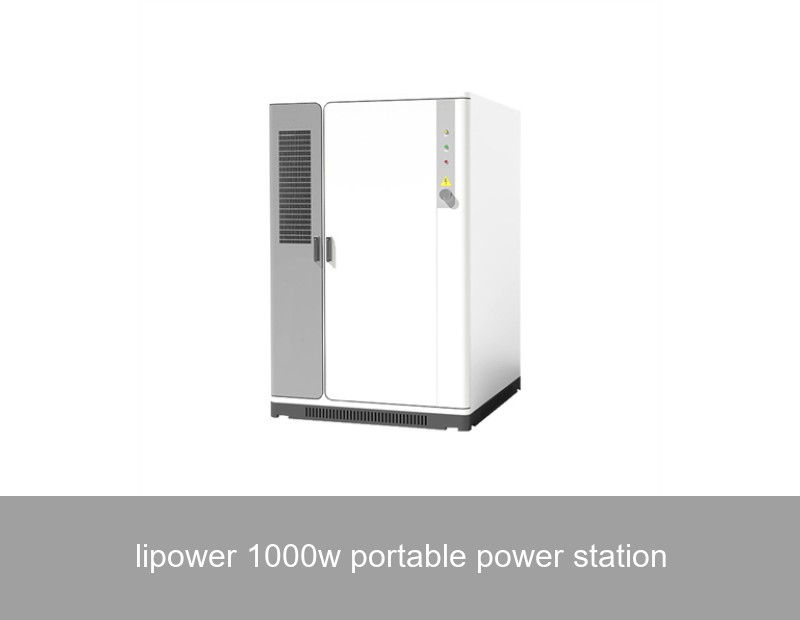
you're in the middle of a breathtaking national park, capturing the perfect sunset with your drone, only for its battery to die. Or, a sudden storm knocks out power at your home office, halting a critical project. In our increasingly mobile and electricity-dependent world, reliable power is no longer a luxury—it's a necessity. This is where the LiPower 1000W portable power station shines. More than just a bulky battery, it's a sophisticated, clean energy hub that represents a significant leap in personal power technology. As a product technology expert at Highjoule, a global leader in advanced energy storage since 2005, I've seen how the principles we apply to large-scale commercial and microgrid systems are revolutionizing portable power. Let's explore why the right portable power station is a game-changer.
Table of Contents
- The Rise of Portable Power: Beyond the Gas Generator
- Anatomy of a Modern Power Station: What Makes a LiPower 1000W Tick
- Real-World Applications: From Camping Trips to Critical Backups
- Case Study: Powering a Remote Work Setup in the Pacific Northwest
- Choosing the Right Station: Key Features Beyond Wattage
- The Highjoule Difference: Engineering Trust into Every Watt
The Rise of Portable Power: Beyond the Gas Generator
For decades, the only option for off-grid or backup power was the loud, fume-spewing gasoline generator. They are effective but come with significant drawbacks: noise pollution, carbon emissions, maintenance, and the hassle of storing fuel. The shift towards renewable energy and quieter, smarter technology has driven the demand for a better solution. According to a market analysis, the global portable power station market is expected to grow at a compound annual growth rate (CAGR) of over 8% from 2023 to 2030, fueled by outdoor recreation, remote work, and increasing awareness of emergency preparedness(Grand View Research).
This is the core phenomenon: people need clean, quiet, and user-centric power. The LiPower 1000W portable power station sits perfectly in this sweet spot. With a 1000W output (and often 2000W surge), it can power everything from smartphones and laptops to mini-fridges, CPAP machines, and even small power tools. It's the silent guardian for your adventures and emergencies.
Anatomy of a Modern Power Station: What Makes a LiPower 1000W Tick
Let's peel back the casing. At its heart, a high-quality portable power station like those developed with Highjoule's expertise consists of three core systems:
- The Battery Cell: This is the fuel tank. Most modern stations use Lithium Iron Phosphate (LiFePO4) cells, and for good reason. Compared to older lithium-ion chemistries, LiFePO4 offers superior safety (much higher thermal stability), a longer lifespan (3,000+ charge cycles vs. 500-1,000), and better performance in a wider temperature range. It's the same technology philosophy we use in our large-scale residential and commercial battery energy storage systems (BESS).
- The Battery Management System (BMS): This is the brain. A sophisticated BMS monitors cell voltage, temperature, and current. It prevents overcharging, over-discharging, and short circuits, ensuring safety and maximizing battery life. Think of it as the advanced energy management software we deploy for microgrids, but miniaturized.
- The Power Electronics: This is the interpreter. It includes the pure sine wave inverter, which converts the battery's DC power to clean AC power that's safe for sensitive electronics. A poor inverter can damage devices. It also manages multiple input ports (AC, solar, car) for flexible recharging.

Image Source: Unsplash - A modern portable power station showcasing multiple output options.
Real-World Applications: From Camping Trips to Critical Backups
So, what can you actually do with 1000 watts? The applications are surprisingly vast:
| Scenario | Devices Powered | Approximate Runtime* |
|---|---|---|
| Weekend Camping | LED String Lights (10W), Portable Cooler (50W), Smartphone Charging | Multiple days |
| Home Office Backup | Laptop (60W), Router (10W), Monitor (30W), Desk Lamp (15W) | 8-10 hours |
| Tailgate Party | Blender (300W), Portable TV (100W), Mini Fridge (80W) | 4-6 hours |
| Emergency Preparedness | CPAP Machine (30-60W), Medical Fridge, Communication Radio, Lights | Critical overnight support |
*Runtime depends on the station's total watt-hour (Wh) capacity. A typical LiPower 1000W model might have a 1002Wh battery.
Case Study: Powering a Remote Work Setup in the Pacific Northwest
Let's look at a real example from the US market. Sarah, a graphic designer from Seattle, wanted to work from a secluded cabin in the Olympic Peninsula for a week. The cabin had unreliable grid power. Her setup included a MacBook Pro (96W), a 27-inch monitor (50W), a Wi-Fi hotspot (15W), and an LED light (10W). Her total continuous draw was around 171W.
She used a LiPower 1000W portable power station with a 1002Wh capacity and paired it with two 200W portable solar panels. The data from her use is enlightening:
- Daily Energy Need: 171W * 8 hours = 1,368Wh. This exceeded the station's capacity.
- Solar Replenishment: With ~5 hours of good sun, her solar array could generate up to 200W * 2 panels * 5 hours * 0.7 (efficiency factor) = ~1,400Wh.
- Outcome: The system created a sustainable microgrid. The power station ran her office all day, while solar charging replenished the battery by late afternoon. She achieved a full week of productive, carbon-free work without sacrificing comfort—a perfect example of personal energy independence.
This mirrors the solutions Highjoule engineers for off-grid communities and industrial sites, just on a personal scale. It demonstrates the powerful synergy between storage and solar generation.
Choosing the Right Station: Key Features Beyond Wattage
When shopping for a LiPower 1000W portable power station, don't just look at the wattage. Here’s a professional checklist:
- Battery Chemistry: Insist on LiFePO4 for longevity and safety.
- Cycle Life: Look for a rating of 3,000+ cycles to 80% capacity.
- Port Variety: Ensure it has AC outlets, USB-C PD (for fast-charging laptops), standard USB-A, and 12V DC ports.
- Solar Charging Compatibility: Verify the maximum solar input (e.g., 500W). A higher input means faster solar recharging.
- Management & Monitoring: A clear digital display and a companion app for remote monitoring are huge pluses.

Image Source: Unsplash - Portable power station recharging via solar panel in an outdoor setting.
The Highjoule Difference: Engineering Trust into Every Watt
At Highjoule, our journey since 2005 has been built on providing intelligent, efficient, and sustainable power solutions for the most demanding commercial, industrial, and residential applications. We understand the critical importance of reliability and safety in energy storage. This deep expertise is now reflected in our approach to portable power.
The principles that ensure a 100 kWh commercial battery system operates flawlessly for decades are the same we advocate for in portable stations: robust cell selection, multi-layer BMS protection, and high-efficiency power conversion. When you choose a product built with Highjoule's technological philosophy, you're not just buying a battery box; you're investing in a piece of proven, professional-grade energy infrastructure designed for your peace of mind. We partner with leading manufacturers to ensure these standards are met, bringing utility-scale confidence to your backpack or garage.
Whether you're powering a critical medical device during an outage in rural Europe, running photography gear on a North American adventure, or simply seeking energy independence, the right tool matters. The LiPower 1000W portable power station category, when built to high standards, represents a transformative step in personal energy freedom.
So, I leave you with this question: What aspect of your life—your creativity, your work, your safety, or your adventure—would you unlock if clean, reliable power was guaranteed, anywhere?
 Inquiry
 Online Chat