


Large Solar Power Station Success: Why Energy Storage is the Game Changer
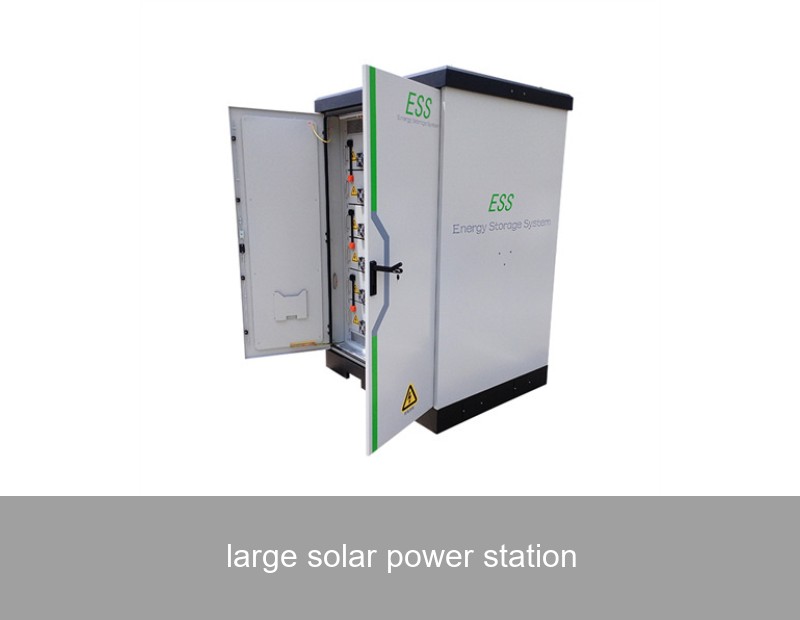
You've seen the impressive images: vast fields of solar panels glinting under the sun, powering thousands of homes. A large solar power station is a marvel of modern renewable energy. But for grid operators and energy developers, a significant, often unspoken challenge persists long after the ribbon-cutting ceremony. What happens when the sun sets, or a thick cloud bank rolls in? The power output plummets, creating grid instability and lost revenue. This is where the true evolution of solar energy begins—not just with generation, but with intelligent storage. Integrating advanced Battery Energy Storage Systems (BESS) is no longer optional; it's the critical component that transforms intermittent solar resources into reliable, dispatchable power plants.
Table of Contents
The Dawn of a New Challenge: Intermittency
The success of large-scale solar has, ironically, created its own set of complexities. Solar generation follows a predictable yet uncontrollable curve, peaking at midday and falling to zero at night. This creates a famous "duck curve" in net load demand, where the grid must rapidly ramp up other power sources in the evening as solar fades. This intermittency poses three core problems for a large solar power station:
- Grid Congestion & Curtailment: During peak production, if local demand is low and transmission lines are congested, grid operators may order the solar farm to reduce output ("curtail"). This is wasted, clean energy and lost income.
- Frequency Instability: The grid requires a precise balance between supply and demand to maintain a stable frequency (e.g., 50Hz in Europe, 60Hz in the US). Sudden drops in solar output can cause frequency dips, potentially leading to outages.
- Reduced Asset Value: A solar plant that cannot deliver power when it's most valuable (e.g., during evening peak demand) has a lower capacity value and faces greater market price volatility.

Image Source: U.S. Department of Energy - Illustrating the 'Duck Curve' created by solar energy.
The Data Reality: Curtailment and Instability
The numbers paint a clear picture. In California, a global leader in solar, the California Independent System Operator (CAISO) reported over 2.4 million MWh of renewable energy curtailed in 2022, a significant portion from solar. That's enough electricity to power over 200,000 homes for a year, simply turned away. In Europe, grid stability is a paramount concern. A 2023 report by ENTSO-E highlighted the increasing need for frequency containment reserves as variable renewable penetration grows. The financial implication? A study by Lazard shows that the levelized cost of energy (LCOE) for standalone solar can be undercut by solar-plus-storage when considering capacity value and time-shifting capabilities.
A European Case Study: Grid Stability in Action
Let's look at a real-world example from Southern Spain. A 250 MW large solar power station was experiencing significant curtailment during midday peaks and was unable to participate in lucrative grid ancillary service markets. The solution was a co-located 100 MWh battery storage system.
The BESS was configured to perform multiple revenue-generating and grid-supportive functions:
- Energy Time-Shift: Store excess solar energy at noon and discharge it during the high-price evening peak (6-9 PM).
- Frequency Regulation: Provide rapid response (within milliseconds) to grid frequency fluctuations, a service paid for by the TSO.
- Solar Smoothing: Mitigate the impact of passing clouds by injecting stored power to maintain a steady output to the grid.
| Metric | Result |
|---|---|
| Solar Curtailment Reduced | By 92% |
| Additional Revenue Streams Created | 3 (Energy Arbitrage, Frequency Response, Capacity Market) |
| Overall Plant ROI Improvement | Estimated 22% increase |
| Grid Stability Contribution | Provided critical inertia & frequency services |
This case demonstrates that storage is not a cost center but a value-creation engine, turning a large solar power station into a versatile and reliable grid asset.
The BESS Solution: More Than Just a Battery
A modern BESS for utility-scale solar is a sophisticated piece of energy infrastructure. It's not merely a container of batteries; it's an integrated system comprising:
- Battery Cells & Racks: Typically lithium-ion for their energy density and response speed.
- Power Conversion System (PCS): The "brain" that converts DC from the batteries to AC for the grid, and vice versa.
- Energy Management System (EMS): The strategic controller. This software platform decides when to charge, when to discharge, and for which service, based on market signals, weather forecasts, and grid needs.
- Thermal Management & Safety Systems: Critical for longevity, performance, and operational safety.
Highjoule's Role: Engineering Intelligence into Storage
This is where Highjoule, with nearly two decades of experience, steps in. We understand that the core value of a BESS lies in its intelligence and reliability. For a large solar power station, our HiveStack™ Utility BESS is engineered to be the perfect partner.
Our solutions directly address the challenges outlined above:
- Advanced Grid Forming (GFM) Inverters: Our PCS technology can "form" grid voltage and frequency, providing virtual inertia that is essential for grids with high renewable penetration. This makes the solar-plus-storage plant behave more like a traditional power plant, enhancing stability.
- Predictive AI-Driven EMS: The Highjoule HiveMind™ EMS doesn't just react; it predicts. By integrating real-time solar irradiance forecasts, wholesale electricity prices, and grid operator signals, it optimizes the battery's operation to maximize economic return while fulfilling grid contracts.
- Proactive Safety & Longevity: Our proprietary thermal management and cell-level monitoring ensure the system operates within ideal parameters, extending battery life to beyond 15 years and ensuring the highest safety standards, which is non-negotiable for large-scale deployments.

Image Source: Highjoule - HiveStack BESS deployed alongside a solar farm.
For developers and asset owners, Highjoule provides a full turnkey service—from initial design and feasibility studies, through commissioning, to long-term performance monitoring and optimization. We ensure your large solar power station achieves its highest potential value and reliability.
The Future Horizon: Solar-Plus-Storage as Standard
The trajectory is clear. Regulatory bodies in the US (FERC) and Europe are increasingly designing markets that value flexibility and fast-responding resources. The "solar-only" project is quickly becoming an artifact of the past. The new benchmark is the hybrid renewable power plant: inherently flexible, resilient, and economically superior.
This shift is supported by the continued decline in battery costs and the rise of intelligent software that can navigate complex, multi-service value streams. The large solar power station of the future is, by definition, a solar-and-storage power station.
As you plan your next utility-scale solar project or consider retrofitting an existing one, the question is no longer if you should include storage, but how to integrate it most effectively. What specific grid service in your region—frequency response, capacity reserve, or peak shaving—presents the most compelling first revenue stream for your solar asset?
 Inquiry
 Online Chat