


The Ultimate Guide to Choosing a 600W Balcony Solar Kit: Beyond Leroy Merlin
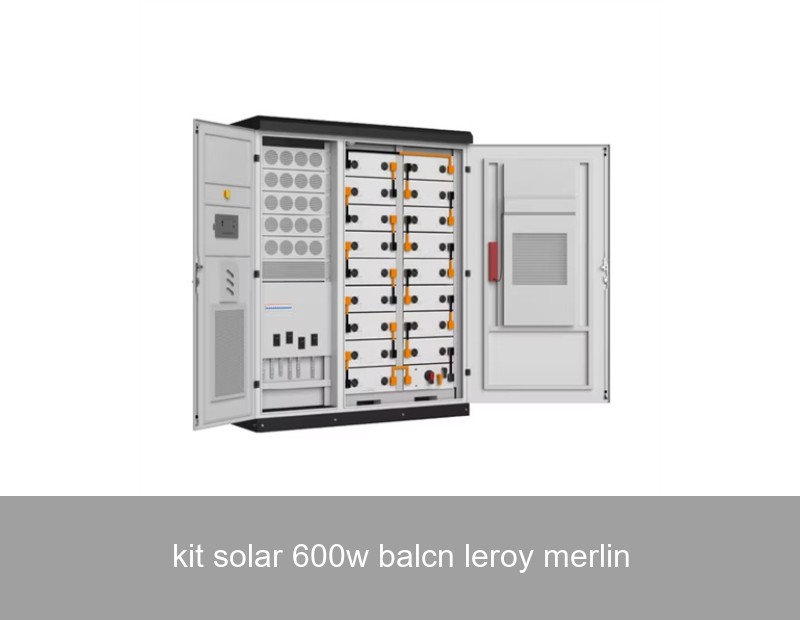
If you're an apartment dweller in Europe or the US, you've likely seen the buzz: compact, plug-and-play solar panels designed for balconies and small terraces. Searches for terms like "kit solar 600w balcón Leroy Merlin" are skyrocketing as urbanites seek energy independence. But what does this 600W rating really mean for your power bill and your contribution to the grid? As a product technology expert at Highjoule, a global leader in advanced energy storage since 2005, I see this trend as a fantastic entry point into renewable energy. However, true energy resilience and maximized savings require a deeper understanding. Let's demystify the balcony solar kit and explore how it fits into the broader picture of intelligent home energy management.
What is a 600W Balcony Solar Kit?
A 600W balcony solar kit, often found in major DIY retailers, is a micro photovoltaic (PV) system typically comprising one or two solar panels, a micro-inverter or a plug-in grid-tie inverter, and mounting hardware. The "600W" refers to the system's peak power output under ideal laboratory conditions (Standard Test Conditions, or STC). In reality, factors like panel orientation, shading, and local weather mean you'll rarely, if ever, see that full 600 watts flowing into your home. These systems are designed to be installed by the end-user, plugging directly into a standard wall outlet to offset a portion of your household's base load.
The Market Phenomenon: Why Are They So Popular?
The surge in popularity is a direct response to a clear market need. Millions of people living in apartments, condos, or rented homes have been historically locked out of the rooftop solar revolution. The balcony kit changes that. It's a low-commitment, relatively affordable gateway to renewable energy. Retailers like Leroy Merlin, Bauhaus, and others have made them highly accessible. The psychological and financial appeal is powerful: reducing electricity costs, gaining a measure of energy autonomy, and taking tangible climate action from your own home. It's a compelling phenomenon driven by accessibility and a growing collective energy consciousness.
The Data Debunked: Real-World Performance vs. Promises
Here’s where a dose of data is crucial. A 600W kit's theoretical annual yield in, say, southern Germany is roughly 600-650 kWh. But real-world data from monitoring studies often shows 10-25% less. Why?
- Non-Optimal Angles: Balcony rails are vertical, while the ideal panel tilt for energy harvest is often 30-35 degrees.
- Partial Shading: A shadow from a railing or neighboring building can disproportionately reduce output.
- Inverter Efficiency: Micro-inverters have efficiency curves, typically peaking around 95-96% under optimal load.
So, your effective output might be closer to 450-550W peak and 500-580 kWh annually. This is still valuable—it can power your refrigerator or charge your electronics—but it's important to set realistic expectations. For context, the average German household consumes about 3,500 kWh per year, so a balcony kit might cover 15-20% of that. The US average is higher, around 10,600 kWh, making the proportional contribution smaller but still financially meaningful.
Real-World Case Study: A Berlin Apartment's Energy Journey
Let's look at concrete data from a 2023 pilot monitored by a German energy blog. A household in Berlin installed a 600W balcony kit (two 300W panels) on a south-west facing balcony.
| Metric | Claimed (Ideal) | Actual (Monitored Annual) |
|---|---|---|
| Total Energy Production | ~650 kWh | ~521 kWh |
| Peak Power Observed | 600 W | 488 W |
| Estimated Annual Savings* | ~€195 (€0.30/kWh) | ~€156 (€0.30/kWh) |
*Savings depend entirely on your local electricity price, which has been highly volatile. In some regions, savings can be significantly higher.
The user reported high satisfaction but noted a key limitation: most energy was produced in the afternoon, while morning consumption (coffee maker, etc.) was still drawn from the grid. This highlights a critical insight: generation timing matters as much as total volume. This is where the conversation evolves from simple generation to intelligent energy management—a core principle at Highjoule.

Image source: Unsplash (Representative image of a balcony solar installation)
Expert Insights: What Retailers Like Leroy Merlin Don't Always Tell You
Beyond performance data, here are key technical and regulatory considerations:
- Grid Connection & Regulations: In Germany, kits under 800W often only require a simple registration with the grid operator (DNO). In the US, NEC codes and utility interconnection rules vary wildly by state and municipality. Always check local regulations before purchase.
- Safety: A quality plug-in inverter must have anti-islanding protection to shut down during a grid outage, preventing backfeed that could endanger utility workers.
- System Longevity: Panel degradation (about 0.5% per year) and inverter lifespan (typically 10-12 years for micro-inverters) affect long-term ROI.
For deeper technical standards, resources like the National Renewable Energy Laboratory (NREL) provide invaluable, unbiased information.
The Highjoule Perspective: Integrating Micro-Generation into a Smarter System
At Highjoule, we view balcony kits as excellent "seed" generators. However, their intermittent nature means much of their value is lost if not used instantly. This is where our expertise in intelligent storage and energy management creates a paradigm shift.
Imagine your 600W balcony kit not just powering your home in real-time, but charging a compact, high-efficiency battery storage system like the Highjoule HomeCell Lite. This system can store your solar surplus from a sunny afternoon and release it during the expensive evening peak or on cloudy days. Our AI-driven energy management platform, Highjoule SynapseOS, can optimize this flow automatically, deciding when to store, use, or even (where permitted) sell back tiny amounts of energy to maximize your economic benefit.
For apartment buildings or communities, our Highjoule Community and Microgrid Solutions can aggregate multiple balcony systems, along with larger rooftop PV and central BESS (Battery Energy Storage Systems), to create resilient, shared-energy communities. The balcony kit becomes a citizen-owned node in a smarter, decentralized grid.

Image source: Unsplash (Representative image of modern home battery technology)
How to Choose the Right Kit for Your Balcony
Ready to take the plunge? Use this checklist:
- Assess Your Site: Use a solar compass app to check your balcony's approximate sun hours. South-facing is best (in the Northern Hemisphere), but east/west can work.
- Verify Regulations: Contact your local grid operator or municipality for plug-and-play solar rules. Check your rental/condo agreement.
- Prioritize Quality Components: Look for panels with a strong performance warranty (e.g., 90% output after 12 years) and inverters with UL (US) or CE/VDE (EU) certifications.
- Plan for the Future: Consider if the system is expandable or can be integrated with a storage system later. Choosing a kit with an inverter compatible with storage-ready signals is a forward-thinking move.
- Think Bigger: Is this your first step? Engaging with a full-service provider like Highjoule for a consultation can map out how a micro-system fits into a long-term plan for energy resilience, especially for commercial or multi-family properties.
The democratization of solar through products like the 600W balcony kit is a thrilling development. It puts power—literally and figuratively—into the hands of everyday people. But to truly unlock its potential, we must think beyond the plug. By pairing generation with intelligence and storage, we move from being passive consumers to active prosumers, building a grid that is not only greener but also more robust and personal.
What's the first appliance you would power with your own balcony-generated electricity, and how would it feel to see it run on sunshine you harvested yourself?
 Inquiry
 Online Chat