


Why You Should Install Solar Panels at Home: A Smart Energy Guide
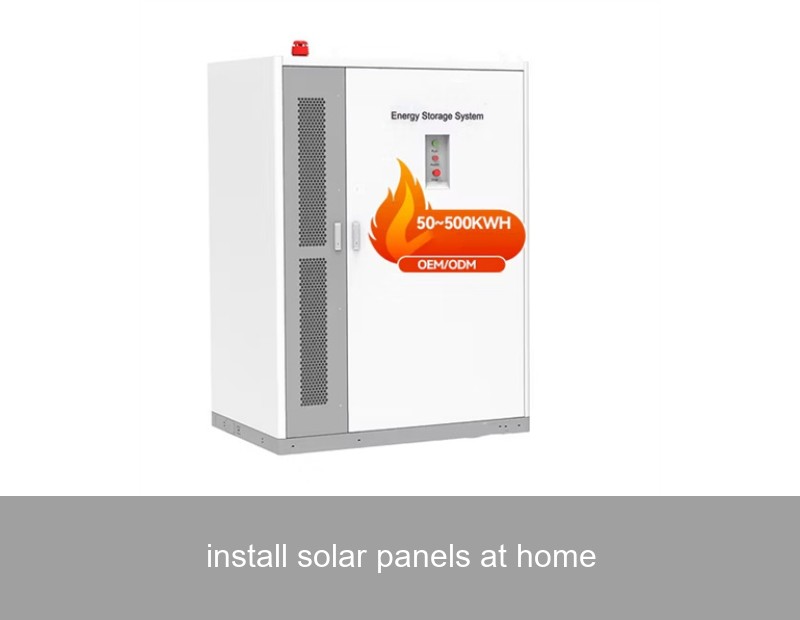
Thinking about the future of your home's energy, bills, and environmental impact? You're not alone. Across Europe and the US, a quiet revolution is happening on rooftops as more homeowners choose to install solar panels at home. This move isn't just about going green; it's a practical financial decision driven by rising electricity costs, technological advancements, and a desire for energy independence. But what does this process truly entail, and how can you ensure your investment is safe, efficient, and future-proof? Let's explore the journey from sunlight to savings.
Table of Contents
- The Rise of Home Solar: More Than a Trend
- Key Components of a Home Solar System
- A Real-World Case: The Smith Family's Journey
- How Highjoule Elevates Your Solar Investment
- Getting Started: Your Roadmap to Solar
The Rise of Home Solar: More Than a Trend
The decision to install solar panels at home has evolved from a niche environmental statement to a mainstream home upgrade. The phenomenon is clear: homeowners are tired of unpredictable utility rates. The data backs this up. According to the International Energy Agency (IEA), solar PV is set to become the largest source of installed power capacity globally, with residential installations being a major driver. In the US, the Solar Energy Industries Association (SEIA) reports that the residential sector has seen consistent growth, with millions of homes now powered by the sun.
But what's driving this? It's a powerful combination of push and pull factors. The push comes from volatile fossil fuel prices and growing climate awareness. The pull comes from attractive government incentives (like the US federal tax credit or various European grants), improved panel efficiency, and critically, the falling cost of the technology itself. The initial investment, while significant, is increasingly viewed as a long-term asset that protects against future energy inflation.
Key Components of a Home Solar System
Understanding what you're installing is key. A typical grid-tied system consists of:
- Solar Panels (Photovoltaic Modules): These capture sunlight and convert it to direct current (DC) electricity. Modern panels are highly efficient and durable, often with warranties of 25+ years.
- Inverter(s): The brain of the system. Inverters convert the DC electricity from your panels into the alternating current (AC) that your home appliances use. Options include string inverters, microinverters (on each panel), or hybrid inverters designed for battery integration.
- Racking and Mounting: The secure, engineered framework that attaches your panels to your roof or ground.
- Monitoring System: A digital platform that allows you to track your system's energy production in real-time, often from a smartphone app.
However, this traditional setup has a fundamental limitation: it primarily produces energy when the sun is shining. What happens at night, on cloudy days, or during a grid outage?

Image Source: Unsplash - Professional installation is crucial for long-term performance.
The Missing Piece: Why Solar Needs a Best Friend
This is where the conversation around home solar gets truly exciting. Installing panels is step one. Step two is capturing that surplus daytime energy for use when you need it most. Without storage, excess solar energy is often sent back to the grid for a small credit (net metering), but you then buy power back at full price in the evening. This cycle limits your independence and savings.
Adding a battery energy storage system (BESS) transforms your setup. It stores your excess solar generation, allowing you to power your home after dark, during peak rate periods, or during outages. This turns your solar array from a daytime-only contributor into a 24/7 personal power plant. The value proposition shifts from just reducing bills to achieving true resilience and control.
A Real-World Case: The Smith Family's Journey
Let's look at a concrete example. The Smith family (name changed for privacy) in Southern California decided to install solar panels at home in 2021. Their primary goals were to cut their average $280 monthly electric bill and gain backup power for wildfire-related Public Safety Power Shutoffs (PSPS).
- System Size: 8.5 kW solar array (about 22 panels).
- Initial Outcome: Their daytime bill dropped to nearly zero, but they still paid for evening grid power. During a two-day outage, their solar system shut down completely for safety reasons (as standard grid-tied systems do), leaving them without power.
- The Upgrade: In 2023, they integrated a 13.5 kWh lithium-ion battery storage system.
- Results with Storage:
Metric Before Storage After Storage Monthly Bill ~$90 ~$12 (basic connection fee) Grid Import (evening) ~60% of usage <10% of usage Outage Resilience None Full home backup for essential loads for over 24 hours
The Smiths' case highlights the paradigm shift: solar + storage delivers financial and resilience benefits that solar alone cannot.
How Highjoule Elevates Your Solar Investment
This is where Highjoule's expertise becomes invaluable. As a global leader in advanced energy storage since 2005, we don't just provide components; we provide intelligent, integrated power solutions. When you plan to install solar panels at home, considering the full ecosystem from day one is the mark of a savvy homeowner.
Highjoule's Residential Energy Hub is designed to be the perfect partner for your new solar array. Unlike generic batteries, our systems feature:
- Advanced Lithium Iron Phosphate (LFP) Chemistry: Renowned for its safety, longevity (typically over 6,000 cycles), and stable performance, making it ideal for daily charging and discharging from your solar panels.
- Integrated Hybrid Inverter: A single, sleek unit manages solar input, battery charging/discharging, and grid interaction seamlessly. This simplifies installation and improves overall system efficiency.
- AI-Powered Energy Management: Our software doesn't just store energy; it optimizes it. It learns your usage patterns, considers weather forecasts, and can automatically decide when to store solar energy, power your home, or sell back to the grid based on time-of-use rates—maximizing your return.
- Scalable Design: Start with what you need and easily add more battery capacity as your needs evolve, protecting your initial investment.
For homeowners, this means the system installed by a Highjoule-certified partner is not a collection of parts, but a unified, intelligent appliance for energy independence. It ensures that the power your panels produce is used in the smartest way possible. You can learn more about battery safety and technology from resources like the U.S. Department of Energy.

Image Source: Unsplash - Integrated storage systems like Highjoule's provide a clean, compact solution.
Getting Started: Your Roadmap to Solar + Storage
Ready to explore? Here’s a sensible path forward:
- Energy Audit: Review your past year's electricity bills to understand your consumption patterns and peak usage.
- Roof Assessment: Consider the age, orientation, and shading of your roof. A south-facing roof (in the Northern Hemisphere) with minimal shade is ideal.
- Get Professional Quotes: Seek out certified installers who can provide designs for both solar and integrated storage. Ask specifically about products designed to work together seamlessly, like the Highjoule ecosystem.
- Financing & Incentives: Research federal, state, and local incentives. Many now specifically include bonuses for adding storage to solar.
- Think Long-Term: Design for your future needs. Will you buy an electric vehicle? Expand your home? A scalable storage solution ensures your system grows with you.
Choosing to install solar panels at home is a significant decision. By partnering with technology leaders and forward-thinking installers, you're not just buying equipment—you're investing in a platform for decades of clean, affordable, and reliable power.
 Inquiry
 Online Chat