


Instalacion Paneles Solares Ecuador: Your Guide to Sustainable Power in the Sun Belt
Have you ever looked at Ecuador's abundant sunshine and wondered how to harness it for your home or business? You're not alone. The topic of instalacion paneles solares Ecuador is more relevant than ever. As energy prices fluctuate and environmental awareness grows, both homeowners and commercial operators across Ecuador are turning their gaze upward to a powerful, clean resource: the sun. This isn't just a trend; it's a strategic move towards energy independence and financial savings. But where do you start? This guide will walk you through the essentials, from understanding the local potential to implementing a system that truly meets your needs, including the often-overlooked key to 24/7 solar power: intelligent energy storage.
Why Solar Energy is Booming in Ecuador
Ecuador is uniquely positioned for solar success. Located squarely on the equator, it receives remarkably consistent and intense solar radiation year-round. Unlike many European or North American countries that face drastic seasonal shifts in sunlight, Ecuador's solar resource is a stable, reliable asset. The government has also recognized this potential, implementing policies and incentives to encourage renewable energy adoption. For businesses, this means reducing operational overhead. For homeowners, it's about locking in predictable energy costs and increasing property value. The initial step in any instalacion de paneles solares project is a detailed site assessment to understand your specific energy profile and solar potential.

Image: Ecuador's exceptional solar irradiation makes it ideal for photovoltaic projects. Source: Wikimedia Commons
Planning Your Solar Panel Installation in Ecuador
A successful installation is more than just mounting panels on a roof. It's a comprehensive process:
- Energy Audit: Analyze your past electricity bills to determine your consumption patterns.
- Site Evaluation: A professional assesses roof condition, orientation, shading, and structural integrity.
- System Design & Sizing: This critical phase matches panel capacity and technology to your energy goals. Do you want to offset 50% or 100% of your usage? Do you need power at night?
- Regulatory Compliance: Navigating local permits and understanding net metering policies with utilities like CNEL or EEQ is essential.
- Quality Components: The choice of photovoltaic panels, inverters, and mounting systems dictates long-term performance.
This is where partnering with an experienced provider makes all the difference. A company with global expertise can anticipate challenges specific to Ecuador's diverse microclimates, from the humid coast to the high-altitude Andes.
A Real-World Case Study: The Quito Industrial Success
Let's move from theory to practice. Consider a mid-sized textile manufacturing plant in the Quito metro area. The facility operated 18 hours a day, facing steep and unpredictable energy costs that directly impacted its bottom line.
- Phenomenon: High operational costs and desire for sustainability.
- Data: The facility consumed an average of 35,000 kWh per month. A detailed analysis recommended a 250 kWp solar photovoltaic system.
- Implementation: The system was installed on the factory's large, unobstructed roof. However, the engineers didn't stop at panels. They integrated a battery energy storage system (BESS) to manage the plant's high evening energy demand, even after sunset.
- Result: The hybrid system now covers over 70% of the plant's total electricity needs. It reduces grid consumption during peak tariff hours, leading to a calculated payback period of under 5 years. Most importantly, it provides a hedge against future electricity price hikes and ensures critical processes are protected from grid outages.
This case highlights a crucial insight: for commercial and industrial applications, true savings and resilience come from combining solar generation with smart storage. You can read more about Ecuador's renewable energy framework on the Ministry of Energy and Non-Renewable Natural Resources website.
Beyond the Panels: The Critical Role of Energy Storage
This is a pivotal point in our discussion. A traditional instalacion de paneles solares generates power only when the sun shines. What happens at night, during cloudy days, or when the grid fails? This gap is filled by advanced energy storage. Think of it this way: solar panels are the source, but a battery system is your personal energy bank.
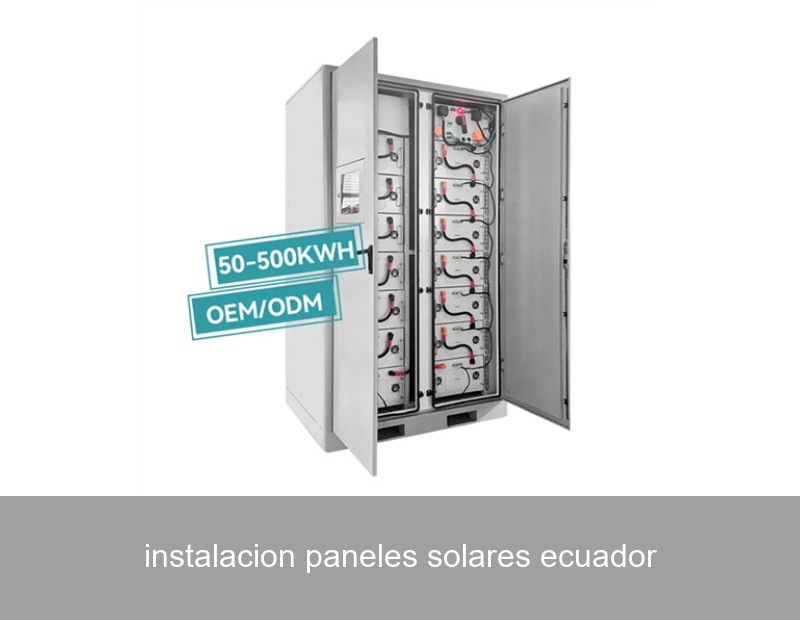
For the Ecuadorian market, this is not a luxury but a strategic enhancement. It maximizes self-consumption of the solar energy you produce, protects against outages, and can even provide services like load shifting (using stored cheap solar energy during expensive peak hours). The technology at the heart of this is the Battery Energy Storage System (BESS).
Highjoule's Tailored Solutions for Ecuador and Beyond
As a global leader in advanced energy storage since 2005, Highjoule understands that every market has unique needs. For projects involving instalacion paneles solares Ecuador, our intelligent storage solutions are the perfect complement. Our systems are designed to seamlessly integrate with new or existing solar arrays, transforming them into resilient, 24/7 power sources.
Highjoule's H-Series Commercial & Industrial BESS offers:
- Scalability: Modular design to grow with your energy needs, from small businesses to large industrial complexes.
- Intelligence: Advanced energy management software that learns consumption patterns and optimizes for cost-saving and efficiency.
- Reliability: Built with robust, cycle-resistant battery technology, engineered for diverse climates, ensuring long-term performance in Ecuador's coastal and highland regions.
- Safety: Comprehensive multi-layer protection systems for ultimate peace of mind.
For residential clients in Ecuador looking to pair their solar installation with storage, our Home Energy Vault provides quiet, compact, and automated backup power, allowing families to keep essential appliances running during outages and maximize their solar investment. By choosing a provider like Highjoule, you're not just buying a battery; you're investing in a complete, intelligent energy ecosystem. Learn about the latest in lithium-ion battery technology from trusted sources like the U.S. Department of Energy.

Image: A complete home energy system combining solar panels and a wall-mounted battery storage unit. Source: Unsplash
The Future of Solar in Ecuador: What's Next?
The landscape for instalacion paneles solares Ecuador is dynamic and promising. We are moving towards smarter, more integrated microgrids—localized energy networks that can operate independently from the national grid. Imagine a residential community or an industrial park in Guayaquil or Cuenca powered by its own shared solar and storage resources, enhancing resilience for all members.
The technology is here. The economic case is stronger than ever. The question is no longer "Should I install solar panels?" but rather "How can I design a complete solar-plus-storage system that delivers maximum independence, savings, and reliability for my specific needs in Ecuador?"
What is the first step you will take to evaluate your own energy independence journey?
 Inquiry
 Online Chat