


How Solar Energy Industries Are Powering a Sustainable Future with Advanced Storage
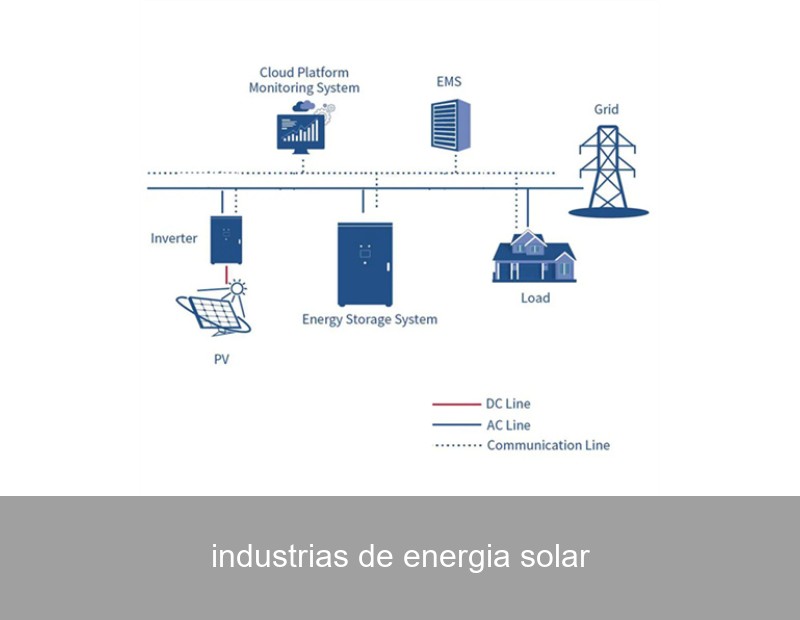
The global solar energy industry is experiencing unprecedented growth. From vast utility-scale farms to commercial rooftops, photovoltaic panels are becoming a dominant force in the energy mix. But as any industry professional knows, the sun doesn't always shine on demand. This intermittent nature presents the central challenge for solar energy industries: how to deliver reliable, 24/7 clean power. The answer, and the key to unlocking solar's full potential, lies not just in generation, but in intelligent storage.
Table of Contents
The Challenge: Beyond the Peak Sun Hour
For solar energy industries, the daily production curve is a familiar sight—a sharp peak around midday followed by a steep decline. This creates a fundamental mismatch with energy demand, which often peaks in the early morning and evening. Without storage, excess solar energy generated at noon is either wasted or sold back to the grid at low prices, while operators must purchase expensive power from the grid after sunset. This volatility undermines both the economics and the reliability of solar projects. It's like having a state-of-the-art factory that can only operate at full capacity for a few hours a day.
The Data Reality: Curtailment and Lost Opportunity
The scale of this issue is quantified by "curtailment." In regions with high solar penetration, grid operators sometimes have to instruct solar farms to reduce output to maintain grid stability. In California, for instance, the California Energy Commission reported significant solar curtailment, with over 2.4 million MWh of renewable energy curtailed in a single year—enough to power hundreds of thousands of homes. This represents a direct financial loss for project owners and a setback for decarbonization goals.
The solution is a strategic shift from seeing storage as an optional add-on to viewing it as a core, value-generating component of any modern solar asset.

Credit: Unsplash - Modern solar farms require integrated storage to maximize their value.
Case Study: A Spanish Solar Farm's Transformation
Let's look at a real-world example from southern Spain, a leader in European solar capacity. A 50 MW solar farm, operational since 2020, was facing the classic dilemma. Its midday generation frequently exceeded local grid absorption capacity, leading to curtailment and revenue caps.
In 2023, the operator partnered with Highjoule to integrate a 20 MWh battery energy storage system (BESS) using Highjoule's HiveMind energy management platform. The results within the first year were compelling:
| Metric | Before BESS Integration | After BESS Integration |
|---|---|---|
| Solar Energy Curtailment | ~18% of potential generation | Reduced to < 2% |
| Revenue from Energy Arbitrage* | Negligible | Increased by 22% |
| Grid Service Participation | None | Frequency regulation contracts secured |
*Energy arbitrage: Storing cheap midday solar energy and selling it during high-price evening peaks.
The Highjoule system didn't just add a battery; it provided an intelligent platform that decides in milliseconds whether to store, discharge, or sell energy based on market prices, grid signals, and weather forecasts. This turned a passive generation asset into a dynamic, grid-supportive power plant.
The Integrated Storage Solution: More Than Just a Battery
For solar energy industries, an advanced BESS is a multifaceted tool. It's crucial to understand its core functions:
- Energy Time-Shifting: The fundamental arbitrage function, capturing excess solar for later use.
- Grid Stabilization: Providing essential services like frequency response and voltage control, which become more critical as solar penetration grows. These services also create new revenue streams.
- Capacity Firming: "Smoothing out" the solar output to deliver a predictable, dispatchable power profile to offtakers or the grid, making solar a more reliable baseload contender.
According to a report by the National Renewable Energy Laboratory (NREL), coupling storage with solar can increase the value of solar by up to 30% depending on market structure, primarily by enabling participation in more wholesale electricity markets.
Highjoule's Role in Empowering Solar Industries
This is where Highjoule's nearly two decades of expertise come into play. We understand that for commercial and industrial solar energy industries, every project has unique demands. Our solutions are not one-size-fits-all.
For large-scale solar farms, our GridMax series of containerized BESS offers utility-grade performance, scalability, and superior cycle life, managed by the HiveMind AI platform. For commercial and industrial (C&I) facilities with on-site solar, our PowerStack modular systems allow businesses to increase self-consumption of their solar generation, reduce demand charges, and build energy resilience.
Our technology focuses on safety, longevity, and intelligence. Using lithium iron phosphate (LFP) chemistry as a cornerstone for its safety and durability, combined with our proprietary thermal management and predictive analytics, Highjoule systems are engineered to maximize return on investment over a 20-year lifespan.

Credit: Unsplash - Advanced monitoring is key to safe and efficient BESS operation.
The Future Horizon: AI and Grid Services
The next frontier for solar energy industries is the full digitalization of asset management. Imagine a solar-plus-storage plant that autonomously optimizes its operations not just for today's weather, but for predicted market conditions days ahead. It could participate in multiple revenue streams simultaneously—wholesale energy markets, frequency regulation, and capacity markets—all while ensuring it meets its core power purchase agreement (PPA) obligations.
This level of optimization requires sophisticated AI, a domain where platforms like Highjoule's HiveMind are pioneering. By treating storage as the intelligent buffer and controller for solar, we can move towards a 100% renewable grid that is stable, affordable, and secure.
A Question for Your Project
As you plan your next solar project or look to optimize an existing one, ask yourself: Is my asset merely generating energy, or is it intelligently managing and maximizing the value of every kilowatt-hour produced? The difference between these two questions defines the future leaders in the solar energy industries.
What specific grid challenge or market opportunity is most pressing for your solar operations today?
 Inquiry
 Online Chat