


Import Solar Panels from China: A Strategic Guide for Maximizing Your Renewable Investment
If you're a solar installer, project developer, or a savvy homeowner in Europe or the U.S., you've undoubtedly considered a crucial question: should I import solar panels from China? It's not just a procurement decision; it's a strategic move that can define the economics and success of your renewable energy project. The global solar market has been fundamentally shaped by Chinese manufacturing, offering unparalleled scale and cost efficiency. But the real story isn't just about buying panels—it's about building a resilient, intelligent, and high-performing energy system around them. Let's explore how to navigate this opportunity wisely.
The Solar Import Phenomenon: A Global Shift
The trend to import solar panels from China is more than a passing phase; it's a structural reality of the photovoltaic industry. Chinese manufacturers have achieved tremendous economies of scale, driven by significant domestic investment and continuous technological refinement. For businesses and large-scale projects, this often translates to a lower levelized cost of energy (LCOE), making solar installations more financially viable. However, this initial cost advantage is just the first piece of the puzzle. The true value of a solar installation is realized over its 25+ year lifespan, which hinges on factors beyond the panel's sticker price: reliability, performance degradation, and—most importantly—how effectively the generated energy is managed and utilized.
By the Numbers: Understanding the Scale
The data underscores China's dominant role. According to the International Energy Agency (IEA), China's share in all key manufacturing stages of solar panels exceeds 80% (IEA Solar PV Global Supply Chains Report, 2022). This concentration brings both opportunity and supply chain considerations. For instance, a European developer might source high-efficiency monocrystalline PERC or advanced N-type TOPCon panels from China at a cost that is 20-35% lower than some locally manufactured alternatives, a significant margin for multi-megawatt projects. But this financial benefit must be balanced with logistics, import duties, and a clear quality assurance protocol.
| Factor | Opportunity | Consideration |
|---|---|---|
| Cost | Lower upfront capital expenditure (CAPEX). | Must include shipping, insurance, and potential tariffs. |
| Technology | Access to latest cell tech (TOPCon, HJT). | Verify performance warranties and degradation rates. |
| Scale | Ability to procure large volumes for utility-scale projects. | Lead times and supply chain resilience. |
| System Integration | Panels are a component of a larger system. | Compatibility with inverters and energy storage systems is paramount. |
Case Study: A Berlin-Based Solar Installer's Strategic Pivot
Let's look at a real example. "EcoWatt GmbH," a mid-sized solar installer in Germany, traditionally sourced European panels. In 2021, to remain competitive for commercial rooftop tenders, they began to import high-efficiency bifacial panels from a Tier-1 Chinese manufacturer. This reduced their module costs by 28%. However, they encountered a new challenge: their clients wanted to maximize self-consumption and participate in grid flexibility programs, which the solar array alone couldn't optimize.
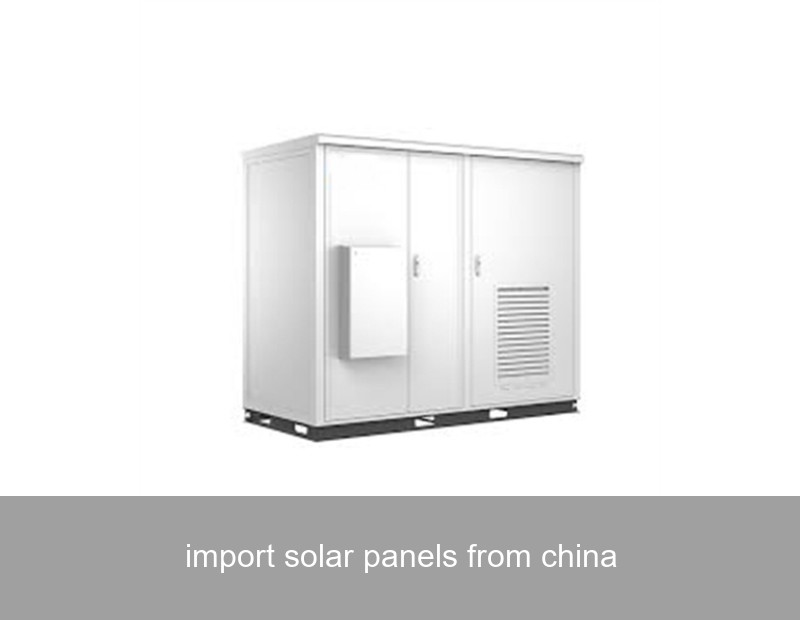
Their solution was to bundle the imported panels with a sophisticated battery storage and energy management system. By partnering with Highjoule, they integrated the solar installation with Highjoule's HJ Commercial Energy Stack. This turnkey Battery Energy Storage System (BESS) features advanced lithium-iron-phosphate (LFP) batteries, scalable architecture, and intelligent energy management software. The result for one pilot project—a 200 kWp rooftop system on a logistics warehouse—was impressive: self-consumption of solar power rose from 35% to over 80%, and the site could reliably participate in demand response, creating an additional revenue stream. The imported panels provided the cost-effective energy harvest, while Highjoule's storage provided the control and value realization.

Image Source: Unsplash (Representative image of commercial solar and energy storage)
Beyond the Panel: The Critical Role of Energy Storage
This case study highlights the essential next step. To import solar panels from China is to secure an excellent energy generator. But without a strategy for storage and management, a significant portion of that energy's potential value is lost. This is where the expertise of a global energy storage provider becomes critical. Think of it this way: the solar panels are the muscles of your system, producing raw power. The battery storage and intelligence platform is the brain and the battery, deciding when to store, when to use, and when to dispatch energy for maximum economic and operational benefit.
- Maximizing Self-Consumption: Store excess daytime solar energy for use at night, dramatically reducing reliance on the grid.
- Grid Services & Revenue: Stable, grid-forming storage systems can provide frequency regulation and peak shaving, turning your energy asset into a revenue generator.
- Backup Power & Resilience: For critical industrial or residential applications, storage provides seamless backup during outages.
The Highjoule Integrated Solution: Intelligence Meets Storage
At Highjoule, we understand that the modern energy project is an integrated ecosystem. Since 2005, we've evolved from a battery innovator to a comprehensive provider of intelligent storage solutions. Our products are designed to be the perfect complement to high-volume solar procurement strategies.
For residential clients, our HJ Home PowerVault series offers scalable storage with integrated inverter capabilities, making it easy to pair with virtually any imported solar panel array. Its AI-driven software learns consumption patterns to optimize solar usage.
For commercial and industrial (C&I) applications, our modular HJ Commercial Energy Stack allows for precise scaling. A project using imported panels for a factory can start with a 100 kWh storage unit and expand as needs grow. Our platform includes sophisticated monitoring and control, enabling participation in virtual power plants (VPPs).
Most importantly, Highjoule systems are built with safety and longevity as core principles, using stable LFP chemistry and robust thermal management. This ensures that the long-term value of your imported solar panels is protected and enhanced by a storage system of equal reliability.
Navigating Import Logistics and Quality Assurance
When you decide to import solar panels from China, due diligence is non-negotiable. Here is a simplified checklist:
- Supplier Verification: Insist on Tier-1 manufacturer status, review bankability reports from independent agencies like BloombergNEF.
- Certification: Ensure panels have relevant regional certifications (UL in the U.S., CE/IEC in Europe).
- Logistics Partner: Work with experienced freight forwarders who handle Incoterms (like FOB, CIF) and customs clearance.
- System Design Synergy: Engage with your storage and inverter provider early. Highjoule's technical team, for example, can assist in designing a system that ensures perfect compatibility between your chosen panels and our BESS, optimizing the DC/AC coupling and control logic.
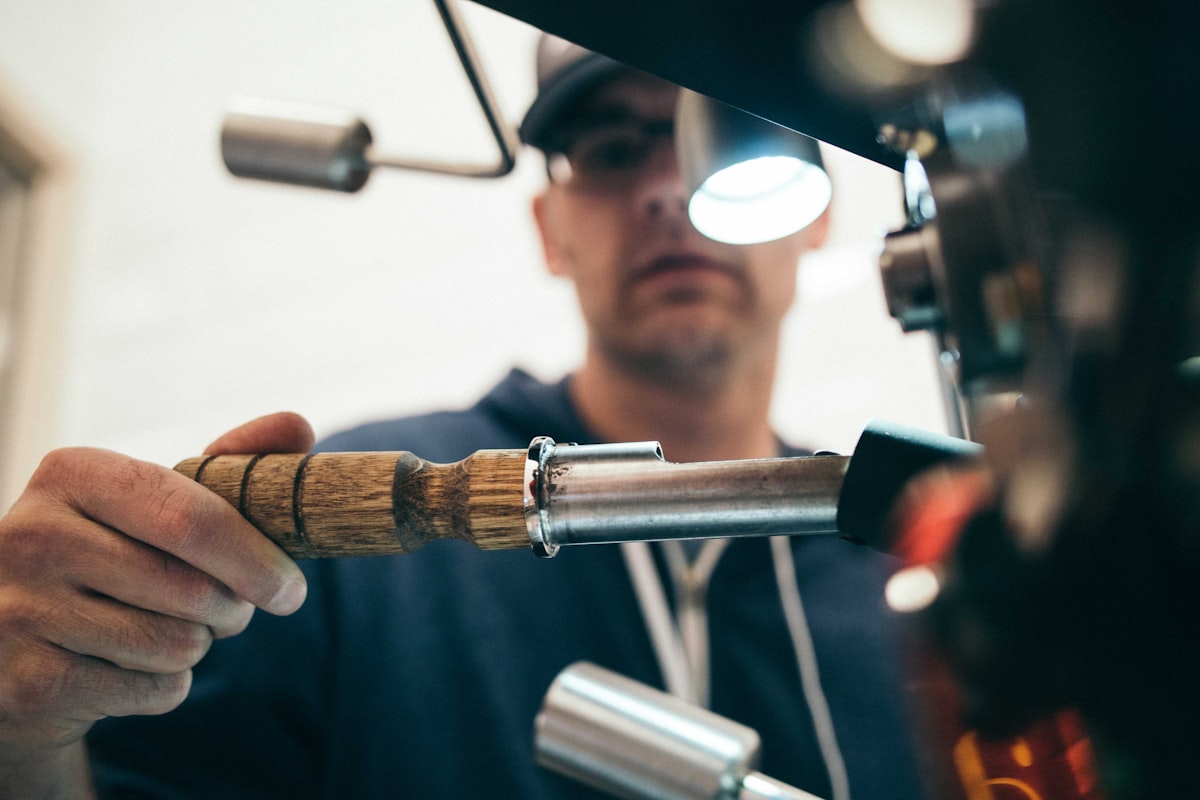
Image Source: Unsplash (Representative image of quality control for solar panels)
Shaping the Future Energy Landscape
The conversation about whether to import solar panels from China is evolving. It's no longer a simple question of origin, but a complex equation about building cost-effective, resilient, and intelligent energy systems. The panels are a vital component, but the system's intelligence—its ability to store, manage, and dispatch energy on demand—is what truly unlocks independence and value.
As you evaluate your next solar project, considering both the cost of generation and the intelligence of consumption, what role could a seamlessly integrated storage solution play in achieving your financial and sustainability goals faster?
 Inquiry
 Online Chat