


Hykon Lithium Battery Inverter: The Intelligent Heart of Modern Energy Storage
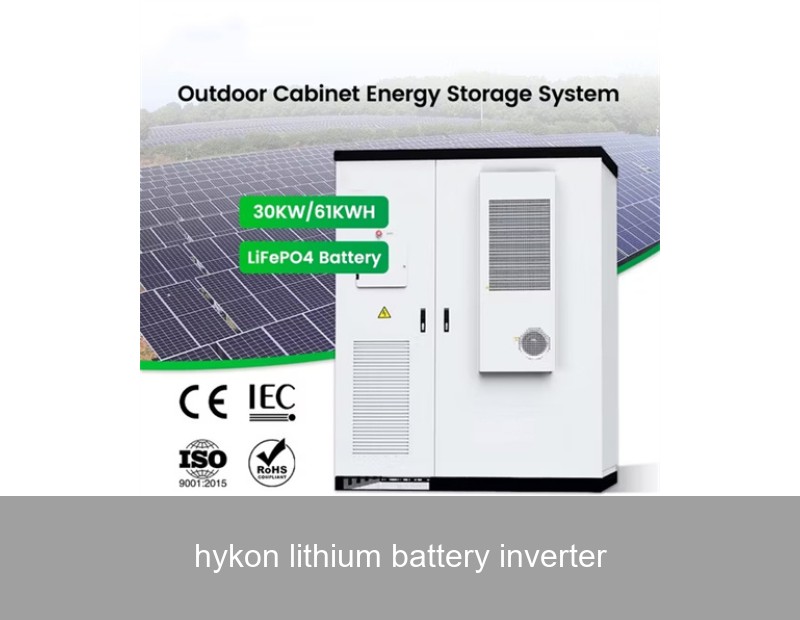
You've made the smart decision to invest in solar panels. The sun powers your home or business, and for a few glorious hours in the afternoon, your electricity meter seems to spin backwards. But what happens when the sun sets, or a cloud bank rolls in? This is where the true magic of a complete energy storage system comes into play, and at its core lies a critical component: the Hykon lithium battery inverter. More than just a simple converter, this device is the intelligent brain and robust heart that determines the efficiency, reliability, and value of your entire storage solution.
Table of Contents
The Challenge: Intermittency and Rising Costs
For homeowners and business managers across Europe and the US, the energy landscape presents a dual challenge. First, renewable sources like solar are inherently intermittent. Second, grid electricity prices are notoriously volatile and consistently trending upward. The phenomenon is clear: energy generation and consumption are often out of sync. You produce excess solar energy at noon when demand is low, only to buy it back from the grid at a premium in the evening peak. A battery stores the energy, but without a sophisticated inverter, you're simply locking potential savings in a box without the key to use it optimally.
What is a Hykon Lithium Battery Inverter?
Let's demystify the technology. A Hykon lithium battery inverter is a specialized power electronic device designed to work seamlessly with lithium-ion battery banks, like those using LiFePO4 (Lithium Iron Phosphate) chemistry. Its primary functions are:
- DC to AC Conversion (Inverting): It converts the direct current (DC) electricity stored in your batteries into the alternating current (AC) used by your home appliances, office equipment, or industrial machinery.
- AC to DC Conversion (Charging): In reverse, it converts AC power from the grid or your solar panels to DC to efficiently charge the battery.
- Intelligent Energy Management: This is where modern inverters shine. A Hykon inverter doesn't just convert; it makes decisions. It constantly monitors energy flow, grid conditions, consumption patterns, and weather forecasts to autonomously decide when to charge, when to discharge, and when to sell back to the grid.
Think of it this way: the battery is your energy reservoir, but the inverter is the smart water management system that controls every tap, pump, and valve, ensuring water is stored during the rainy season and released precisely when and where it's needed during a drought.

Credit: Unsplash / ThisIsEngineering - A modern, integrated energy storage system with inverter.
The Data: Why Inverter Intelligence Matters
The performance gap between a basic inverter and an advanced Hykon lithium battery inverter is quantifiable. Key metrics include:
| Metric | Basic Inverter | Advanced Hykon-type Inverter |
|---|---|---|
| Round-Trip Efficiency | ~92-94% | 96-98% |
| Grid Response Time | Seconds | Milliseconds (Grid-forming capability) |
| Peak Shaving Accuracy | Manual / Basic | AI-predictive, dynamic |
| Battery Life Optimization | Fixed Parameters | Adaptive, chemistry-specific algorithms |
That few percentage points in efficiency might seem small, but over a 10+ year system lifespan, it translates to thousands of kilowatt-hours of additional usable energy that you've paid for but would otherwise lose as heat. Furthermore, advanced features like grid-forming capability allow the system to create a stable microgrid during a blackout, a critical feature for businesses and communities seeking true resilience. For more on grid stability and inverter roles, see this resource from the National Renewable Energy Laboratory (NREL).
Case Study: A German Bakery's Recipe for Resilience
Let's look at a real-world application. "Bäckerei Schmidt" (a pseudonym for a real customer) is a mid-sized bakery in Bavaria, Germany, with high energy demands for refrigeration, ovens, and lighting. Their challenges were peak demand charges from the utility and vulnerability to even short power outages, which could ruin entire batches of product.
The Solution: They installed a 100 kWh lithium-ion (LiFePO4) battery system centered on a high-power, three-phase Hykon lithium battery inverter. The system was integrated with their existing rooftop solar and configured for peak shaving and backup power.
The Data-Driven Outcome (12-month period):
- Demand Charge Reduction: The intelligent inverter predicted consumption spikes and seamlessly discharged the battery to cap grid draw, reducing peak demand by 35%.
- Self-Consumption Increase: Solar self-consumption rose from 40% to over 85%, drastically cutting grid purchases.
- ROI: Combined savings from demand charges and increased self-consumption led to a projected payback period of under 7 years.
- Resilience: During two planned grid outages and one unexpected fault, the inverter's grid-forming capability kept critical cooling and lighting systems online with zero interruption.
This case exemplifies how the right inverter transforms a battery from a simple storage unit into a strategic financial and operational asset.

Credit: Unsplash / amirali-mirhashemian - Commercial operations like bakeries benefit greatly from intelligent energy management.
Highjoule's Role: Integrating Intelligence into Every System
At Highjoule, we understand that the component synergy is everything. Since 2005, we have evolved from a component supplier to a global provider of integrated, smart storage solutions. Our approach to the Hykon lithium battery inverter is not as a standalone commodity, but as the core intelligence of our Highjoule Harmony ESS platform.
Our systems feature inverters that are pre-configured and rigorously tested with our proprietary battery modules and Highjoule Energy OS. This deep integration means:
- Optimized Communication: The inverter speaks the battery's "language" perfectly, enabling precise state-of-charge management and health monitoring that extends battery life.
- Advanced Software Features: Users can set sophisticated goals via a simple app—like "maximize self-consumption," "prepare for storm backup," or "participate in grid services"—and the inverter executes the optimal strategy automatically.
- Scalability for Every Need: Whether for a large family home in California, a manufacturing facility in Poland, or a community microgrid, Highjoule designs systems with the appropriately scaled Hykon inverter at the center, ensuring reliability and performance at every level.
We partner with leading lithium battery cell manufacturers to ensure safety and longevity, a topic thoroughly documented by agencies like the U.S. Department of Energy.
The Future is Integrated and Intelligent
The trajectory is clear. The next generation of energy storage isn't just about capacity; it's about connectivity and intelligence. Future Hykon lithium battery inverters will act as autonomous energy agents, participating in real-time energy markets (Virtual Power Plants), integrating with electric vehicle charging, and providing critical grid stability services. This transforms passive consumers into active "prosumers," strengthening the entire energy network.
As you consider taking control of your energy future, the choice of inverter is paramount. It's the difference between having a storage closet and having a smart, automated warehouse. What specific energy challenge—be it unpredictable bills, the need for backup power, or a desire to maximize your solar investment—is motivating you to look at a complete battery system today?
 Inquiry
 Online Chat