


DIY Solar Kits South Africa: A Practical Guide to Energy Independence
Have you ever watched the South African sun blaze across the sky and thought, "What if I could harness that power for my own home?" You're not alone. Across the nation, from Johannesburg suburbs to coastal homes in Cape Town, a quiet energy revolution is taking place. More South Africans are turning to DIY solar kits as a tangible solution to load-shedding and rising electricity costs. But what does it truly take to go from a box of components to a reliable, safe power source? This guide cuts through the noise, offering a professional perspective on navigating the world of self-installed solar power in South Africa's unique context.
Table of Contents
- The Rise of DIY Solar in South Africa
- What's Really in a DIY Solar Kit?
- A Real-World Case Study: The Pretoria Homeowner
- The Professional Edge: Where Smart Technology Meets Reliability
- Making the Right Choice for Your Home
The Rise of DIY Solar in South Africa: Phenomenon and Motivation
The drive towards DIY solar kits in South Africa isn't just a trend; it's a direct response to a pressing national challenge. The phenomenon is clear: persistent load-shedding disrupts daily life and business, while electricity tariffs continue to climb. This has created a powerful motivation for homeowners to seek control over their energy supply. The appeal of a pre-packaged kit is understandable—it promises a defined path to energy independence, often with a lower upfront cost than a custom-designed system. The market has responded with a plethora of options, ranging from simple solar panel bundles to all-inclusive kits with batteries and inverters. But before diving in, it's crucial to understand what you're really getting into.
What's Really in a DIY Solar Kit? Breaking Down the Components
A typical DIY solar kit for South African conditions will contain several core components. Understanding each is key to evaluating a kit's suitability.
- Solar Panels (PV Modules): These are the workhorses that convert sunlight into direct current (DC) electricity. Kit quality varies greatly here—look for panels from reputable manufacturers with solid warranties.
- Inverter: This is the brain of the system. It converts the DC electricity from the panels into the alternating current (AC) that your appliances use. The inverter's capacity and type (e.g., hybrid, off-grid) dictate what your system can do.
- Battery Storage (Optional but Recommended): To power your home during the night or during load-shedding, you need an energy storage system. This is often the most complex and costly part. Kits may include lead-acid or lithium-ion batteries.
- Mounting Hardware & Cabling: This includes the racks to secure panels to your roof and all necessary wires and connectors. The suitability of mounting for your specific roof type is a common DIY oversight.
- Charge Controller (for off-grid): Manages the flow of power to the batteries, preventing overcharging.
While a kit provides the hardware, it rarely includes three critical elements: a structural assessment of your roof, a professional electrical design ensuring components are optimally sized and safe, and the legal know-how for grid connection if needed. According to the South African government's own energy updates, while small-scale embedded generation is encouraged, it must comply with municipal regulations for safety and grid stability.
The Hidden Pitfalls: Data on DIY System Performance and Safety
Let's talk data. A 2023 industry analysis by the South African Photovoltaic Industry Association (SAPVIA) indicated that a significant percentage of homeowner-reported system failures stem from improper installation or component mismatch—common issues with generic DIY kits. The problem isn't the concept of solar; it's the complexity hidden behind a "simple" kit. For instance, undersizing an inverter for a home's peak load can lead to constant tripping. Incorrect battery wiring can pose a serious fire risk. Furthermore, a kit's estimated output is based on ideal lab conditions, not the specific shading, orientation, and weather patterns of your property. This mismatch between expectation and reality is where many DIY projects falter.
A Real-World Case Study: The Pretoria Homeowner
Consider the case of Johan, a skilled engineer in Pretoria. Confident in his technical ability, he purchased a high-end 8kW DIY solar kit online in early 2023. The kit promised to cover his household's needs. He invested over R150,000 and a month of weekends installing it. The initial results were promising. However, by winter, problems emerged. His system couldn't handle the simultaneous startup load of his geyser and washing machine, causing the inverter to shut down. He also discovered that the battery bank, which was not specifically designed for high-cycle, deep-discharge use, had lost 30% of its capacity within 10 months. Johan's story is not one of failure, but of sub-optimization. He had the hardware, but lacked the integrated design and component synergy needed for long-term, reliable performance. He later spent an additional R40,000 to have a professional reconfigure the system and replace the batteries.

Image Source: Unsplash (Representative image of solar installation)
The Professional Edge: Where Smart Technology Meets Reliability
This is where the expertise of a global provider like Highjoule becomes invaluable. While we understand the appeal of a hands-on project, our experience since 2005 across Europe, North America, and emerging markets has shown that resilience requires more than just components—it requires intelligent, integrated energy solutions. For the South African market, we offer an alternative path that marries homeowner empowerment with professional-grade reliability.
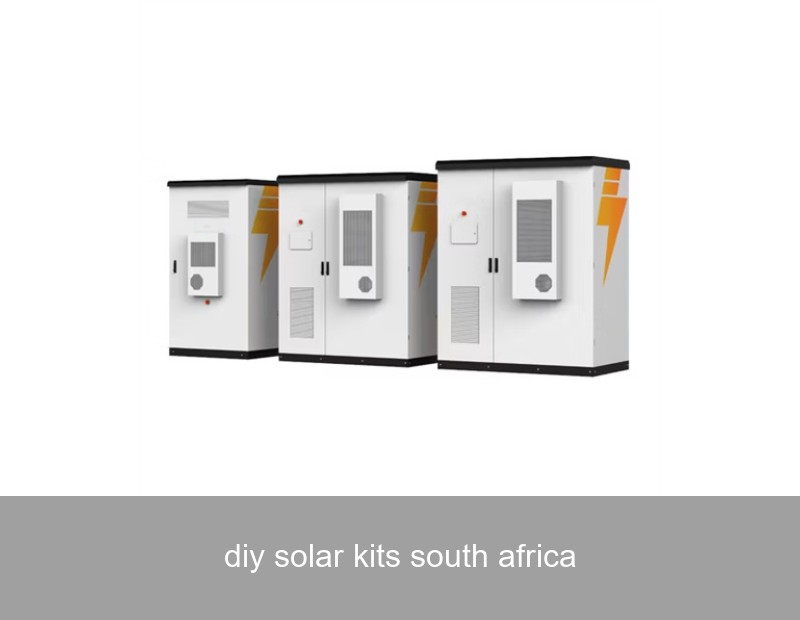
Instead of a generic kit, Highjoule provides smart, pre-engineered storage systems that are designed to seamlessly integrate with solar generation. Think of it as providing the "heart and brain" of your energy system. Our JouleBox™ residential energy storage system features advanced lithium-iron-phosphate (LiFePO4) batteries known for safety and long cycle life, coupled with a hybrid inverter that can be easily paired with a wide range of solar panels. The key differentiator is our integrated energy management software, which intelligently directs solar power to where it's needed most—powering your home, charging your batteries, or even selling back to the grid where allowed—all while ensuring the system operates safely and at peak efficiency.
For homeowners who want the satisfaction of partial involvement, our approach allows for flexible collaboration. You might choose to source and install the solar panels locally (with our guidance on compatibility), while we provide and commission the core storage and control unit. This ensures the most complex part of the system is handled by experts, complete with remote monitoring, over-the-air updates, and full warranty support.
Why System Integration is Non-Negotiable
| Consideration | Generic DIY Kit | Highjoule Integrated Solution |
|---|---|---|
| System Design | One-size-fits-all; may not match your specific load profile. | Professionally engineered; scalable and matched to your consumption patterns. |
| Component Synergy | Components from various makers; compatibility is not guaranteed. | Seamless integration between battery, inverter, and software for optimal performance. |
| Safety & Compliance | Relies entirely on installer's knowledge. May void insurance if not compliant. | Systems are certified to international safety standards (IEC, UL); installation guidelines ensure compliance. |
| Long-Term Support | Limited or fragmented warranty; difficult to diagnose issues. | Single-point warranty, remote diagnostics, and proactive system monitoring. |
| Future-Proofing | Fixed configuration; difficult to expand or upgrade. | Modular design allows for easy capacity expansion as your needs grow. |
Making the Right Choice for Your South African Home
So, where does this leave you if you're considering a DIY solar kit in South Africa? The choice isn't merely between doing it yourself or hiring a turnkey installer. There's a smart middle ground. Ask yourself these questions: Is my primary goal the lowest possible upfront cost, or the highest long-term reliability and return on investment? Do I have the expertise to correctly size the system, handle high-voltage DC wiring, and ensure it meets all municipal bylaws? Am I prepared to be my own project manager and service technician?
For those who value robust performance, safety, and peace of mind, partnering with an experienced technology provider like Highjoule for the core system components offers a compelling advantage. We handle the complex integration, so you can enjoy the benefits of solar energy without the hidden risks of a purely DIY approach.

Image Source: Unsplash (Representative image of a modern, energy-resilient home)
Your Energy Future
The journey to energy independence is exciting. Whether you're meticulously researching DIY solar kits or evaluating professional solutions, the most important step is making an informed decision based on real-world data and long-term value. What specific energy goal—be it eliminating load-shedding anxiety, locking in your electricity costs, or reducing your carbon footprint—is most important for you to achieve in the next year?
 Inquiry
 Online Chat