


Navigating the Landscape: What Hybrid Solar ESS Reviews Really Tell You
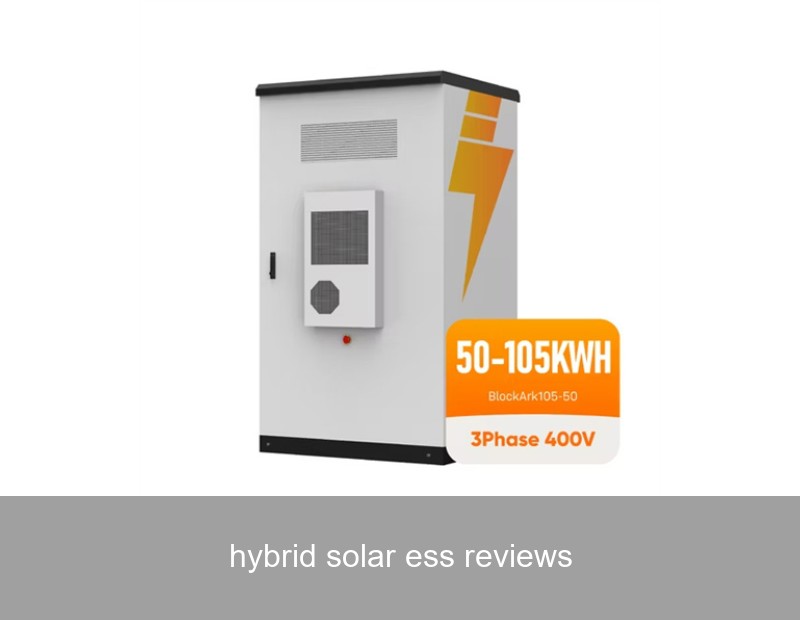
If you're researching energy independence, you've likely typed "hybrid solar ESS reviews" into a search engine. The results can be overwhelming—a mix of technical specifications, star ratings, and conflicting user experiences. But what are these reviews truly revealing about the state of modern energy storage? More than just product comparisons, they highlight a global shift: the move from simply generating solar power to intelligently managing it for resilience and savings. As a leader in this field since 2005, Highjoule understands that a great hybrid system isn't just about the components; it's about seamless integration, intelligent software, and long-term reliability. Let's decode the key themes in these reviews and what they mean for your energy future.
Table of Contents
- The Hybrid Advantage: More Than Just Backup Power
- Decoding Reviews: Key Performance Indicators That Matter
- From Review to Reality: A California Case Study
- Looking Beyond Specs: The Highjoule Approach to Intelligent Storage
- Asking the Right Questions Before You Buy

Image: A modern hybrid solar and storage installation, key for energy resilience.
The Hybrid Advantage: More Than Just Backup Power
First, let's clarify the "hybrid" in Hybrid Solar ESS (Energy Storage System). Unlike simple battery backups, a hybrid system is a multi-talented conductor for your personal energy orchestra. It intelligently manages three power flows: solar generation from your panels, battery storage, and the main electrical grid. The core promise? To maximize self-consumption of your solar energy, provide backup during outages, and, through smart software, even participate in grid services in some regions.
Reviews often center on how well a system delivers on these promises. Common praises include significant reductions in electricity bills and peace of mind during storms or blackouts. Frequent complaints, however, might point to clunky software, insufficient backup duration, or complex installation processes. This gap between expectation and experience is where choosing a technology partner like Highjoule becomes critical. Our systems are engineered not as a collection of parts, but as a unified, intelligent platform designed to eliminate these pain points.
Decoding Reviews: Key Performance Indicators That Matter
When sifting through reviews, focus on these tangible metrics rather than vague sentiments:
- Round-Trip Efficiency (RTE): This is the system's "energy IQ." If you feed 10 kWh into the battery, how much can you usefully pull out? Top-tier systems, like Highjoule's H-Series, achieve over 96% RTE, meaning you lose very little energy in the storage process.
- Depth of Discharge (DoD) & Cycle Life: Can you safely use 90% or 100% of the battery's capacity without harming it? How many charge/discharge cycles is it rated for over its lifetime? These numbers directly impact your long-term return on investment.
- Power Rating & Scalability: Does it have enough instantaneous power (in kW) to start your well pump or air conditioner? Can you easily add more battery capacity (kWh) later? Modularity is a hallmark of forward-thinking design.
- Software & Grid Interaction: This is the true differentiator. Can the system be programmed for time-of-use optimization? Does it offer storm watch mode? In markets like the UK or Texas, can it respond to grid signals? Intelligent software turns hardware into a smart asset.
| Performance Indicator | Why It Matters in Reviews | What to Look For |
|---|---|---|
| Round-Trip Efficiency | Directly impacts energy savings; lower efficiency means more wasted solar power. | >94% for lithium-ion systems. |
| Usable Capacity & DoD | Determines actual available backup power and system longevity. | 100% DoD with a long warranty (e.g., 10+ years). |
| Software Features | Dictates how well you can automate savings and resilience. | App control, TOU scheduling, grid service compatibility. |
From Review to Reality: A California Case Study
Let's move from theory to a real-world scenario. Consider a medium-sized winery in Napa Valley, California. Their challenges were peak demand charges from irrigation and cooling loads, coupled with a need for operational resilience during Public Safety Power Shutoffs (PSPS).
After analyzing numerous hybrid solar ESS reviews, they selected a Highjoule commercial system. The installation included a 150 kW solar array coupled with a 300 kWh H-Series battery storage unit. The results, monitored over 12 months, were telling:
- Demand Charge Reduction: By strategically discharging the battery during short periods of peak grid demand, the winery slashed its monthly demand charges by an average of 40%.
- Self-Consumption Boost: The system increased on-site solar consumption from ~60% to over 90%, drastically reducing net energy purchases.
- Resilience Verified: During three separate PSPS events, totaling 52 hours, the winery's critical cold storage and facility operations continued uninterrupted, preventing spoilage and business disruption.
This case mirrors the positive themes in thorough reviews: tangible financial ROI, enhanced sustainability, and proven reliability. It's a practical example of the intelligence built into Highjoule systems, which can be programmed for complex, multi-objective optimization that simple batteries can't handle.

Image: A containerized battery energy storage system (BESS) for commercial/industrial scale.
Looking Beyond Specs: The Highjoule Approach to Intelligent Storage
At Highjoule, we believe the best hybrid solar ESS reviews are the ones our customers don't have to write—because the system works so seamlessly it becomes a quiet, dependable part of their daily lives. Our philosophy centers on three pillars beyond the datasheet:
- Adaptive Intelligence: Our HarmonyOS™ platform doesn't just follow pre-set rules; it learns energy usage patterns and adapts to weather forecasts and grid conditions, making proactive decisions to optimize for cost or resilience.
- Unified System Design: Unlike assembled solutions from disparate inverters and batteries, Highjoule's fully integrated systems are designed and tested as a single unit. This reduces compatibility issues, simplifies installation, and ensures optimal performance and safety, a point often highlighted by professional installers in their reviews.
- Global Support for Local Needs: Whether it's meeting the specific grid codes of Germany, participating in virtual power plants in Australia, or handling the backup needs of a American home, our platforms are globally engineered but locally tailored.
For residential users, our Highjoule HomePower series brings this industrial-grade intelligence to a compact, user-friendly format. For businesses and microgrids, our H-Series Modular Blocks offer unparalleled scalability. This holistic approach addresses the very gaps—complexity, lack of integration, poor software—that lead to negative reviews in the first place.
Asking the Right Questions Before You Buy
Informed by what we've learned from the market and customer feedback, your decision process should go beyond reading reviews. Ask potential providers these crucial questions:
- Is the inverter and battery communication fully integrated, or are they simply compatible?
- How does the software handle multiple objectives (e.g., saving money vs. ensuring backup) simultaneously?
- What is the total cost of ownership over 10 years, including potential software subscriptions or expansion costs?
- Can the system be updated to participate in future grid service programs?
For authoritative, third-party information on solar and storage technology, you can refer to resources like the U.S. Department of Energy or the International Energy Agency (IEA).
Your Energy Future
The journey through hybrid solar ESS reviews is ultimately about finding a partner for a decades-long investment in your energy resilience and financial efficiency. The technology is not a commodity; the intelligence, integration, and support behind it make all the difference. As you weigh your options, consider this: What specific energy goal—total blackout protection, maximum bill savings, or reducing your carbon footprint—is most important for you to achieve in the next year?
 Inquiry
 Online Chat