


Unlocking Grid Resilience: A Deep Dive into the 200 Amp Energy Storage Cabinet Battery
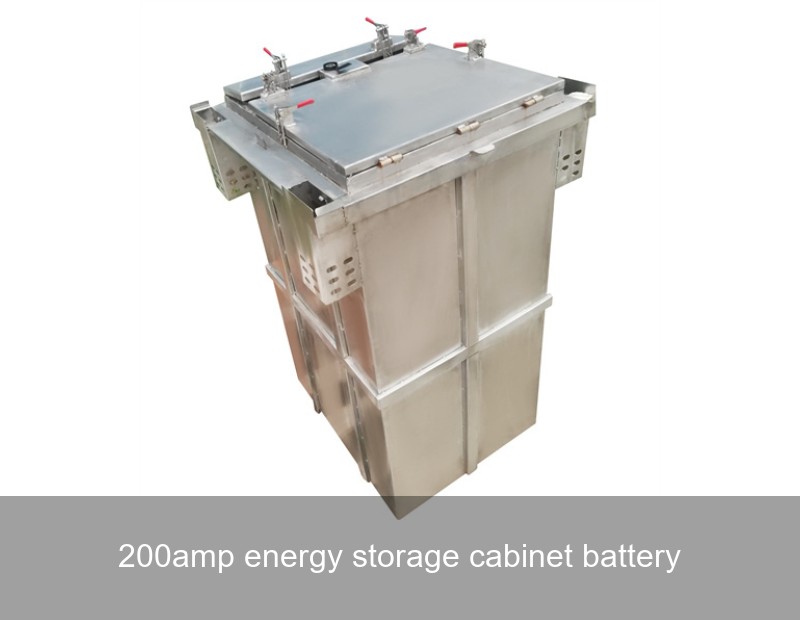
a sudden power outage halts production at a bustling factory. Or, a cloud passes over a solar-powered community, causing a momentary but costly dip in energy supply. In our modern world, energy reliability isn't just a convenience; it's the backbone of our economy and daily lives. This is where advanced energy storage, particularly robust systems like the 200 amp energy storage cabinet battery, steps in as a game-changer. These high-capacity units are more than just big batteries; they are intelligent power hubs designed to provide stability, independence, and significant cost savings. For businesses, industrial facilities, and large residential complexes navigating volatile energy markets and seeking sustainable power, understanding this technology is the first step toward true energy resilience.
Table of Contents
- What is a 200 Amp Energy Storage Cabinet Battery?
- Why a 200A System Matters: Beyond Basic Backup
- Key Components & How It Works
- A Real-World Case Study: The German Manufacturing Shift
- Choosing the Right System: Key Considerations
- The Future of Large-Scale Storage
What is a 200 Amp Energy Storage Cabinet Battery?
Let's break down the terminology. A "200 amp energy storage cabinet battery" refers to a complete, integrated system where the battery's continuous discharge current rating is 200 Amperes. The "cabinet" denotes its form factor—a self-contained, often modular, enclosure that houses not just the battery cells, but all critical components for safe and efficient operation. Think of it as a power plant in a box.
The "200A" rating is crucial. In simple terms, Amps measure electrical current flow. A higher amp rating means the system can deliver more power at once. To understand its capacity, we combine it with voltage (V). For instance, a common commercial battery voltage is 51.2V. Using the formula Power (kW) = Voltage (V) x Current (A) / 1000, a 51.2V, 200A system can deliver approximately 10.24 kW of instantaneous power. That's enough to simultaneously support heavy machinery, HVAC systems, and critical loads in a commercial setting.

Image Source: Unsplash - Representative image of advanced industrial battery storage.
Why a 200A System Matters: Beyond Basic Backup
The shift towards these high-amperage cabinet systems isn't accidental. It's a direct response to several pressing market phenomena:
- Rising Energy Costs & Demand Charges: For commercial and industrial (C&I) users, a significant portion of the electricity bill comes from "demand charges"—fees based on the highest 15-30 minute power draw in a billing cycle. A 200A storage cabinet can discharge during these peak periods, shaving the demand spike and slashing bills, often by 20-30%.
- Renewable Integration: Solar and wind are intermittent. A 200A system acts as a buffer, storing excess generation during sunny/ windy periods and releasing stable, 200A-capable power when production drops, maximizing self-consumption of green energy.
- Grid Services & Revenue: In many regions, grid operators pay for frequency regulation and capacity services. A robust, grid-interactive 200A cabinet can participate in these programs, turning a capital expense into a revenue stream.
Key Components & How It Works
An effective 200 amp energy storage cabinet battery is a symphony of advanced components:
| Component | Function | Why It's Critical |
|---|---|---|
| Battery Cells (LiFePO4) | The core energy storage medium. | Lithium Iron Phosphate chemistry offers superior safety, longevity (6,000+ cycles), and stability for high-current applications compared to older chemistries. The U.S. Department of Energy notes its growing importance in stationary storage. |
| Battery Management System (BMS) | The "brain" that monitors cell voltage, temperature, and state of charge. | Ensures safe operation within the 200A discharge envelope, prevents overcharge/over-discharge, and balances cells for maximum lifespan. |
| Power Conversion System (PCS) | Inverter/Charger that converts DC battery power to AC for use. | A high-quality bidirectional inverter is essential to handle the continuous 200A output efficiently and manage grid interaction seamlessly. |
| Thermal Management | Cooling and heating system (liquid or air). | Maintains optimal cell temperature. High-current discharge generates heat; precise thermal control is non-negotiable for performance and safety. |
| Energy Management System (EMS) | The system-level controller. | Makes intelligent decisions on when to charge/discharge based on weather, tariffs, and load patterns to optimize economic return. |
A Real-World Case Study: The German Manufacturing Shift
Let's look at concrete data from a project Highjoule completed for a mid-sized automotive parts supplier in Bavaria, Germany. The client faced two challenges: skyrocketing Strompreis (electricity prices) and a corporate mandate to achieve 70% renewable energy usage.
- Phenomenon: High peak demand from simultaneous operation of presses and robotic arms, leading to punitive demand charges. Solar generation often exceeded midday facility needs, with surplus sold to the grid at low feed-in tariffs.
- Data & Solution: Analysis revealed a peak demand of 180kW. Highjoule installed a modular system comprising two of its H-Cabinet 200 units, configured for a combined continuous output of 200A+ at 400V (over 160kW). The system was integrated with their existing 500kW rooftop solar array.
- Result (12-month post-installation):
- Demand Charge Reduction: 28% decrease, saving approximately €18,000 annually.
- Solar Self-Consumption: Increased from 55% to 89%, drastically reducing grid purchases.
- ROI: Projected payback period of 4.2 years, not accounting for available German federal subsidies for commercial storage.
This case exemplifies the tangible value a properly sized 200 amp energy storage cabinet battery delivers: direct cost savings, enhanced sustainability, and operational independence.
Choosing the Right System: Key Considerations
Not all cabinets are created equal. When evaluating a 200 amp energy storage cabinet battery, ask these questions:
- Scalability: Can you start with one cabinet and add more in parallel as your needs grow? Modular design is key.
- Depth of Discharge (DoD) & Cycle Life: A system rated for 90% DoD and 6,000 cycles will deliver far more usable energy over its lifetime than one rated for 80% and 4,000 cycles.
- Grid Intelligence: Does the EMS have sophisticated, forecast-driven software that can automatically respond to time-of-use rates or grid signals?
- Safety Certifications: Look for UL 9540 (USA) or IEC 62619 (EU) certifications for the entire energy storage system, not just the cells.
Highjoule's Intelligent 200A Cabinet Solution
At Highjoule, with nearly two decades of experience, we've engineered our H-Cabinet 200 Series to address these exact considerations. Our solution is more than just hardware; it's an integrated smart power platform.
Our cabinets are built around ultra-safe, long-cycle LiFePO4 cells and feature an industry-leading, multi-layer BMS for precise control. What truly sets them apart is the Highjoule Neuron™ EMS platform. This AI-driven software doesn't just react—it predicts. By integrating weather forecasts, historical load data, and real-time electricity pricing (from sources like ENTSO-E in Europe), it optimizes every charge and discharge cycle for maximum financial return. Whether for a California warehouse aiming to avoid PG&E peak rates or a Spanish resort seeking 24/7 solar power, our system is configured to deliver reliable, high-current power precisely when and where it's needed.

Image Source: Unsplash - Representative image of advanced energy storage system monitoring.
The Future of Large-Scale Storage
The trajectory is clear. As grid dynamics become more complex and renewables penetration deepens, the role of dispatchable, high-power storage like the 200 amp energy storage cabinet battery will only expand. We're moving towards systems that don't just store energy but actively participate in building virtual power plants (VPPs), providing critical grid stability services at a community or regional level.
The question for facility managers, business owners, and energy developers is no longer if they need storage, but how to select a system that is future-proof, intelligent, and backed by deep expertise. It's about choosing a partner who understands that the cabinet is just the beginning—the real value lies in the intelligence that controls it and the service that supports it for decades.
Is your organization currently analyzing its peak demand profiles, and what has been the most surprising insight you've uncovered about your energy consumption patterns?
 Inquiry
 Online Chat