


How Much Does a SolarMax 3.8 kW System Really Cost? A 2024 Breakdown
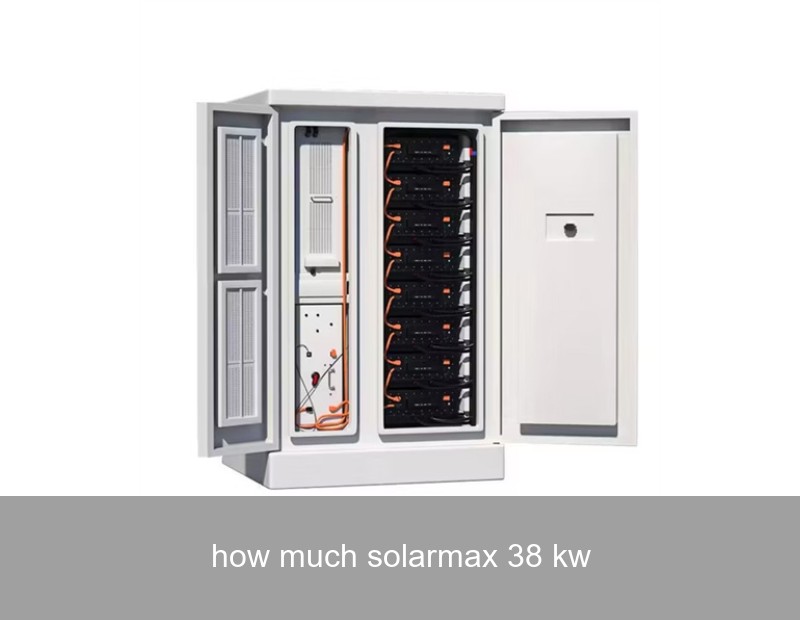
So, you're considering a 3.8 kW solar system, perhaps a popular model like the "SolarMax," and the burning question is: how much does a SolarMax 3.8 kW system cost? It's a smart starting point, but the answer isn't a single number. The final price tag for a 3.8 kilowatt solar installation is a blend of equipment quality, installation complexity, local incentives, and crucially, the long-term value of the energy it produces. As a leader in smart energy storage, Highjoule often sees that focusing solely on the upfront cost can overshadow the importance of system efficiency and integration with storage for true energy independence.
Table of Contents
The Real Cost Components of a 3.8 kW System
Let's dismantle the "sticker price." A 3.8 kW solar system cost is typically quoted as a turnkey price per watt ($/W). This includes:
- Solar Panels (Modules): The 3.8 kW rating refers to the total DC power output of the panels under ideal conditions. Panel efficiency (monocrystalline vs. polycrystalline) and brand reputation cause significant price variation.
- Inverter(s): This is the brain of your system, converting DC solar energy to usable AC power. A standard string inverter for a 3.8 kW system is common, but microinverters or power optimizers (which maximize output per panel, especially in shaded conditions) add cost and value.
- Mounting Hardware & Racking: The unseen backbone that secures your system to your roof for decades.
- Installation Labor: Costs vary dramatically by region, company, and roof complexity (e.g., a simple asphalt shingle roof vs. a tile roof with multiple angles).
- Permits, Fees, and Interconnection: Your installer handles these, but the cost is passed on. This includes local building permits and the utility fee to connect your system to the grid.
The Hidden (But Critical) Factor: System Design and Partner
Two installers might quote the same 3.8 kW system size with a $3,000 difference. Why? Expertise, warranty, and system design matter. A quality partner doesn't just slap panels on your roof; they model your home's specific sun exposure, shading, and energy consumption patterns to design a system that delivers the promised financial return. This is where the initial question of "how much for a SolarMax 3.8 kW" evolves into "how much value will my specific system generate?"
Price Range: From Budget to Premium
As of mid-2024, for the U.S. and European markets, the average gross price for a residential solar system ranges from $2.50 to $3.50 per watt before incentives. Let's apply that to a 3.8 kW (3,800-watt) system.
| System Quality Tier | Price Per Watt (USD/EUR) | Estimated Gross Cost for 3.8 kW | Typical Components |
|---|---|---|---|
| Budget / Value | $2.50 - $2.80 | $9,500 - $10,640 | Standard efficiency panels, basic string inverter. |
| Mid-Range / Most Common | $2.80 - $3.20 | $10,640 - $12,160 | Higher efficiency panels, optimizer-enhanced or reliable string inverter. |
| Premium / High-Performance | $3.20 - $3.80+ | $12,160 - $14,440+ | Top-tier panels (e.g., bifacial), microinverters, complex installation. |
Source: Aggregated data from industry reports like the U.S. DOE Solar Energy Technologies Office and European market analyses.
Now, here's where it gets exciting: incentives. In the U.S., the federal Investment Tax Credit (ITC) allows you to deduct 30% of the system cost from your federal taxes. In Germany, while the EEG feed-in tariff has decreased, the focus has shifted to self-consumption, and VAT exemptions on solar installations apply. Suddenly, that $12,000 mid-range system has a net cost closer to $8,400 in the U.S. after the ITC.
Image: A quality 3.8 kW installation starts with premium components. (Photo Source: Unsplash)
A Real-World Case: The Johnson Residence in Berlin
Let's move from theory to practice. The Johnson family in Berlin installed a 3.85 kW system on their south-facing townhouse roof in early 2023.
- System Specs: 11 x 350W monocrystalline panels, paired with a hybrid inverter.
- Gross Cost: €11,800 (approximately $3.07/W).
- Key Decision: They planned for future expansion and chose a Highjoule HomePower 5 battery-ready inverter from the start.
- First-Year Results: The system generated 3,650 kWh, covering about 65% of their annual electricity consumption directly.
- The "Gotcha": They were exporting excess midday power to the grid for a low feed-in tariff while still buying expensive power in the evening. This is a common pain point that highlights the limitation of solar-only systems.
In 2024, they added a Highjoule HomePower 5 battery (10 kWh capacity). Now, their self-consumption rate has jumped to over 85%. They store their cheap, self-produced solar energy for use at night, drastically reducing grid imports. The value of their initial 3.8 kW solar system increased overnight because it now fuels their battery. This integrated approach is what modern energy independence looks like.
Beyond Panels: The Highjoule Advantage for Your Solar Investment
When evaluating "how much a SolarMax 3.8 kW" or any solar system costs, the conversation is incomplete without considering storage. Highjoule, with nearly two decades of experience, doesn't just see solar as an endpoint. We see it as the first component of a resilient, intelligent home energy ecosystem.
Our HomePower Series of integrated battery storage systems (like the model chosen by the Johnson family) are designed to seamlessly connect with new or existing solar arrays. With our AI-driven energy management software, the system learns your habits, weather patterns, and utility rate schedules (like time-of-use rates common in California and parts of Europe) to autonomously decide when to store solar energy, power your home, or export to the grid for maximum profit.
This transforms your 3.8 kW solar system from a simple cost-saving tool into a dynamic asset that provides backup power during outages and actively manages your energy economics.

Image: Integrating storage maximizes the value of your solar investment. (Photo Source: Unsplash)
Key Factors That Impact Your Return on Investment (ROI)
Your location is a massive determinant of your 3.8 kW system's payoff period. A 3.8 kW system in sun-drenched Arizona will produce more kWh annually than the same system in cloudy Seattle, paying for itself faster. Use tools like the NREL PVWatts Calculator to estimate production.
- Local Electricity Rates: The higher your current cost per kWh, the faster solar pays off. This is a major driver in markets like Germany and the UK.
- Net Metering Policies: How your utility credits you for excess solar energy sent to the grid varies widely and is changing. This makes self-consumption via storage increasingly attractive.
- Financing: Paying cash yields the highest ROI, but solar loans, leases, and PPAs offer low- or no-upfront-cost options, affecting long-term savings.
The Storage Dividend
Adding a Highjoule battery system increases upfront cost but also dramatically increases your utility bill savings and protection against rising rates and outages. In many regions, it's the difference between simply offsetting your bill and achieving near-total energy autonomy.
Is a 3.8 kW System Right for Your Home?
A 3.8 kW system is a popular, mid-size option suitable for many smaller homes, couples, or those with moderate electricity usage. But the right size is determined by your past 12 months of utility bills, your roof's usable space, and your future plans (like buying an EV).
So, instead of just asking "how much does a SolarMax 3.8 kW cost?", we invite you to ask a more powerful question: What is the optimal energy system to achieve my goals of savings, resilience, and sustainability? The answer likely involves high-quality solar panels, intelligent inverters, and perhaps, the missing piece: a Highjoule battery system ready to unlock your solar power's full potential, day and night.
What's the single biggest energy challenge you hope a solar and storage system will solve for your home?
 Inquiry
 Online Chat