


How Much Do Solar Cells Cost? A Realistic Breakdown for 2024
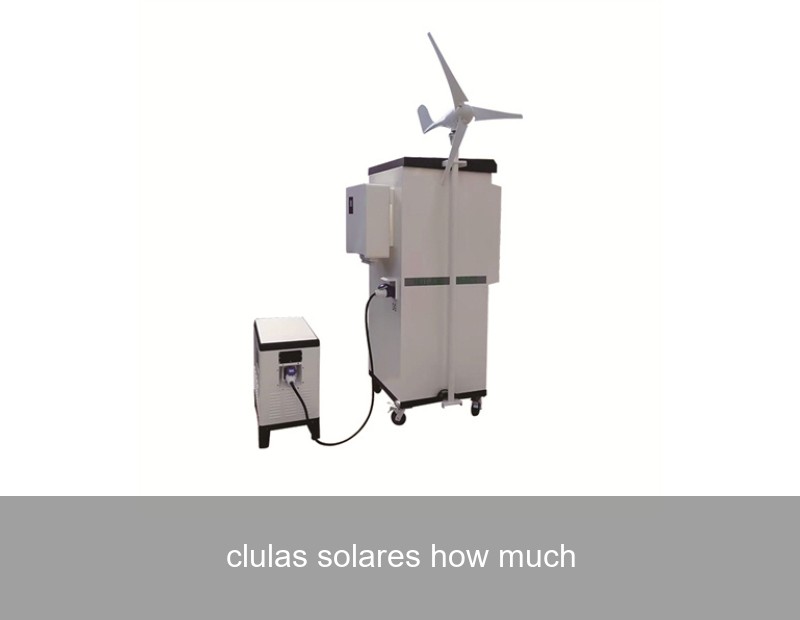
If you're considering solar power, the first question is almost always, "How much do solar cells cost?" It’s a smart question, but the answer is more nuanced than a simple price tag. The cost of the photovoltaic panels themselves is just one part of the equation for your total solar investment. In this guide, we’ll break down the real costs, the factors that influence them, and how pairing your system with a modern battery can transform your energy independence and return on investment.
Table of Contents
The Real Cost Components: Beyond the Panel Price
When installers or articles quote a cost "per watt," they're typically referring to the fully installed system cost. Let's demystify what that includes:
- Solar Panels (Modules): The actual "células solares" or solar cells assembled into panels. This typically accounts for about 15-25% of the total system cost.
- Inverters: The brain of the system, converting DC electricity from the panels to usable AC for your home. Crucial for efficiency.
- Mounting Hardware & Racking: The structural system that securely attaches your panels to the roof or ground.
- Electrical Components & Wiring: All the conduits, switches, and safety devices needed for a compliant installation.
- Permitting & Inspection Fees: Costs associated with local building and electrical permits.
- Installation Labor: Professional installation by certified technicians, which ensures safety, performance, and warranty validity.
- Optional: Energy Storage System (Battery): This is an add-on that is increasingly becoming a standard part of a robust solar installation.

Image source: Unsplash. Professional installation is a key cost and value component.
Current Solar Panel Pricing Trends
As of 2024, the average cost for a residential solar panel system in the U.S. and Europe, before incentives, ranges from $2.50 to $3.50 per watt. For a typical 6-kilowatt (kW) system, that translates to a gross cost between $15,000 and $21,000.
Why the range? Panel technology plays a role. Highly efficient monocrystalline panels (the kind with black cells) are at the premium end, while polycrystalline panels (with a blue hue) may offer a lower entry cost. The good news is that panel costs have dropped significantly over the last decade, thanks to advancements in manufacturing and scale. According to the National Renewable Energy Laboratory (NREL), module prices have fallen over 90% since 2010.
Critical Note: Always look at the post-incentive net cost. In the U.S., the federal Investment Tax Credit (ITC) allows you to deduct 30% of the system cost from your federal taxes. Many European countries, like Germany, Spain, and Italy, also offer attractive subsidies or tax benefits. This can dramatically reduce your final investment.
Key Factors Influencing Your Final Cost
Your unique situation will determine where in the price range you land. Here are the main variables:
| Factor | Impact on Cost |
|---|---|
| System Size (kW) | Larger systems cost more upfront but have a lower cost per watt and generate more savings. |
| Roof Complexity | Steep pitch, multiple angles, or skylights can increase labor and racking time/cost. |
| Location | Local labor rates, permit fees, and available sunlight (affecting system sizing) vary by region. |
| Panel & Inverter Quality | High-efficiency panels and advanced inverters (like micro-inverters) cost more but offer better performance and monitoring. |
| Energy Storage (Battery) | Adds significant upfront cost but provides backup power and maximizes self-consumption. |
The Game Changer: Adding Battery Storage
This is where the conversation about solar value evolves. Think about it: solar panels generate power during the day, but your energy consumption often peaks in the early morning and evening. Without a battery, excess solar energy is sent back to the grid (often for a low feed-in tariff), and you draw power back at night (at a high retail rate).
Adding a battery storage system changes this dynamic entirely. It allows you to:
- Store Excess Energy: Keep your solar power for use when the sun isn't shining.
- Increase Self-Consumption: Rely less on the grid, sometimes up to 70-80% or more.
- Provide Backup Power: Keep essential loads running during grid outages.
- Enhance ROI: In areas with time-of-use rates or weak net metering, a battery can improve financial returns by avoiding peak electricity purchases.
So, when asking "how much do solar cells cost," the more future-proof question is, "How much does a solar-plus-storage system cost?"
A Real-World Case Study: Solar + Storage in Action
Let's look at a concrete example from Southern California, a market with high electricity rates and time-of-use billing.
The Challenge: A mid-sized family home with an average monthly electricity bill of $220 wanted to eliminate their bill and gain resilience against frequent public safety power shutoffs.
The Solution: A 7.6 kW rooftop solar system was paired with a 13.5 kWh lithium-ion battery storage unit. The solar system was sized to cover 100% of their annual energy usage.
- Total Gross System Cost: ~$35,000 (Solar: ~$22,000 | Battery Storage: ~$13,000)
- After Federal ITC (30%): ~$24,500 net cost.
- Annual Savings: ~$2,640 (eliminating their $220/month bill).
- Simple Payback Period: Just under 9.3 years. The system lifespan is 25+ years for solar and 10-15 years for the battery.
- Additional Value: The home has experienced several multi-hour grid outages. The battery seamlessly provided backup power to critical loads (refrigeration, lighting, internet), a value not captured in simple dollar savings.
This case shows that while storage increases initial investment, it creates a more complete and resilient energy solution. The economics are increasingly favorable in regions with volatile energy prices or less generous solar compensation schemes, a trend seen in parts of Europe and across the U.S.

Image source: Unsplash. A modern solar-plus-storage home installation.
Highjoule's Integrated Energy Solutions
At Highjoule, we believe the true potential of solar is unlocked when it's part of an intelligent, integrated energy system. Since 2005, we've moved beyond just providing components to delivering complete, smart power solutions for homes and businesses.
Our approach addresses the core question of cost by focusing on long-term value and system intelligence. Our HES (Home Energy System) seamlessly combines high-efficiency solar with our advanced HJ-PowerStack lithium-ion battery and intelligent energy management software.
What sets the Highjoule system apart?
- All-in-One Integration: Our systems are designed to work together perfectly, simplifying installation and optimizing communication between solar production, battery storage, and home consumption.
- Adaptive AI Software: Our platform learns your energy habits and automatically adjusts to maximize self-consumption, leverage time-based utility rates, and ensure backup power is available when you need it most.
- Scalable Storage: The modular HJ-PowerStack battery can be configured to match your specific budget and backup needs, with the option to expand later.
- Global Expertise: With deep experience in both the European and North American markets, we understand the local regulations, incentive structures, and grid challenges, ensuring a system optimized for your location.
By choosing an integrated solution like Highjoule's, you're not just buying solar cells and a battery; you're investing in a holistic energy ecosystem designed to deliver reliability, savings, and control for decades.
Your Next Step Towards Energy Independence
The question of "how much do solar cells cost" is the starting point for a more important journey: understanding the value of energy independence. The landscape is clear: solar alone is powerful, but solar paired with intelligent storage is transformative.
With incentives still strong and electricity prices uncertain, the economic case for solar-plus-storage is more compelling than ever. The right system pays for itself and then continues to deliver free, clean power and peace of mind.
So, we leave you with this question to consider: What is the true cost of *not* having control over your power, both during the next billing cycle and the next grid outage?
 Inquiry
 Online Chat