


How Much LivCell Battery Do I Need? A Guide to Right-Sizing Your Energy Storage
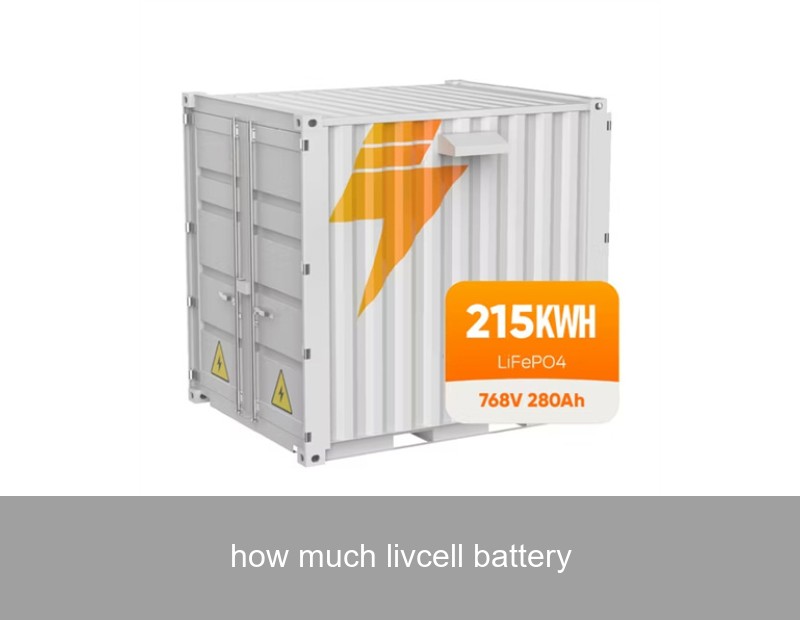
So, you're considering a home battery system, and the big question has popped up: how much LivCell battery capacity is right for my home? It's the cornerstone of planning your energy independence. Think of it like planning a road trip. You wouldn't just buy a random amount of fuel; you'd calculate the distance, your vehicle's efficiency, and desired safety buffer. Your energy storage needs deserve the same careful planning. As a global leader in advanced energy storage since 2005, Highjoule is here to guide you beyond the simple kilowatt-hour (kWh) number. The answer to "how much" is a personalized equation balancing your consumption, solar production, goals, and smart technology.
Understanding "How Much" – It's More Than Just kWh
When we ask "how much battery," we're primarily talking about usable energy capacity, measured in kilowatt-hours (kWh). One kWh powers a 1000-watt appliance for one hour. But here's the crucial insight: a 10kWh battery doesn't mean 10kW of power output. You must separate energy (kWh) from power (kW). Power (or peak output) determines how many heavy appliances you can run simultaneously, while capacity determines for how long. A Highjoule LivCell system is engineered to provide robust power ratings alongside scalable energy capacity, ensuring your lights stay on and your fridge hums even during a prolonged outage.

Image: A modern home energy system integrating solar and storage. Source: Unsplash
Key Factors That Determine Your Ideal Battery Size
Let's break down the four pillars of the "how much" calculation. Grab your latest utility bill; it's your starting point.
1. Your Daily Energy Consumption
This is your baseline. Check your electricity bill for your average daily kWh usage. A typical U.S. home consumes about 29 kWh per day, but this varies widely. Aiming for a battery that can cover 80-100% of your critical daily load is a common goal for self-consumption.
2. Solar PV System Size & Production
Your solar panels and battery are a team. A large solar array generates excess energy to fill your battery, while a smaller array may need a more modest battery to avoid "starving" it. We analyze your historical or projected solar production patterns to match storage capacity effectively.
3. Desired Backup Power Goals & Essential Loads
This is where personalization shines. What do you want to power during an outage, and for how long?
- Essential Loads (Partial Home Backup): Refrigeration, lights, internet, select outlets. This may require 10-20 kWh of storage.
- Whole-Home Backup: All appliances, including HVAC. This typically requires 20+ kWh and a high-power inverter.
4. Future-Proofing & Scalability
Are you planning an electric vehicle? A heat pump? Your future energy needs will grow. The modular design of Highjoule LivCell batteries means you can start with a system that meets today's needs—say, a 13.5kWh module—and seamlessly add more units later. This scalability is a core advantage, making "how much" a flexible question over time.
A Real-World Case Study: The Johnson Family Home
Let's make this concrete. The Johnson family in Hamburg, Germany, had a 8 kWp solar array but was still exporting 60% of their summer production to the grid due to low feed-in tariffs. Their daily consumption was 22 kWh, with essential loads (fridge, heating circulation pump, lights, home office) totaling about 10 kWh/day.
Their Goal: Maximize self-consumption and ensure 24-hour backup for essentials during frequent winter grid disturbances.
The Highjoule Solution: A single LivCell 13.5kWh battery unit paired with our hybrid inverter. This size was chosen because:
- It could store nearly all excess solar production on a typical summer day.
- Its capacity provided over a full day of backup for their essential loads, with a comfortable buffer.
- The system's high round-trip efficiency (over 96%) ensured minimal energy loss.
The Result: After one year, their grid dependence reduced by 85%, and their levelized cost of electricity from the solar+storage system fell below the retail price. During a 36-hour winter outage, their essential systems ran uninterrupted, validating their capacity choice.
Highjoule's Tailored Solutions: Finding Your "How Much"
At Highjoule, we don't sell generic boxes; we deliver optimized systems. Our LivCell product line is designed to answer the "how much" question with flexibility:
| Application Focus | Typical LivCell Configuration | Ideal For |
|---|---|---|
| Maximize Self-Consumption | 13.5 kWh - 27 kWh | Homes with moderate solar excess looking to reduce bills. |
| Essential Backup | 13.5 kWh - 27 kWh | Ensuring critical circuits run for 12-24+ hours. |
| Whole-Home Resilience | 27 kWh - 40.5 kWh+ | Larger homes, full HVAC backup, or areas with frequent/long outages. |
| Commercial & Industrial | Scalable clusters from 40.5 kWh to MWh scale | Peak shaving, demand charge management, and backup for businesses. |
Our process involves a detailed energy assessment, often using monitoring data, to model different scenarios and provide a clear ROI projection. This data-driven approach takes the guesswork out of sizing.

Image: A Highjoule energy storage unit in a residential setting. Source: Unsplash
Beyond Capacity: The Highjoule Intelligent Edge
Choosing "how much" is also about choosing "how smart." A larger battery managed poorly is less effective than a right-sized, intelligent one. The Highjoule Energy Management System (HEMS) uses AI and weather forecasting to optimize every kilowatt-hour:
- Predictive Charging: Prioritizes solar charging but can intelligently use off-peak grid power if a storm is forecasted, ensuring you're fully prepared.
- Grid Services Readiness: In some markets, our systems can participate in virtual power plants, providing value back to the grid and potentially generating revenue for you.
- Advanced Safety: With cell-level monitoring and a robust thermal management system, LivCell batteries are built for longevity and safety, a non-negotiable factor in sizing a system for a 15-20 year lifespan.
Your Next Step Towards Energy Confidence
The journey to answering "how much LivCell battery" you need is a collaborative one. It starts with understanding your unique energy fingerprint—your consumption patterns, your solar dreams, and your resilience goals. Highjoule's experts are here to translate those factors into a precise, scalable, and intelligent energy storage solution. What would a day of complete energy security look like in your home, and what's the first load you'd want to guarantee never goes offline?
 Inquiry
 Online Chat