


How Much Does EnerVenue Price? Understanding the True Cost of Metal-Hydrogen Storage
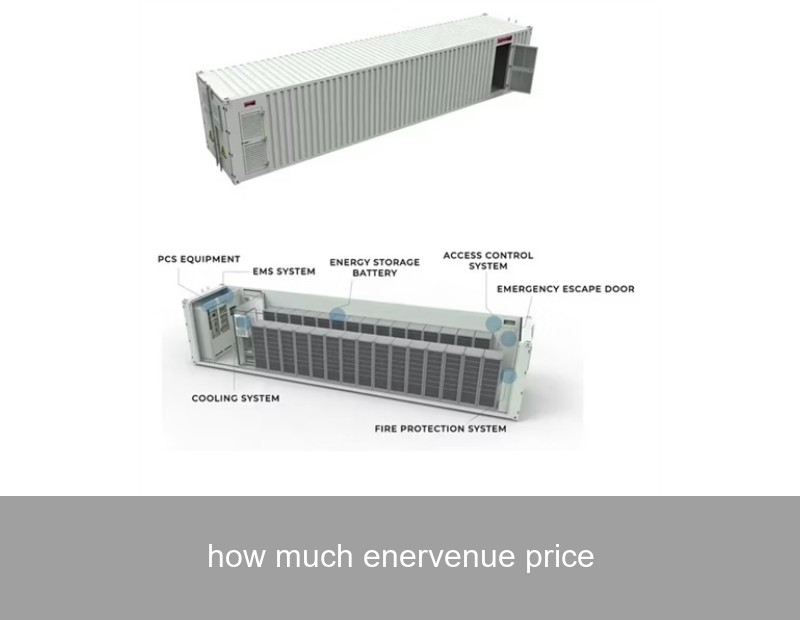
If you're exploring the future of energy storage, you've likely heard the buzz about EnerVenue. Touted as a durable, maintenance-free alternative to lithium-ion, the immediate question that follows is, "How much does EnerVenue price per kWh?" It's a logical starting point, but as with any sophisticated energy system, the answer is more nuanced than a simple sticker price. The initial battery cost is just one piece of a larger financial puzzle that includes installation, balance of system, and the total value delivered over decades. In this article, we'll demystify the cost structure of EnerVenue's metal-hydrogen technology and provide you with the framework to evaluate its true economic fit for your commercial, industrial, or utility-scale project.
What is EnerVenue? A New Player in the Energy Storage Arena
Before diving into costs, let's clarify what we're discussing. EnerVenue is an emerging company commercializing a nickel-hydrogen battery technology originally developed for the extreme demands of aerospace (like satellites and the International Space Station). Their core value proposition revolves around exceptional longevity (30+ years, 30,000+ cycles), a wide operating temperature range, and inherent safety with no risk of thermal runaway. For project developers and asset managers tired of complex thermal management systems and aggressive degradation curves, EnerVenue presents a compelling, "set-and-forget" physical storage solution. But this rugged performance comes from a different chemistry—nickel and hydrogen—which carries its own manufacturing and material cost implications.

Image Source: Unsplash - Representative image of advanced battery modules.
How Much Does EnerVenue Cost? Breaking Down the Price Factors
As of late 2023 and into 2024, EnerVenue is in the early stages of gigafactory scale-up. Therefore, publicly available, finalized "per kWh" prices for large-scale orders are scarce and highly project-specific. However, we can analyze the cost drivers. Industry reports and executive statements suggest that at scale, EnerVenue is targeting a capital cost (CAPEX) that is competitive with mainstream lithium-ion iron phosphate (LFP) systems when considering the total system lifecycle.
The Core Components: The Battery Cell and Stack
The raw cell cost is influenced by the use of nickel and platinum-group catalysts. While nickel is abundant, refining and processing add cost. EnerVenue's design eliminates many expensive components found in lithium-ion, like complex battery management systems (BMS) for thermal runaway prevention. The simplified architecture can reduce balance-of-system expenses. Early estimates from analysts like Greentech Media suggested a target system price in the range of $500-$800 per kWh for the initial production, with a clear roadmap to drive costs down with manufacturing scale. It's critical to note this is the system price, not just the cell.
The "Beyond-the-Battery" Costs
This is where the conversation gets practical. The quoted price of the EnerVenue Energy Storage Vessel (their containerized unit) is not your final project cost. You must factor in:
- Power Conversion System (PCS): Inverters and transformers to connect DC storage to the AC grid.
- Installation & Civil Works: Site preparation, foundation, and physical installation.
- Grid Interconnection & Engineering: Permits, studies, and electrical interconnection fees.
- Software & Controls: The energy management system (EMS) that dictates when to charge and discharge to maximize revenue or savings.
These costs can add 30% to 100% on top of the core storage hardware. This is precisely where an experienced system integrator like Highjoule becomes invaluable. Our role is to design, procure, and integrate all these components into a seamless, optimized, and warrantied system, ensuring you get the promised performance and financial return.
The Real Metric: Total Project Cost and Levelized Cost of Storage (LCOS)
Sophisticated buyers look beyond upfront CAPEX. They evaluate the Levelized Cost of Storage (LCOS)—the net present cost of building and operating the storage asset over its lifetime, per unit of energy discharged. This is where EnerVenue's strengths shine.
| Factor | EnerVenue (Metal-Hydrogen) | Typical Lithium-ion (LFP) |
|---|---|---|
| Cycle Life (to 80% capacity) | 30,000+ cycles | 6,000 - 10,000 cycles |
| Calendar Life | 30+ years | 10 - 15 years |
| Degradation | Very low, linear | Higher, non-linear |
| Thermal Management | Passive air cooling (low cost & energy) | Active liquid cooling (added cost & parasitic load) |
| Upfront System CAPEX (Est.) | Currently Higher, falling with scale | Mature, lower upfront |
| Projected LCOS (long-duration) | Potentially lower over 20+ years | Higher due to replacement needs |
As the table shows, while the initial EnerVenue price might be higher, its unparalleled cycle life and minimal maintenance can result in a superior LCOS for projects requiring daily cycling over a 20-30 year period. You're paying more upfront for a financial asset that lasts decades longer with less operational hassle.
The Highjoule Approach: Smart Integration for Optimal Value
At Highjoule, we view new technologies like EnerVenue through the lens of total project success. Since 2005, we've specialized in matching the right storage technology to the specific application—be it peak shaving for a factory, renewable firming for a solar farm, or grid services. Our intelligent, containerized H-Joule Cube platform is agnostic and can be configured with leading battery chemistries, including lithium-ion, flow batteries, and, where it makes economic sense, metal-hydrogen.
For a client considering EnerVenue, we don't just sell hardware. We provide a full feasibility analysis: modeling your load profile, simulating degradation of different technologies, and calculating the net present value (NPV) and internal rate of return (IRR) for each option. Our integrated Energy Management System (EMS) ensures the battery operates in the most profitable regime every single day, maximizing the return on your investment regardless of the underlying chemistry. This holistic service is what transforms an interesting battery technology into a reliable, revenue-generating asset on your balance sheet.

Image Source: Unsplash - Representative image of an engineer monitoring industrial equipment.
A Real-World Perspective: Case Study from a German Industrial Facility
Let's look at a theoretical but data-backed scenario based on our real project experience in Europe. A mid-sized manufacturing plant in Bavaria with a 2 MW solar PV array wants to add storage to increase self-consumption and provide peak load shaving. They evaluated a standard 4 MWh, 2-hour lithium-ion system versus a 4 MWh EnerVenue system.
- Lithium-ion (LFP) Option: Upfront project cost: ~€1.2 million. Expected lifespan before significant replacement: 15 years. Requires active cooling, adding to operational electricity use.
- EnerVenue Option: Upfront project cost: ~€1.6 million (estimated premium). Expected lifespan: 30+ years with minimal degradation. Passive cooling reduces parasitic load.
Our financial modeling, using real German electricity price forecasts and grid service tariffs from sources like Fraunhofer ISE, showed that while the EnerVenue system had a higher CAPEX, its 30-year lifecycle and stable performance yielded a 15% better IRR. The avoided cost of a full system replacement in year 15 was a decisive factor. For this client, whose primary goal was long-term, predictable cost control, the higher initial EnerVenue price was justified by the superior lifetime value.
Making the Decision: Is EnerVenue the Right Choice for You?
So, how much does EnerVenue price? The answer is: it depends on your total project scope and long-term operational goals. If your project has a short horizon, needs the absolute lowest upfront cost, or requires very high energy density, lithium-ion may still be the answer. However, if you are building a critical infrastructure asset, a microgrid that must last for decades, or a renewable energy plant facing stringent long-term performance guarantees, the LCOS advantage of metal-hydrogen becomes compelling.
The key is to partner with an integrator who can run the numbers objectively and handle the complexity for you. At Highjoule, we're technology-neutral because our commitment is to your project's financial and operational success, not to selling a specific cell. We combine cutting-edge hardware with intelligent software to deliver a guaranteed outcome.
Ready to move beyond the simple price-per-kWh question and discover the true lifetime value of storage for your specific application? What is the single biggest operational energy challenge your business or community faces today that a 30-year battery could solve?
 Inquiry
 Online Chat