


Grid Forming Energy Storage: The Keystone for a Stable, Renewable-Powered Future
Imagine a symphony orchestra. For decades, our power grid has been like an orchestra led by a few massive, predictable conductors—coal, gas, and nuclear plants. They set the beat (frequency) and the volume (voltage), and everyone else follows. Now, we're rapidly adding a chorus of brilliant soloists: solar panels and wind turbines. But here's the catch—these renewable soloists are intermittent and, crucially, they traditionally follow the grid's lead; they can't start the symphony on their own. This is where grid forming energy storage emerges as the essential new conductor, capable of creating a stable electrical grid from scratch and enabling a future powered by clean energy.
What is Grid-Forming Energy Storage?
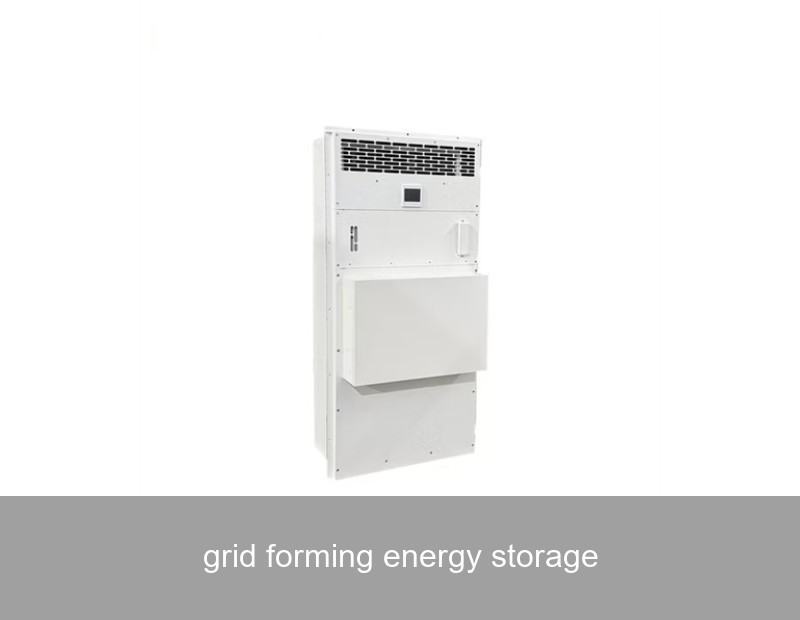
At its core, grid-forming (GFM) is a revolutionary capability for battery energy storage systems (BESS). Unlike traditional "grid-following" inverters that must sync to an existing grid signal, a grid-forming battery system can independently establish and maintain the grid's voltage and frequency. It creates a stable electrical "waveform" that other resources—solar farms, wind turbines, and even conventional plants—can synchronize to. Think of it as the foundational heartbeat for a modern, decentralized power system.

Image Source: Unsplash - Representative image of a utility-scale battery storage installation.
The Modern Grid Challenge: Too Much Sun, Not Enough Stability
The phenomenon is clear: grids worldwide are undergoing a rapid transformation. In Europe and the U.S., record-breaking percentages of power are coming from renewables. California, for instance, has seen moments where solar power meets over 100% of daytime demand. This is a triumph for decarbonization, but it introduces complex technical data:
- Reduced Inertia: Traditional turbines provide physical inertia, slowing frequency changes during disturbances. Inverter-based resources (solar/wind) don't, inherently making the grid "stiffer" and more prone to cascading failures.
- Voltage Instability: Fluctuations in renewable output can cause rapid voltage swings, threatening equipment and triggering outages.
- Black Start Dilemma: After a total blackout, you need a source to restart the grid. Renewables alone cannot "black start" without a grid-forming reference.
This data paints a pressing picture: as we retire fossil fuel plants, we are also removing the very assets that have historically provided grid stability and resilience.
How Grid-Forming Technology Works: The Digital Grid Architect
So, how does a battery become a grid former? The magic is in the advanced power electronics and control software. A Highjoule grid-forming BESS uses sophisticated algorithms to mimic—and often improve upon—the behavior of a traditional synchronous generator.
| Grid-Following Mode | Grid-Forming Mode |
|---|---|
| Waits for, detects, and synchronizes to an existing grid voltage. | Actively generates a stable, sinusoidal voltage waveform. |
| Acts as a current source, injecting power when called upon. | Acts as a voltage source, setting the foundational electrical parameters. |
| Can exacerbate instability if the grid is weak (like adding weight to a shaky table). | Strengthens the grid inherently, providing virtual inertia and immediate frequency response. |
This capability allows a network of distributed assets to operate reliably as an "island" (a microgrid) during main grid outages, and to seamlessly reconnect when grid power is restored.
Key Benefits of Grid-Forming Battery Storage
- Unlocks Higher Renewable Penetration: By providing essential stability services, GFM storage is the key to safely integrating more wind and solar onto the grid, accelerating the clean energy transition.
- Enhances Resilience & Reliability: It enables true energy independence for communities, campuses, and industrial facilities through robust microgrids that can survive and recover from extreme weather or grid faults.
- Improves Power Quality: Actively regulates voltage and frequency, protecting sensitive industrial machinery and data center operations from costly dips and surges.
- Future-Proofs Infrastructure: Investing in grid-forming storage is investing in the foundational technology for the 21st-century grid, as recognized by leading grid operators like NERC and the European Network of Transmission System Operators (ENTSO-E).
Highjoule's Grid-Forming Solutions: Engineered for Resilience
At Highjoule, we've been anticipating this grid evolution since our founding in 2005. Our HPS Series of commercial and industrial battery energy storage systems is now available with our proprietary GridSynch™ grid-forming software suite. This isn't just an add-on; it's engineered into the system's DNA.
Our solutions are designed to provide:
- Seamless Transition: Automatic, sub-second switching between grid-tied and islanded microgrid operations.
- Multi-Asset Coordination: Our intelligent energy management system (EMS) can orchestrate a mix of solar, wind, existing generators, and storage as a unified, grid-forming resource.
- Scalability: From a single 500kW unit stabilizing a factory to a multi-MW portfolio providing services to the utility, our architecture is modular and scalable.
For utilities and independent power producers, our Utility-Scale Platform offers front-of-the-meter storage explicitly designed for transmission and distribution deferral, renewable firming, and, critically, providing bulk system stability services as a grid-forming asset.

Image Source: Unsplash - Engineer monitoring advanced energy management systems.
Case in Point: Stabilizing a European Industrial Microgrid
Let's look at a real-world application. A major chemical manufacturing plant in Germany sought to increase its on-site solar generation from 5MW to 15MW to reduce carbon emissions and energy costs. However, grid impact studies revealed that adding that much variable generation would create unacceptable voltage volatility on their medium-voltage internal network, risking process shutdowns.
The Highjoule Solution: We deployed a 4MW/8MWh HPS system with GridSynch™ technology. This system was strategically configured not just for energy arbitrage, but as the primary grid-forming asset for the plant's internal microgrid.
- Voltage Regulation: The system maintains voltage within a tight 0.99 to 1.01 per unit band, eliminating the risk of solar-induced fluctuations.
- Renewable Hosting Capacity: Enabled the full 15MW solar expansion without costly grid reinforcement, increasing the plant's renewable consumption to over 60% of daytime load.
- Resilience Metric: The facility can now island from the main grid for over 4 hours at critical load, ensuring continuous operation during outages. In its first year, it successfully prevented two potential production halts during grid disturbances.
This case exemplifies how grid-forming storage is the critical enabler for industrial decarbonization and resilience, turning a grid stability challenge into a competitive advantage.
The Future Grid: Built on Storage
The transition is undeniable. Grid operators from National Grid ESO in the UK to CAISO in the U.S. are actively revising grid codes and launching procurement programs specifically for grid-forming capabilities. The future grid will not be defined by a few large plants, but by a dynamic network of distributed resources, with intelligent, grid-forming storage at its core, providing the stability and flexibility needed for a 100% renewable future.
Is your business, community, or project ready to be a proactive part of this new grid architecture? What would the ability to create your own stable, clean microgrid mean for your operational resilience and energy independence?
 Inquiry
 Online Chat