


Battery Storage with Solar Panels: Your Complete Guide to Energy Independence
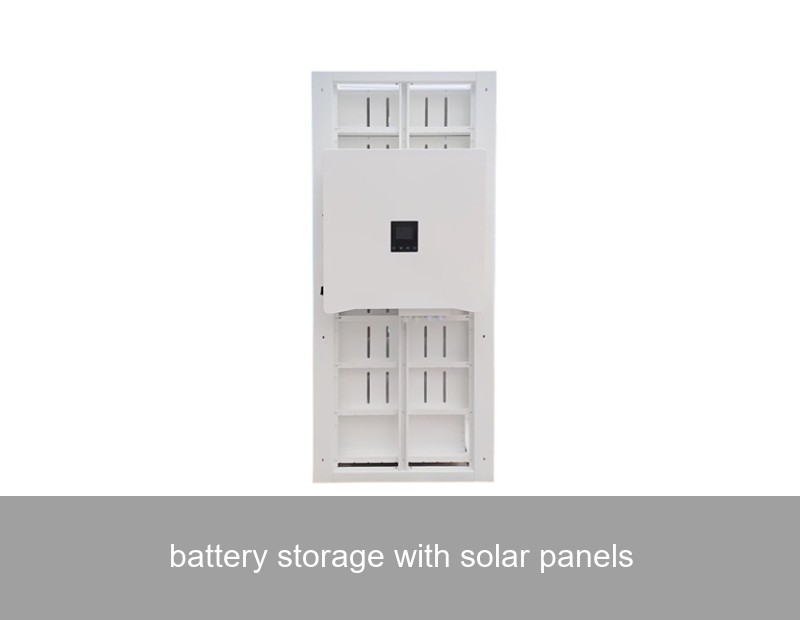
Have you ever watched your solar panels generate a surplus of clean energy on a sunny afternoon, only to see it flow back to the grid, knowing you'll have to buy it back at a higher price in the evening? This common experience is at the heart of the modern energy puzzle. The solution, however, is both elegant and increasingly essential: pairing battery storage with solar panels. This combination transforms a one-way solar system into a personal, resilient power station. For over 18 years, Highjoule has been at the forefront of this revolution, engineering smart, efficient, and sustainable power solutions that empower homeowners and businesses to take true control of their energy. Let's explore how integrating a battery with your solar array isn't just an upgrade—it's the key to unlocking the full potential of renewable energy.
Table of Contents
- The Solar Dilemma: Generation vs. Consumption
- How Battery Storage with Solar Panels Works: A Seamless Symphony
- Key Benefits Beyond Backup Power
- Real-World Case Study: A California Business Becomes Resilient
- Choosing the Right System: What to Consider
- The Highjoule Solution: Engineered for Intelligence and Durability
- The Future of Energy is in Your Hands
The Solar Dilemma: Generation vs. Consumption
Solar panels are brilliant at their primary job: converting sunlight into electricity. But here's the catch—the sun's schedule doesn't always align with our energy needs. Most homes and businesses see peak energy usage in the early morning and evening, precisely when solar production is low or nonexistent. This mismatch creates a seesaw effect.
Without a battery, excess solar energy produced midday is exported to the utility grid, often for a modest feed-in tariff. Later, when the sun sets and demand spikes, you must import energy from the grid at a much higher retail rate. According to the U.S. Department of Energy, this imbalance challenges grid stability as solar penetration increases. The financial and operational inefficiency is clear: you're generating power but not necessarily using it when it's most valuable to you.
How Battery Storage with Solar Panels Works: A Seamless Symphony
Integrating a battery storage system changes the entire game. Think of it as adding a sophisticated energy reservoir to your property. Here’s the typical flow:
- Daytime Production: Your solar panels generate electricity. This power first meets your immediate home or business needs.
- Charging the Reservoir: Any surplus energy, instead of going straight to the grid, is directed to charge your battery system.
- Evening & Peak Discharge: As solar production wanes and electricity rates often peak, your system automatically switches to draw power from the charged batteries.
- Grid Interaction: The grid becomes a backup, not a primary source. You only draw from it when your battery is depleted, significantly reducing your bills.
This intelligent cycle is managed by an inverter and an energy management system (EMS), which act as the brain of the operation, optimizing for self-consumption, cost savings, or grid services.

Image Source: Unsplash - A modern home equipped with solar panels and a wall-mounted battery storage unit.
Key Benefits Beyond Backup Power
While emergency backup during outages is a major motivator, the advantages of battery storage with solar panels run much deeper:
- Maximized Self-Consumption: Use more of the solar energy you produce, sometimes increasing self-consumption rates from 30-40% to over 80%.
- Substantial Bill Savings: Avoid high time-of-use (TOU) rates and demand charges (crucial for businesses). This is where the ROI becomes compelling.
- Grid Support & Revenue: In some markets, advanced systems can participate in grid services like frequency response, creating a potential revenue stream.
- Increased Energy Independence: Reduce reliance on volatile utility prices and contribute to a more decentralized, resilient energy network.
Real-World Case Study: A California Business Becomes Resilient
Let's look at a concrete example from our work at Highjoule. A medium-sized winery in Napa Valley, California, faced two critical issues: crippling peak demand charges from their utility and frequent brief grid outages that risked spoiling product during temperature-sensitive fermentation processes.
The Problem: Their existing 100 kW solar array was offsetting energy costs but did nothing for demand charges or outages. Their monthly utility bill still showed significant spikes.
The Highjoule Solution: We designed and installed a tailored 250 kWh battery energy storage system (BESS) integrated with their existing solar. The system was programmed for peak shaving—discharging the battery during the 2-3 hours of highest grid demand each day.
The Data-Driven Results (12-month period):
| Metric | Before Installation | After Installation | Change |
|---|---|---|---|
| Monthly Demand Charge Cost | ~$3,200 | ~$900 | -72% |
| Grid Energy Import (kWh) | 25,000 kWh/month | 8,500 kWh/month | -66% |
| Self-Consumption of Solar | 42% | 91% | +49 pts |
| Outage Protection | None | Full critical load backup for 10+ hours | Complete Resilience |
This project, completed in 2022, delivered a return on investment in under 5 years, all while guaranteeing production continuity. It's a prime example of how commercial entities can leverage battery storage with solar panels for both economic and operational resilience. For more on grid challenges, see this report from the International Energy Agency (IEA).
Choosing the Right System: What to Consider
Not all storage solutions are created equal. When evaluating systems, consider these factors:
- Battery Chemistry: Lithium Iron Phosphate (LFP) is now the industry standard for residential and commercial storage due to its superior safety, long cycle life, and stability, compared to older NMC chemistries.
- Power & Capacity: Understand the difference. Power (kW) determines how many appliances you can run at once. Capacity (kWh) dictates how long you can run them.
- Depth of Discharge (DoD): A higher DoD means you can use more of the battery's stated capacity without harming its lifespan.
- System Intelligence: Can it learn your usage patterns? Can it be updated for future grid programs? Software is as important as hardware.
- Scalability: Can you easily add more battery modules later if your needs grow?
The Highjoule Solution: Engineered for Intelligence and Durability
At Highjoule, we've spent nearly two decades refining our approach. Our HPS Series for homes and HES Series for commercial/industrial applications are built on a core philosophy: seamless integration, unmatched safety, and intelligent optimization.
Our systems use premium LFP battery cells and are managed by our proprietary Adaptive Energy OS. This software platform doesn't just react; it predicts. By analyzing weather forecasts, your historical consumption, and real-time grid price signals (where available), it automatically chooses the most economical and efficient operation mode. For instance, it might decide to hold a 20% reserve for an expected outage while using the rest for peak shaving, all without you lifting a finger.

Image Source: Unsplash - Representative image of a professional, containerized battery storage system installation.
For businesses and microgrids, our solutions go further. We provide turnkey energy management, designing systems that can island from the grid, integrate with generators, and even participate in virtual power plants (VPPs). Our focus is on delivering a holistic power solution, not just a battery box.
Safety and Sustainability by Design
We understand that storing energy on-site is a significant responsibility. Every Highjoule unit undergoes rigorous testing, features multi-layer protection (thermal, electrical, structural), and is designed for a long service life with minimal degradation. This commitment to durability makes our systems not only a smart investment but a sustainable one, reducing long-term waste. Learn about battery lifecycle from a trusted source like NREL.
The Future of Energy is in Your Hands
The journey from a simple solar consumer to a proactive energy producer and manager is now accessible. Battery storage with solar panels represents the logical, powerful next step in the evolution of personal and community energy. It answers the critical question of "what happens when the sun doesn't shine?" with a practical, profitable, and empowering solution.
As grid dynamics continue to evolve and the push for decarbonization intensifies, the value of a resilient, self-sufficient energy asset will only grow. The technology is proven, the economics are clear in most regions, and the benefits extend from your wallet to the wider community.
So, we leave you with this: What would energy certainty look like for your home or business? Is it never worrying about a blackout again, finally seeing that utility bill shrink predictably, or simply knowing you're maximizing your contribution to a cleaner grid? What's the first step you'll take to explore making that vision a reality?
 Inquiry
 Online Chat