


Unlocking Energy Freedom: Your Guide to Grid-Connected PV Battery Systems
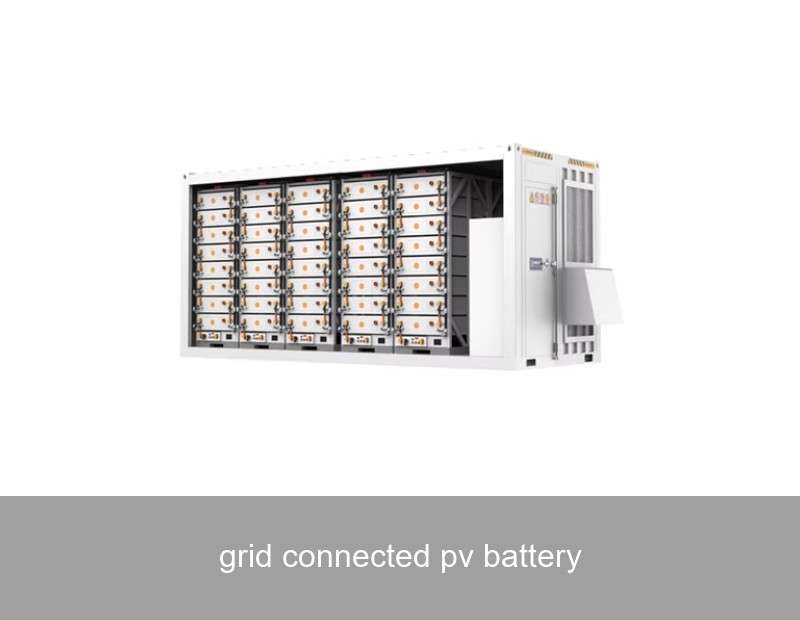
Have you ever watched your solar panels pump energy back to the grid on a sunny afternoon, only to buy it back at a premium in the evening? You're not alone. This common frustration is precisely why grid-connected PV battery systems are revolutionizing how homes and businesses use solar power. Unlike off-grid systems, a grid-tied battery setup keeps you connected to the utility network while giving you a personal energy reservoir. It’s the best of both worlds: you enjoy the security and backup of the grid while maximizing your self-consumption of solar energy, reducing bills, and increasing resilience. As a leading energy storage provider since 2005, Highjoule has been at the forefront of this intelligent energy management shift, empowering users to take true control of their power.
The Phenomenon: Why Grid-Tied Solar Storage is Booming Now
The shift towards grid-connected PV battery systems isn't just a niche trend; it's a mainstream movement. Two primary forces are driving this. First, electricity prices, especially in Europe and parts of the US, have become increasingly volatile and expensive. Second, the frequency of grid disruptions—from extreme weather events to aging infrastructure—has raised serious concerns about power reliability. Homeowners and business operators are no longer passive consumers. They are becoming "prosumers," generating, storing, and managing their own energy. The grid is transforming from a one-way street into a collaborative network, and your battery is your key negotiating tool in this new landscape.

Image source: Unsplash. A modern home equipped with solar panels and a wall-mounted battery storage system, showcasing a typical grid-connected setup.
The Data: What the Numbers Tell Us About Energy Independence
Let's talk specifics. According to the International Energy Agency (IEA), global renewable capacity additions soared by nearly 50% in 2023, with solar PV accounting for three-quarters of that growth. Crucially, they note that "the role of batteries is expanding rapidly." In markets like Germany and California, studies show that adding a battery to a residential PV system can increase self-consumption of solar power from 30-40% to 60-80% or more. This directly translates to a dramatic reduction in grid electricity purchases. For a typical household, this could mean slashing their annual electricity bill by 60-80%, depending on local rates and incentives. The financial argument is now compellingly clear.
Financial & Resilience Benefits at a Glance
| Benefit | Without Battery | With Grid-Connected PV Battery |
|---|---|---|
| Solar Self-Consumption | ~30-40% | ~60-80%+ |
| Bill Savings | Moderate | High (Up to 80% possible) |
| Backup Power During Outages | None | Seamless, automatic |
| Grid Service Participation | Limited | Possible (e.g., peak shaving) |
Case Study: A Real-World Application in California
Consider the experience of a medium-sized winery in Napa Valley, California. Facing frequent Public Safety Power Shutoffs (PSPS) to prevent wildfires, a multi-day grid outage could ruin temperature-sensitive fermentation processes. Their solution? A 250 kW solar array paired with a 500 kWh grid-connected PV battery system. Here are the results after one year:
- Energy Cost Reduction: Reduced their grid energy purchases by 92% during peak rate periods.
- Outage Protection: Successfully rode through 12 grid outages, keeping critical cooling and operations running seamlessly.
- ROI: Achieved an estimated payback period of under 5 years, factoring in California's SGIP (Self-Generation Incentive Program) incentive.
This case, mirrored by many commercial installations Highjoule has delivered, highlights that the technology is not just theoretical but a proven, operational asset.
Key Components of a Robust Grid-Connected PV Battery System
Understanding the key parts of your system demystifies the technology. A typical setup includes:
- Solar PV Array: The primary generator of DC electricity.
- Hybrid Inverter or Inverter + Battery Controller: The brain of the operation. It manages energy flow between solar panels, the battery, and the grid, converting DC to AC for home use.
- Battery Bank: The heart of your energy storage. Lithium-ion phosphate (LFP) batteries are now the industry standard for safety, longevity, and performance.
- Energy Management System (EMS): The intelligent software that decides when to charge, discharge, or hold based on weather forecasts, usage patterns, and tariff rates.
- Grid Connection: The critical link that allows for import and export, governed by a secure grid interconnect agreement.

Image source: Unsplash. An engineer checks the control panel of a large-scale Battery Energy Storage System (BESS), highlighting the industrial application of grid-connected technology.
Highjoule's Smart Solutions for Grid-Tied Resilience
At Highjoule, we've spent nearly two decades refining grid-connected PV battery solutions for diverse applications. Our systems are designed for intelligence, durability, and seamless integration. For residential clients, our H-Joule HomePower series features modular LFP batteries and an intuitive hybrid inverter that can be managed via a simple smartphone app. It automatically switches to backup power during an outage in milliseconds—you likely won't even notice the lights flicker.
For commercial and industrial customers, our H-Joule C&I Energy Platform is a scalable powerhouse. It goes beyond simple backup, offering advanced features like peak shaving (reducing demand charges) and load shifting. Our proprietary EMS can integrate with building management systems and even participate in grid service programs where available, turning your energy storage into a potential revenue stream. As highlighted by the U.S. Department of Energy, integrating storage is key to a flexible and reliable grid, and Highjoule's technology is built to be a responsible and responsive grid citizen.
Expert Insights: The Future of Grid-Interactive Storage
The evolution of the grid-connected PV battery is moving towards greater grid interactivity. Think of "virtual power plants" (VPPs), where thousands of distributed home batteries are aggregated to provide grid stability services, as piloted in places like Australia and Vermont. Furthermore, the integration of AI for predictive energy management is on the horizon, where your system will learn your habits and weather patterns to optimize every kilowatt-hour with incredible precision. The key is choosing a system, like those from Highjoule, that is software-upgradable and built on open standards, ensuring you are ready for the energy innovations of tomorrow.
So, as you look at your roof and your electricity bill, ask yourself: Is my current solar setup working as hard as it could be? What would true energy security and independence look like for my home or business?
 Inquiry
 Online Chat