


Energía Solar en Uruguay: A Blueprint for Global Renewable Success
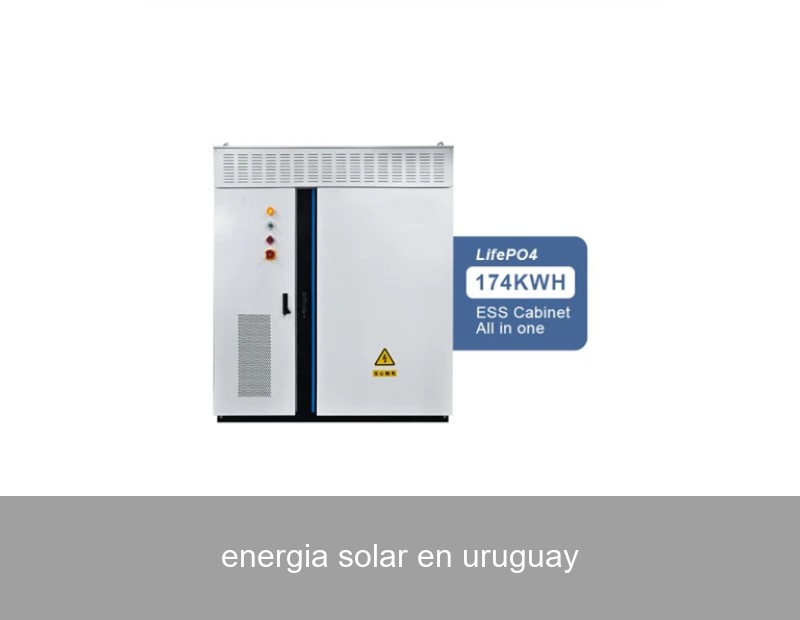
Look at a global renewable energy map, and one small nation in South America consistently shines brighter than its size would suggest: Uruguay. The story of energía solar en Uruguay is nothing short of remarkable. In less than two decades, the country transformed its energy matrix from one dependent on costly imports to a world leader in renewables, with solar playing an increasingly pivotal role. For countries in Europe and the US looking to accelerate their own clean energy transitions, Uruguay offers not just inspiration, but a proven playbook. This journey, however, is entering its most critical phase—one where intelligent energy storage becomes the key to unlocking solar power's full potential.
The Uruguayan Sun Miracle: A Global Inspiration
Uruguay's achievement is a masterclass in energy policy and public-private partnership. Facing a lack of fossil fuel resources and volatile import prices, the country made a bold, strategic commitment to renewables. Through clear regulations, attractive power purchase agreements (PPAs), and a stable investment climate, it attracted global capital and expertise. Today, renewables account for over 95% of its electricity generation, with wind leading the charge and solar capacity growing rapidly. This isn't just about being green; it's about energy sovereignty, economic stability, and price security. The success of energía solar en Uruguay demonstrates that a systemic approach can yield extraordinary results.

Image: Utility-scale solar farms are a cornerstone of Uruguay's energy matrix. (Source: Unsplash, Photographer: American Public Power Association)
From Phenomenon to Power: The Data Behind the Boom
Let's talk numbers. Uruguay boasts excellent solar irradiance, comparable to parts of Southern Europe and California. The government's target is to add 200-300 MW of new solar PV capacity annually. But here's where the interesting challenge emerges. Solar, by its nature, is intermittent. The sun doesn't shine at night, and production peaks during midday. Uruguay's grid, now heavily reliant on variable sources like wind and solar, faces the delicate task of balancing supply and demand in real-time.
- High Penetration: On some days, renewables supply nearly 100% of national demand for hours.
- The Duck Curve Challenge: A familiar phenomenon in California and Germany is now relevant in Uruguay: a sharp drop in solar production in the evening creates a rapid ramp-up need for other sources.
- Grid Resilience: Managing frequency and voltage stability becomes more complex with high shares of inverter-based resources like PV.
This data reveals the next frontier: moving from generating clean energy to intelligently managing it. The question is no longer how to build more solar, but how to optimize every kilowatt-hour produced.
Case Study: A Dairy Farm's Energy Transformation in Paysandú
Consider "Estancia La Paz," a modern dairy farm in the department of Paysandú. With high energy costs for milking machines, refrigeration, and irrigation, their profitability was tightly linked to the grid tariff. In 2022, they installed a 150 kW rooftop solar system. The results were impressive:
| Metric | Before Solar | After Solar |
|---|---|---|
| Monthly Grid Energy Cost | ~$5,400 USD | ~$1,200 USD |
| Self-Consumption Rate | 0% | 65% |
| Payback Period (Est.) | N/A | 5.5 years |
However, the farm manager noted a persistent issue: "Our solar panels work hardest when the sun is high, but our milking parlor and cooling systems run heavily in the early morning and evening. We're still exporting a lot at midday and buying back expensive power later." This gap between generation and consumption profiles is the universal challenge of solar economics. The farm's next logical step? Integrating a battery energy storage system (BESS) to capture that midday surplus for use during peak hours, pushing their self-consumption toward 90% and maximizing their return on investment.
The Missing Piece: Why Solar Needs a Smart Partner
The story of Estancia La Paz is being replicated across Uruguay, from industrial plants to residential communities. Energía solar en Uruguay has laid a phenomenal foundation, but to build the next level of energy resilience and independence, storage is non-negotiable. Think of it this way: solar panels are the excellent harvesters of energy, but without a smart storage system, a portion of that harvest is wasted. A BESS acts as an energy bank, storing excess solar generation for when it's needed most. This delivers:
- Energy Arbitrage: Store cheap solar energy, avoid buying expensive grid power.
- Backup Power: Critical for businesses and homes during grid outages.
- Grid Support: At scale, distributed storage can help stabilize the national grid, smoothing out the duck curve.
This is where global experience meets local need. Companies like Highjoule, with nearly two decades of expertise in advanced energy storage, are perfectly positioned to support this next phase. Our systems are designed to solve precisely these challenges, turning a solar installation from a simple generator into a smart, autonomous energy asset.
Highjoule's Intelligent Storage: The Perfect Complement to Uruguayan Solar
At Highjoule, we don't just sell batteries; we provide integrated, intelligent power solutions. For the Uruguayan market, with its mature solar base and forward-looking energy policies, our technology offers a seamless upgrade path.
Our H-Series Commercial & Industrial (C&I) energy storage systems are a prime example. These modular, containerized solutions are built for reliability and ease of integration. For a factory or agribusiness like Estancia La Paz, a Highjoule H-Series system would:
- Automatically optimize charging from their solar arrays and discharging based on consumption patterns and tariff schedules.
- Feature advanced lithium-iron-phosphate (LFP) battery chemistry, known for its long cycle life, safety, and stability—crucial for demanding environments.
- Include our proprietary Adaptive Grid Interface (AGI) software, which can be configured to provide grid-supportive functions if required by the utility.
For residential clusters or microgrid applications, such as remote communities or eco-tourism hotels, our Modular Home Power Hub provides scalable, plug-and-play storage. This allows communities to maximize the use of shared solar resources, ensuring lights stay on and businesses keep running, completely independent of the central grid if needed.

Image: Advanced battery energy storage systems are key to managing renewable energy. (Source: Unsplash, Photographer: American Public Power Association)
The Future of a Sustainable Uruguay
The next chapter for energía solar en Uruguay is about integration and intelligence. The vision is a decentralized, resilient, and hyper-efficient energy network where every solar panel is paired with smart storage, forming virtual power plants that support the national grid. According to a 2021 IEA policy review, Uruguay is already exploring regulatory frameworks for distributed storage and demand-side management. The opportunity for businesses and homeowners to become active participants in the energy system is immense.
Highjoule is committed to being a partner in this transition. Our global experience from projects in Europe and North America—where grid dynamics and solar penetration are similar—informs our solutions for Uruguay. We provide not just hardware, but the energy management intelligence to make solar work harder and smarter for every stakeholder.
An Open Question for Solar Stakeholders
Your solar panels are generating clean energy. But are you truly maximizing their value? As electricity tariffs and grid dynamics evolve, can you afford to let that self-generated power go to waste? The technology to capture and control it is here, proven, and ready. What's the first step you will take to move from passive generation to active energy management?
 Inquiry
 Online Chat