


Understanding the Average Cost of a Solar Panel: A 2024 Guide for Homeowners
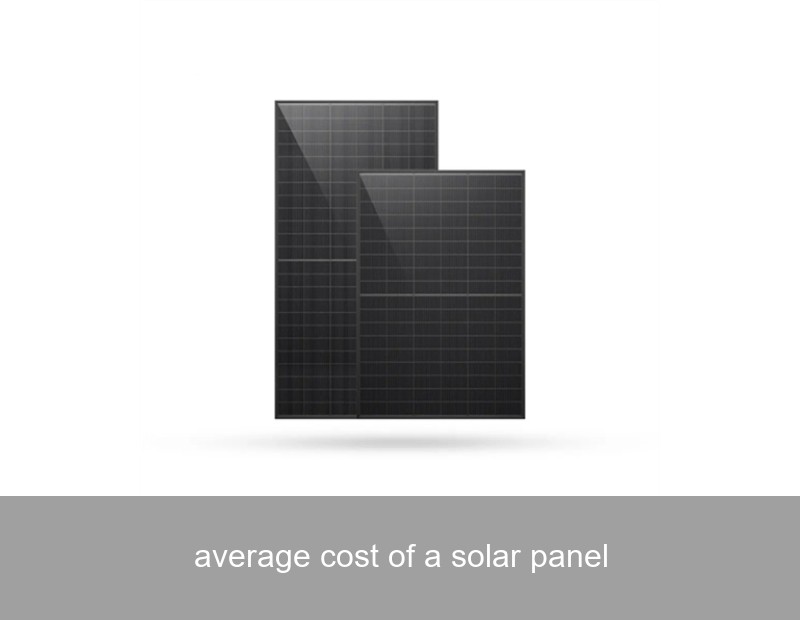
If you're considering solar power, one of the first questions you likely have is, "What's the average cost of a solar panel?" It's a smart starting point, but the answer is more nuanced than a single number. The price of an individual panel is just one piece of a larger puzzle that includes installation, system size, location, and the critical role of energy storage. In this guide, we'll break down the costs, explore the value of modern solar-plus-storage systems, and show you how to think about your investment not just as an expense, but as a step toward energy independence.
Breaking Down the Average Cost: More Than Just the Panel
As of 2024, the average cost for a single solar panel module itself typically ranges from $200 to $350, depending on its efficiency, brand, and technology (like monocrystalline or polycrystalline). However, this "sticker price" is misleading for budgeting. The meaningful figure is the cost per watt of solar capacity or the total installed system cost. In the U.S., the average cost for a residential solar system before incentives is between $2.50 to $3.50 per watt, leading to a total system cost of $15,000 to $25,000 for a typical 6-kilowatt (kW) system.
Let's look at what contributes to the final price tag:
- Equipment (30-40%): This includes the panels, inverters, mounting hardware, and wiring. Higher-efficiency panels cost more but may produce more energy in a limited space.
- Installation & Labor (20-30%): Costs vary by roof type, system complexity, and local labor rates.
- Permits, Inspections, and Interconnection (10%): Every municipality has different requirements and fees.
- Sales and Operations (15-25%): This covers company overhead, customer acquisition, and warranties.
It's crucial to consider post-incentive costs. The U.S. federal Investment Tax Credit (ITC), for example, allows you to deduct 30% of your system cost from your federal taxes, significantly lowering the net investment. Similar schemes exist across Europe, such as VAT reductions in the UK or various Länder-level incentives in Germany.
The Role of Inverters and Balance of System
While panels capture sunlight, inverters are the brains, converting direct current (DC) to usable alternating current (AC). Microinverters (per-panel) or string inverters (for a series of panels) add to the cost but affect efficiency and monitoring capabilities. This "balance of system" hardware is where quality matters immensely for long-term performance.
The Real Value: Why Solar Needs a Storage Partner
Here's a pivotal insight: focusing solely on the average cost of a solar panel misses the modern energy paradigm. Solar panels produce energy only when the sun shines, often peaking midday when homes are empty. Without storage, excess energy is sold back to the grid at a low rate, and you draw expensive power from the grid at night. This limits your savings and resilience.
Integrating a battery energy storage system (BESS) transforms your solar array. It allows you to store surplus daytime energy for use in the evening, during peak rate periods, or during grid outages. This maximizes self-consumption, shields you from volatile utility rates, and provides backup power. The true value of your solar investment is unlocked not by panels alone, but by an intelligent storage solution.

Image: A modern home solar-plus-storage installation. Source: Unsplash
A Real-World Case: The Smith Family in California
Let's examine real data. The Smith family in Sacramento, California, installed a 7.2 kW solar system in 2022. Their initial focus was panel cost, but they soon realized the limitation of a solar-only setup.
| Metric | Solar-Only System (Before Storage) | Solar + Storage System (After Adding Battery) |
|---|---|---|
| System Cost (After ITC) | $18,500 | $28,000 (additional $9,500 for storage) |
| Monthly Energy Bill Savings | ~65% (Still paid high evening rates) | ~95% (Nearly eliminated grid consumption) |
| Self-Consumption of Solar Energy | ~40% | ~85% |
| Payback Period Estimate | 8 years | 9 years (with added resilience) |
| Value During Grid Outage | None | Critical loads powered for 18+ hours |
As this case shows, the added upfront cost of storage extended the payback period slightly but dramatically increased energy independence, savings predictability, and provided invaluable peace of mind during California's Public Safety Power Shutoff (PSPS) events. The levelized cost of energy (LCOE) for their combined system, when factoring in resilience, became more favorable.
The Highjoule Solution: Intelligent Energy Management
This is where Highjoule, a global leader in advanced energy storage since 2005, changes the equation. We believe the discussion shouldn't end at the average cost of a solar panel. It should evolve into the value of a fully integrated, smart energy ecosystem.
For residential customers, our HOMESERIES battery systems are designed to seamlessly pair with new or existing solar arrays. Unlike basic storage, our systems feature advanced lithium-iron-phosphate (LFP) battery chemistry for safety and longevity, coupled with an intelligent energy management system (EMS). This software doesn't just store and release energy; it learns your usage patterns, weather forecasts, and utility rate schedules to autonomously optimize when to charge from solar, when to discharge to your home, and when to participate in grid services programs (where available), potentially generating additional revenue.
For commercial and industrial clients, Highjoule's GRIDSERIES solutions provide scalable, containerized storage that manages demand charges, integrates renewable sources, and ensures operational continuity. Our microgrid controllers can island a facility from the grid, allowing business to continue uninterrupted.

Image: A high-capacity battery storage system for commercial use. Source: Unsplash
By choosing Highjoule, you're investing in a system that maximizes the return on every solar panel, effectively lowering the lifetime cost of your clean energy.
How Highjoule Technology Complements Your Solar Investment
- Adaptive Charging: Our EMS prioritizes solar charging to maximize self-consumption, reducing wear on the battery from grid charging.
- Peak Shaving: Automatically powers your home with stored energy during expensive peak utility hours, slashing demand charges for businesses.
- Scalable Design: Start with a base system and easily add more battery capacity as your needs grow, protecting your initial investment.
Future Trends: What's Next for Solar and Storage Costs?
According to the National Renewable Energy Laboratory (NREL), solar module prices have fallen by over 80% in the last decade. While supply chain fluctuations occur, the long-term trend for panel costs is downward. The real excitement is in storage. BloombergNEF reports that the average price of lithium-ion battery packs fell to $139/kWh in 2023, an 80% drop since 2013. This convergence makes solar-plus-storage more accessible than ever.
Future innovations like vehicle-to-home (V2H) technology, where your EV battery can power your house, will further integrate with systems like Highjoule's, creating a holistic home energy network. The focus is shifting from simple cost-per-panel to the overall cost per kilowatt-hour of managed, reliable, clean energy at your fingertips.
Making the Right Decision for Your Home
When evaluating quotes, look beyond the per-panel price. Request a detailed breakdown that includes:
- Total installed cost (pre- and post-incentive)
- Estimated annual energy production (kWh)
- Warranty terms for both performance and equipment
- And crucially, the cost and specifications of an integrated storage solution.
So, as you ponder the average cost of a solar panel, we leave you with this question: What is the true value of energy independence and resilience for your household or business, and how can an intelligent storage system help you achieve that goal today?
 Inquiry
 Online Chat