


Electric Power Generation is Changing: Are You Ready for a Smarter Grid?
For over a century, electric power generation followed a simple, centralized script: massive plants (coal, nuclear, gas) produced power, sent it over hundreds of miles of transmission lines, and we consumed it. The grid was a one-way street. But if you listen closely today, you can hear a new hum—a symphony of rooftop solar panels, whispering wind turbines, and quietly intelligent battery systems. The script is being rewritten, and the star of the show is becoming the prosumer: entities that both produce and consume energy. This shift from centralized to distributed generation is the most profound transformation in electricity since the days of Edison and Tesla.
The Data Behind the Decentralization Trend
The numbers paint a clear picture of this revolution. According to the International Energy Agency (IEA), renewables are set to contribute 80% of new power capacity globally by 2030, with solar PV alone accounting for more than half of that expansion. In the United States, the Energy Information Administration (EIA) projects that combined solar and wind generation will surpass coal-fired generation for the first time in 2024. Europe is charging ahead even faster, with countries like Germany, Spain, and the Netherlands regularly achieving days where renewables meet 70-100% of electricity demand.
But here’s the critical nuance: a growing portion of this capacity isn't in massive utility-scale farms. It's on commercial rooftops, integrated into industrial facilities, and powering residential communities. This is distributed electric power generation in action, and it brings both incredible opportunities and complex challenges to grid stability.

Image Source: Unsplash - Representative of distributed solar generation.
The Core Challenge: Intermittency & Grid Stability
Let's talk about the elephant in the room. The sun doesn't always shine, and the wind doesn't always blow. This intermittency of renewable sources creates a mismatch between electric power generation and consumption patterns. On a sunny, windy afternoon, we might have a surplus. On a calm, cloudy evening, we face a deficit. Traditional grids, designed for steady, predictable input, struggle with these swings. This can lead to:
- Frequency Instability: The grid's frequency (50Hz in Europe, 60Hz in the US) must be kept within a tight band. Rapid drops or surges in generation can cause frequency deviations, risking blackouts.
- Voltage Fluctuations: High local solar generation can push voltage levels above safe limits, potentially damaging connected equipment.
- Congestion: Transmission lines can become overloaded when excess power from one region needs to be shipped elsewhere.
So, how do we harness the clean energy revolution without compromising the reliability we all depend on? The answer lies not just in generation, but in intelligent storage and control.
The Solution: Intelligent Energy Storage as a Grid Ally
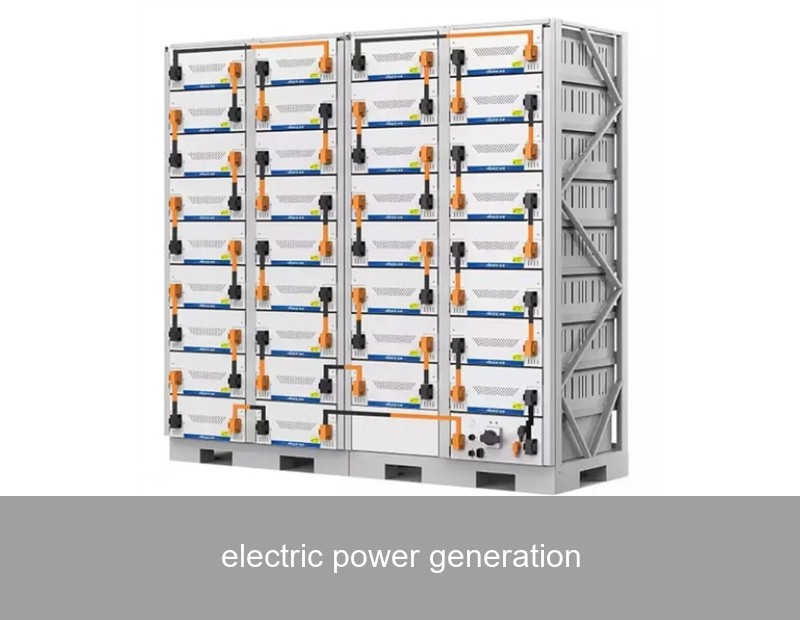
This is where Battery Energy Storage Systems (BESS) transition from a niche technology to the essential cornerstone of the modern grid. Think of a BESS as a "shock absorber" and a "time machine" for electricity. It absorbs excess energy when generation is high and releases it when needed, effectively shifting energy across time.
How Does a Modern BESS Work?
A sophisticated BESS is far more than a collection of batteries. It's an integrated ecosystem comprising:
| Component | Function | Highjoule's Approach |
|---|---|---|
| Battery Racks (Li-ion, LFP) | The core energy storage medium. Lithium Iron Phosphate (LFP) is increasingly favored for its safety, longevity, and stability. | Highjoule systems utilize UL-certified, high-cycle life LFP cells, optimized for daily cycling in demanding applications. |
| Power Conversion System (PCS) | The "translator" between AC (grid) and DC (battery) power, enabling bi-directional flow. | Our integrated PCS features high efficiency (>98%) and rapid response times (milliseconds) for grid services. |
| Energy Management System (EMS) | The "brain." It uses algorithms and weather/data forecasts to control charging/discharging based on economics, grid needs, or user preferences. | Highjoule's AI-driven Helios EMS platform makes autonomous, profit-optimizing decisions, turning storage into an active asset. |
| Thermal Management & Safety | Maintains optimal battery temperature and includes multi-layer protection (electrical, fire, environmental). | Our patented liquid-cooling technology ensures uniform temperature, extending battery life by up to 20% versus air-cooled systems. |
Beyond Backup: The Multi-Faceted Value of Storage
For businesses and grid operators, a smart BESS unlocks multiple revenue streams and cost-saving mechanisms simultaneously:
- Energy Arbitrage: Buy and store electricity when prices are low (e.g., at night), use it or sell it back when prices are high (peak evening hours).
- Peak Shaving: Avoid costly "demand charges" from utilities by discharging the battery during your facility's short periods of highest consumption.
- Grid Services: Provide vital stability services like Frequency Response or Voltage Support to the local grid operator, generating additional income.
- Renewable Integration: Smooth the output of an onsite solar array, store midday excess, and guarantee clean power availability after sunset.
Case in Point: A German Industrial Park's Journey
Let's ground this in reality. A medium-sized manufacturing park in Bavaria, Germany, was facing rising energy costs and wanted to maximize its 2 MW rooftop solar installation. Their solar generation often peaked at midday, exceeding the park's consumption, leading to curtailed energy (wasted) and not covering their high-power evening shifts.
They partnered with Highjoule to deploy a 1.5 MWh / 750 kW battery storage system integrated with their existing solar and our Helios EMS. The results after one year were compelling:
- Self-Consumption of Solar: Increased from 55% to 92%, drastically reducing grid purchases.
- Demand Charge Reduction: Peak grid draw was shaved by 40%, saving over €18,000 annually on demand charges alone.
- Grid Revenue: By participating in the German primary control reserve market (a frequency service), the system generated approximately €15,000 in ancillary service revenue.
- ROI Timeline: The combined savings and revenue streams projected a full return on investment in under 6 years.
This case exemplifies the triple win: greater sustainability, enhanced resilience, and improved economics for the business, while simultaneously providing a valuable service to the national grid.

Image Source: Unsplash - Representative of a modern containerized BESS installation.
Highjoule's Role in the New Energy Landscape
Since 2005, Highjoule has been at the forefront of this transition. We understand that the future of electric power generation is not just about creating energy, but about managing it intelligently. Our solutions are designed to be the adaptive layer that connects distributed generation to consumption and grid needs.
For our commercial and industrial clients across Europe and North America, we provide more than just hardware. We deliver turnkey energy resilience:
- Highjoule Sentinel Series BESS: Scalable, containerized solutions from 100 kWh to multi-MWh, engineered for harsh outdoor environments and seamless grid interconnection.
- Helios AI-Powered EMS: The software intelligence that continuously analyzes energy prices, weather forecasts, consumption patterns, and grid signals to optimize every kilowatt-hour for economic or sustainability goals.
- Microgrid Controllers: For campuses, remote communities, or critical facilities, we design systems that can intelligently "island" from the main grid during an outage, powered by local solar and storage.
Our approach is partnership-oriented. We start with a deep energy analysis of your site, model the financial and operational benefits, and provide a clear roadmap to energy independence and cost control.
The Future of Electric Power Generation is Adaptive
The grid of the future will be a dynamic network of millions of interconnected nodes—solar homes, wind farms, EV charging stations, and industrial battery systems—all communicating and responding in real-time. In this network, electric power generation becomes a collaborative, flexible activity. The question is no longer just "how much can we generate?" but "how intelligently can we store, share, and use it?"
This shift empowers everyone. It empowers a factory to control its energy destiny, a town to build a resilient microgrid, and a nation to accelerate its decarbonization goals with grid stability. The technology to build this future exists today.
Is your business or community ready to move from being a passive consumer to an active, empowered participant in the new energy landscape? What would you do with control over your own power?
 Inquiry
 Online Chat